
A person reacts strongly when an investigator mentions a detail that was supposedly known only to the person responsible for an incident. That reaction might be significant. But it does not answer the most important question: how did the person learn the information?
This distinction sits at the heart of the Concealed Information Test (CIT), a specialized form of credibility assessment designed to identify recognition of particular facts rather than directly measure whether someone is lying.
Unlike conventional polygraph questioning, which often focuses on a person’s denial of wrongdoing, the concealed information test polygraph approach examines whether certain details produce distinctive physiological responses. Polygraphianz has separately examined the accuracy implications in its article on polygraph testing and eye-tracking technology.
The method has a substantial scientific history and continues to influence research involving polygraphs, eye-tracking and memory detection. Yet its usefulness depends on a condition that can be difficult to preserve during real investigations: the information being tested must genuinely distinguish someone with relevant knowledge from someone without it.
For employers, investigators and legal professionals, that limitation can be more consequential than the technology used to record a response.
How a Concealed Information Test Works
The Concealed Information Test developed from research into the relationship between recognition, attention and physiological responses.
Psychologist David Lykken’s work in the late 1950s helped establish an approach originally called the Guilty Knowledge Test. The name reflected its proposed investigative use, although researchers increasingly prefer “Concealed Information Test” because recognizing information does not necessarily establish guilt.
The technique is built around a specific incident.
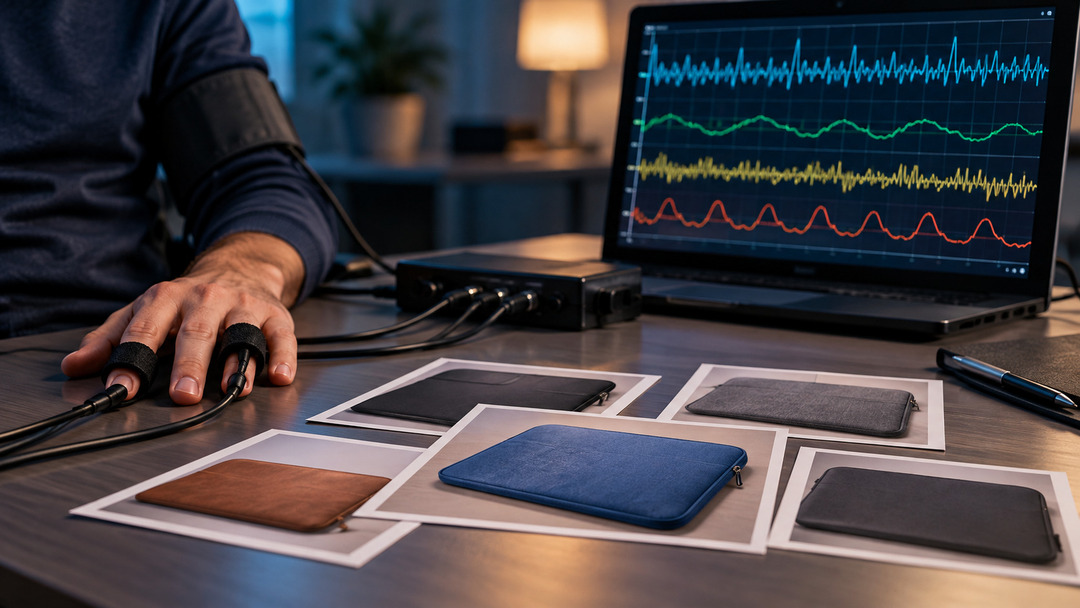
Imagine that a laptop disappears from a restricted office. Investigators discover that the computer had been placed inside a distinctive blue fabric sleeve. That detail has not been publicly disclosed.
An examiner might present several plausible alternatives concerning the missing laptop’s appearance, including the actual detail.
The underlying theory is that someone who recognizes the true item may respond differently to it than to unfamiliar alternatives.
Traditional versions of the test examine physiological indicators such as skin conductance, cardiovascular activity and respiration. Related research has investigated measures of brain activity and eye movements.
The important distinction is that the examination is not looking for a unique biological signal of dishonesty.
It is examining whether the person’s reactions suggest recognition of information associated with the event.
That creates a different question from the one used in many conventional polygraph examinations.
Why Recognition Testing Differs From Ordinary Polygraph Questioning
Many familiar polygraph techniques belong to the Comparison Question Test family.
These procedures compare physiological responses to questions about a specific allegation with responses to other questions designed to provide a comparison.
A Concealed Information Test uses a different principle.
Instead of relying primarily on how someone responds to an accusation, it looks for evidence that one particular item carries special meaning.
This distinction is supported by decades of psychophysiological research.
A 2014 meta-analysis published in Psychophysiology examined research involving skin conductance, respiration, heart rate and the P300 brain-response component.
The researchers found substantial evidence that these measures can differentiate people who possess relevant information from people who do not under laboratory conditions.
However, the results differed by measurement method and experimental setting. The analysis did not establish that every application would produce the same level of performance.
The difference matters because detecting recognition and establishing responsibility are separate tasks.
An individual may know an important detail for innocent reasons. Another individual may have participated in an incident without remembering a particular feature.
A method that measures recognition cannot independently resolve either possibility.
The Hidden Detail Becomes Less Useful When Information Spreads
The biggest practical vulnerability of a Concealed Information Test may emerge before the examination begins.
Its underlying logic assumes that the relevant detail has remained unknown to people who were not involved in the incident.
In a controlled experiment, researchers can manage that condition by separating participants who possess the information from those who do not.
A real investigation is less predictable.
Consider the missing laptop example.
The blue sleeve might initially be known only to the person responsible and the investigator who discovered the evidence.
But the detail could later appear in an internal security briefing. A manager might mention it during an interview. An employee could see a photograph in a shared incident report.
Someone who had no involvement in the disappearance might subsequently recognize the blue sleeve because the information was disclosed during the investigation.
Their recognition would be real. The inference that they participated in the theft would not necessarily follow.
This is known as information contamination, and it presents a fundamental problem for recognition-based testing.
The 2014 research review specifically identified leakage of critical information as a major threat to the validity of the Concealed Information Test.
Researchers also described how innocent people who receive incident information can show stronger responses to relevant items than people who remain uninformed.
This does not mean every information leak inevitably causes a false accusation. It means the investigator can no longer safely assume that recognition is confined to the person responsible.
The critical issue is not simply whether the test detects a reaction.
It is whether the circumstances still support the interpretation attached to that reaction.
Memory Gaps Create the Opposite Problem
Information leakage can make an innocent person appear knowledgeable. Imperfect memory creates another difficulty: someone involved in an incident may not remember the detail selected for testing.
A person might remember removing a laptop but never have noticed its sleeve.
Another might have seen the detail briefly without retaining it.
Time, attention, competing information and the circumstances of the event can affect what enters memory and what can later be retrieved.
The usefulness of a Concealed Information Test therefore depends partly on whether the selected details were likely to have been noticed and remembered.
A test that focuses on obscure or incidental information may produce weak responses even when the examinee was directly involved in the event.
That is why a lack of distinctive physiological responding should not automatically be interpreted as proof that the individual lacks relevant knowledge.
The result may reflect limitations in memory, the selected questions, measurement quality or the examination procedure.
These possibilities make the test less suitable as a simple pass-or-fail mechanism.
What the 2026 Eye-Tracking Research Adds
Interest in detecting concealed information has expanded beyond traditional polygraph instruments.
A June 2026 study published in Scientific Reports compared eye-tracking and polygraph-based Concealed Information Tests under controlled experimental conditions.
Participants assigned to the mock-crime group carried out a simulated theft involving several predetermined details. Those assigned to the innocent group did not participate in the activity and were not exposed to the relevant information.
Researchers then examined whether the methods could distinguish between the groups.
The eye-tracking approach produced encouraging classification results, although the study involved a relatively small sample and an artificial setting without the consequences associated with real investigations.
The methodological detail is especially revealing.
Researchers deliberately created a situation in which one group knew the relevant information and the other did not.
That arrangement made the central assumption of the test manageable.
An actual workplace investigation cannot always provide the same assurance.
Employees may have witnessed relevant events, discussed evidence, reviewed reports or received information through ordinary work activities.
Even a technically sophisticated recognition test cannot establish where knowledge originated.
The broader scientific lesson is that improvements in measurement technology do not automatically resolve weaknesses in investigative design.
Five Conditions That Determine Whether the Test Is Useful
Before interpreting results from a recognition-based examination, investigators need to establish whether the underlying method is appropriate for the case.
Five considerations are particularly important:
- The information must be distinctive. A detail that could easily be guessed or inferred is less useful than one genuinely associated with the incident.
- Its disclosure history must be understood. Investigators should establish who had access to the information before testing, including through interviews, reports, photographs and internal communications.
- The detail must be reasonably memorable. A fact that someone involved would have had little reason to notice may not provide a useful recognition measure.
- The examination must use a suitable validated procedure. Question construction, alternative items, measurement quality and interpretation all affect the strength of the resulting inference.
- Any finding must be compared with independent evidence. Recognition alone cannot establish when, why or how the information was acquired.
These conditions are not a guarantee of accuracy or a substitute for professional standards.
They provide a practical way to identify cases in which the test’s assumptions are poorly supported.
If investigators already know that critical details circulated widely, the better decision may be to avoid using a recognition-based examination for those details.
Similarly, when an incident is poorly documented, the absence of reliable information may prevent investigators from constructing appropriate test items in the first place.
Workplace Investigations Require an Additional Legal Check
A scientifically plausible test is not automatically a legally permissible workplace procedure.
In the United States, the Employee Polygraph Protection Act generally prohibits most private employers from requiring or requesting lie-detector tests or using their results in employment decisions, subject to limited exemptions and specific safeguards.
Public-sector and certain national-security contexts operate under different provisions.
Australian and New Zealand employers face their own jurisdiction-specific employment, privacy and consent requirements. American testing exemptions should not be treated as permission to conduct equivalent examinations elsewhere.
Even where testing is permitted, recognition-based findings must be handled in the context of the whole investigation.
An employee who recognizes confidential information might have obtained it through legitimate duties, routine access, another employee or an earlier briefing.
The information could be relevant to the inquiry without establishing misconduct.
Conversely, a weak or inconclusive recognition response should not automatically end an investigation when independent evidence identifies unresolved concerns.
The central responsibility remains with the investigator or decision-maker, not the instrument.
The Strongest Evidence May Come From Explaining the Knowledge
A Concealed Information Test is potentially valuable because it asks a narrower question than a conventional allegation-focused polygraph examination.
Rather than treating every physiological reaction as evidence of dishonesty, it examines whether particular information appears familiar to the person being tested.
That can be informative when the circumstances are carefully controlled.
The limitation is equally clear.
Knowing a fact does not prove how that knowledge was acquired.
A reliable investigation therefore needs to establish the history of the information itself.
Who first documented it? Who could access it? When was it disclosed? Could an uninvolved person reasonably have learned it?
Answers to those questions may provide more meaningful evidence than the strength of a physiological response.
The most defensible use of a Concealed Information Test is not to replace ordinary investigation, but to contribute carefully bounded information when its assumptions are supported.
Recognition can be a clue. Responsibility still requires evidence.