
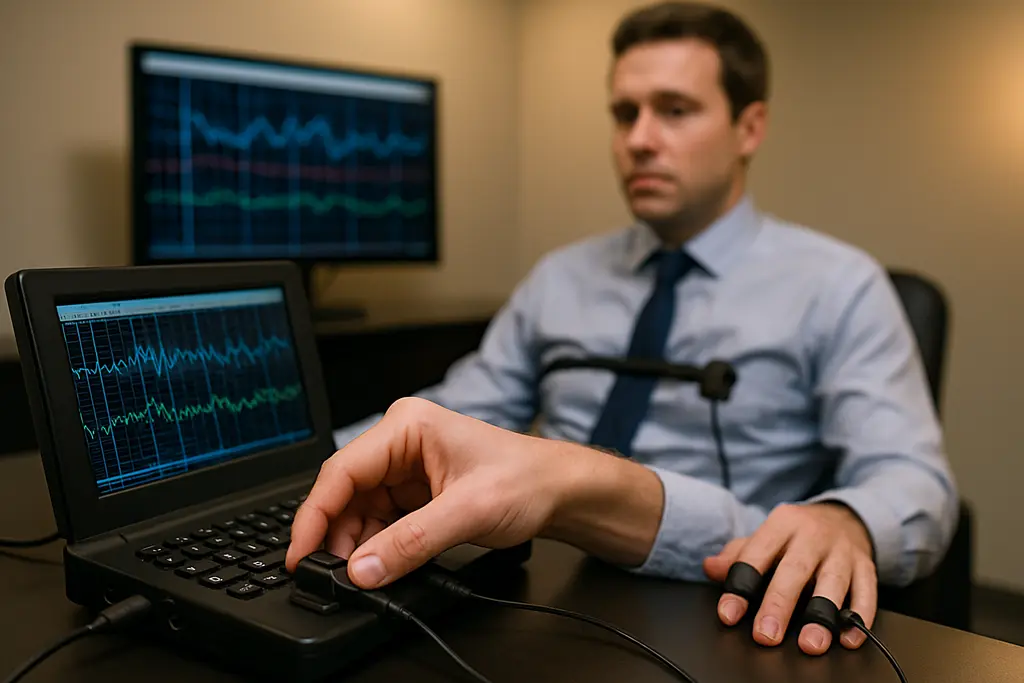
The Pentagon’s Modernizing Polygraph initiative has drawn attention because it links traditional credibility assessment with non-contact sensors, AI-assisted scoring, and centralized analytics. As of October 13, 2026, the program should be read as a federal research and development request, not as proof that future testing will be more accurate, fair, or suitable for every workplace use.
The clearest public signal is budgetary. The Defense Counterintelligence and Security Agency requested $30.3 million over five years, from FY 2027 through FY 2031, for Polygraph+ / Polygraph Next, according to reporting on the Pentagon request by The Next Web. That funding request matters because it shows where federal credibility assessment research may be heading: toward tools that collect more data, analyze it faster, and support vetting or insider-threat decisions. It does not settle the harder question of how much weight any result should carry.
What Modernizing Polygraph Requests Fund
Modernizing Polygraph In Practical Terms
The program described in the federal budget material is not simply a new name for a conventional examination. The DCSA budget justification refers to Polygraph Next / Polygraph+ as work involving non-contact sensing, AI/ML-based scoring algorithms, decision aids, and centralized data analytics, including cloud-based storage of assessment data in the DCSA budget justification. Those elements point to a broader system: data capture, algorithmic interpretation, examiner support, and data management.
For polygraph service providers and workplace integrity teams, that combination raises practical questions before it raises promotional opportunities. What signals are being collected? How are they validated? Who can review the data? How long are records kept? What happens when a decision aid conflicts with an examiner’s judgment or other investigative evidence? These are operational questions, not abstract technical concerns.
Why The Budget Request Is Not A Validation Study
A funding request can show institutional interest, but it does not prove that a technology performs well in the settings where it may later be used. That distinction is essential for any employer, attorney, investigator, or security manager reviewing claims about Polygraph Next. A federal R&D line can support prototypes, trials, and data systems, but users still need evidence about error rates, intended populations, examiner training, and limits on interpretation.
The strongest workplace use of any credibility assessment tool remains evidence-bound. A result may contribute to an inquiry, but it should not replace documents, interviews, access logs, policy records, or ordinary fact development. Readers comparing integrity controls across service sectors may also notice the same principle in written vendor reviews and documentation practices; Top Ten Writing Services, a related site in the same network, serves as a reminder that clear claims and traceable evidence matter outside the testing field as well.
Why Non-Contact Testing Changes The Risk Profile
More Data Does Not Automatically Mean Better Decisions
Traditional polygraph examinations record physiological responses during a structured process. The newer concept adds non-contact sensing and analytics, which may reduce some physical constraints but may also increase the amount of data being collected. In practice, that can make the system feel more objective than it has been shown to be. The risk is not only technical error; it is misplaced confidence.
Non-contact measurement can be attractive in high-volume or security-sensitive settings because it suggests less intrusive collection and easier deployment. Yet the core decision problem remains the same: physiological signals require interpretation. If an algorithm is trained on prior assessment data, users need to know whether those data are appropriate for the new use case. If the tool is used for screening rather than a focused incident inquiry, the consequences of false positives and false negatives may differ sharply.
Data Governance Becomes Part Of Test Integrity
Centralized analytics and cloud-based storage make governance part of the testing question. A modern system does not end when the examination ends. It creates stored records, possible model-training data, access-control questions, audit needs, and disclosure issues. Those concerns are especially sensitive where personnel vetting and insider-threat detection are the stated applications.
For corporate or legal users watching Modernizing Polygraph work from outside government, the lesson is not to copy the federal model. The more useful lesson is to define scope before testing begins. A written protocol should identify the purpose of the test, the questions authorized, who receives the report, how conflicting evidence will be handled, and what the examinee is told about the process. A related discussion of polygraph transparency is relevant because disclosure and documentation often determine whether a testing program earns cooperation or resistance.
Workplace Lessons From A Federal Research Program
Credibility Tools Should Complement Other Controls
The Pentagon’s stated interest in personnel vetting and insider-threat detection speaks to a familiar workplace problem: organizations want earlier warning signs when sensitive information, assets, or trust positions are at risk. Polygraph services may support that effort in defined settings, but they work best as one part of a wider integrity system. Access management, reporting channels, supervisory review, incident documentation, and fair investigative procedures remain necessary even when testing is available.
A cautious success story is not one where a test supposedly solves everything. A more credible example is a process where a polygraph examination narrows an inquiry, prompts follow-up verification, or helps resolve a disputed account alongside independent records. That is the standard corporate users should apply to claims about Modernizing Polygraph tools: ask how the technology improves decision quality without giving it authority it has not earned.
Employee Trust Depends On Boundaries
Testing programs can weaken trust when employees experience them as broad, unexplained, or detached from the event being investigated. They are more defensible when the purpose is specific, the scope is limited, and the organization is honest about what a result can and cannot show. This is particularly true for AI-assisted tools because staff may assume the system is either magically accurate or inherently unfair. Neither assumption helps.
Clear communication matters. Employers and investigators should avoid statements that imply certainty. They should also avoid presenting a federal R&D initiative as if it has already produced a standard commercial answer. As of October 13, 2026, the known public record supports describing Polygraph Next as a requested and described modernization effort, with earlier prototype work in the background, not as a settled replacement for current practice.
Evidence Standards For Future Polygraph Services
Questions Buyers Should Ask Vendors
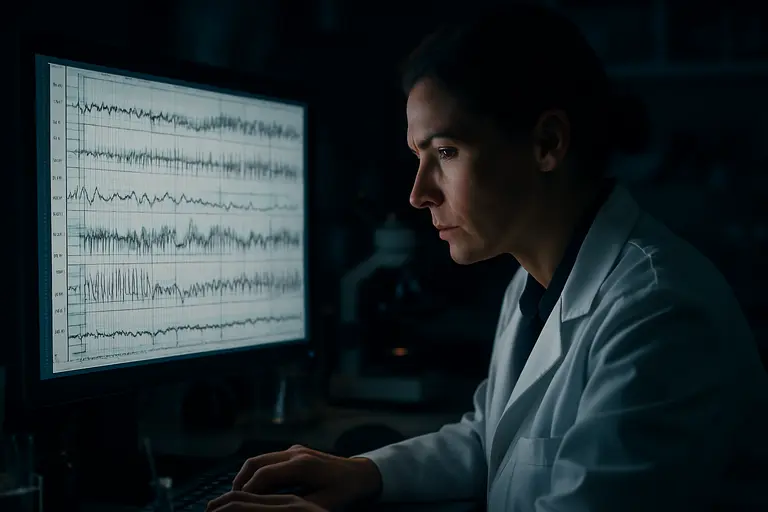
Organizations evaluating future credibility assessment services should focus on proof rather than novelty. A vendor’s claim that a system uses AI, machine learning, thermal imaging, or standoff sensing should lead to follow-up questions about validation, examiner oversight, data handling, and reporting limits. The same standard applies whether the buyer is a corporation, a law firm, a security contractor, or a public agency.
- What exact signals are collected, and under what conditions?
- Has the system been evaluated for the specific use case being proposed?
- How does the examiner review or override algorithmic output?
- What records are stored, who can access them, and when are they deleted?
- How are inconclusive, conflicting, or low-quality results reported?
These questions do not reject innovation. They make innovation accountable. A tool that cannot explain its scope, data path, or limits should not receive greater trust simply because it is newer.
Comparison Criteria Should Be Narrow And Verifiable
Comparisons between legacy testing and Polygraph Next-style systems should be made only on criteria that can be checked. Useful criteria include stated purpose, sensor type, examiner role, data retention, quality-control review, and the kinds of decisions the result is allowed to influence. Less useful are broad labels such as “more advanced” or “next generation” without evidence tied to a specific application.
For workplace integrity programs, the best purchasing question may be: does this service produce a clearer, fairer, and better-documented decision process than the alternative? If the answer depends only on branding or technical language, the organization does not yet have enough support for high-stakes use.
What Modernizing Polygraph Means For Testing
Modernizing Polygraph Safeguards To Watch
Modernizing Polygraph work signals that federal credibility assessment may move toward non-contact collection, algorithmic scoring support, and centralized analytics. Those features could change how examinations are administered and reviewed. They could also increase pressure to treat test outputs as more decisive than the evidence allows.
The practical future of testing should therefore be judged by safeguards. Sound programs will need defined use cases, transparent consent and notice practices where applicable, examiner training, independent quality review, careful data governance, and reports that distinguish findings from assumptions. If those controls are absent, modernization may only make weak decisions faster.
For legal and corporate settings, the measured response is neither enthusiasm nor rejection. The better response is disciplined evaluation. Modernizing Polygraph may influence the tools available to examiners, but the central obligation remains unchanged: use credibility assessment cautiously, document its limits, and keep final decisions grounded in a wider body of evidence.