
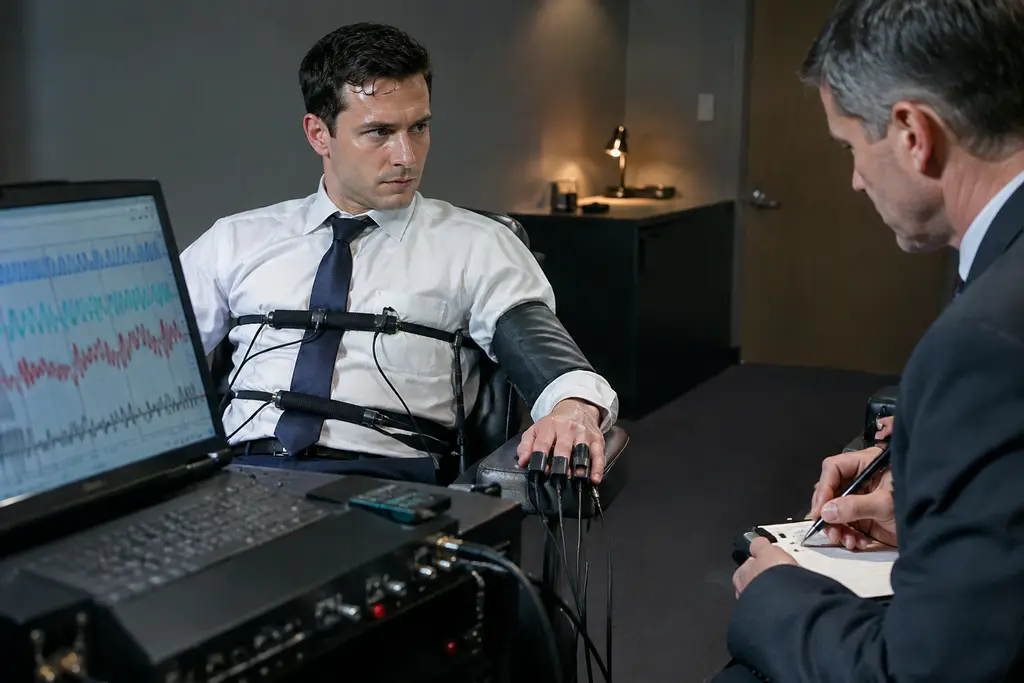
Polygraph Next Funding deserves careful attention from employers, investigators, and HR leaders because it signals a federal interest in modernizing credibility assessment while leaving major questions unresolved. As a workplace ethics advocate, I read the Pentagon’s proposal less as a promise of certainty and more as a reminder that any testing program must be judged by validation, transparency, human review, and the trust it either protects or damages.
The proposed effort, also described in public materials as Polygraph Next or Polygraph+, has been tied to non-contact physiological sensing, artificial intelligence scoring tools, decision aids, centralized data handling, field testing, and prototype evaluation. Those terms sound technical, but the workplace issue is familiar: how should an organization use uncertain evidence without overstating what it proves?
Polygraph Next Funding And Modernized Credibility Assessment
Why Polygraph Next Funding Is Still A Request
For FY 2027, the Defense Counterintelligence and Security Agency budget request includes $6.421 million for Polygraph Next, and the justification materials describe research connected to non-contact sensors, automated scoring aids, analytics, and prototype work in credibility assessment, according to the FY 2027 budget justification. As of November 4, 2026, that should still be treated as a proposed funding request rather than a completed congressional appropriation.
That distinction matters for practical planning. Employers outside the defense community should not assume that tools described in a federal research plan are ready for routine workplace use. A budget request can show institutional priorities, but it does not prove operational accuracy, fairness, legal fit, or employee acceptance. Polygraph Next Funding should not be described as evidence that next-generation credibility tools have already solved the limits of conventional polygraph practice.
What The Program Appears To Test
The research direction points toward a shift from conventional wired sensors toward technologies that may collect physiological indicators at a distance. The stated goals include better usability, traceability, reliability, and evaluation of credibility assessment methods. In plain workplace language, that means the Pentagon is exploring whether future tools can capture more standardized data and support examiners with analytics.
That possibility has two sides. Better documentation and consistent scoring aids could help reduce unexplained variation between examiners if the underlying method is validated. Yet central analytics and machine-generated outputs can also create a false sense of precision if leaders treat a score as a decision rather than one piece of evidence. Ethical use depends on the difference between support and substitution: technology may assist trained professionals, but it should not silently replace judgment, context, or due process.
Workplace Implications For HR And Security Teams
Use Cases Need Clear Boundaries
In sensitive environments, credibility assessment may arise during personnel vetting, insider-risk reviews, or leak inquiries. Those settings involve serious interests on both sides: the employer’s duty to protect information and the employee’s interest in fair treatment. The lesson for HR teams is not that every organization should adopt advanced polygraph services. The lesson is that any use of credibility tools needs a defined purpose, written scope, trained administration, and a rule against using one result as a standalone employment verdict.
Clear boundaries also help preserve trust. Employees are more likely to view an integrity program as legitimate when they understand why a process exists, what questions may be asked, who will see the results, how records will be handled, and how they may respond to concerns. For readers comparing related workplace integrity issues, the analysis of AI polygraph tools offers a useful companion perspective on accuracy, oversight, and responsible use.
Trust Costs Can Outweigh Speed
Speed is often presented as a benefit of automation. Faster screening, faster analytics, and faster escalation can look attractive during a security incident. In employment relationships, however, speed can become a liability if workers believe the process is opaque or predetermined. A rushed credibility assessment may produce short-term investigative momentum while weakening long-term trust in management.
Practical safeguards should be set before any test is scheduled. An employer should be able to answer basic questions in writing:
- What specific issue is being examined, and what topics are outside scope?
- Who is qualified to administer or interpret the process?
- What independent evidence will be reviewed alongside the result?
- How will personal data be stored, retained, secured, and limited?
- What process allows an employee to clarify, contest, or contextualize findings?
Those questions do not make polygraph services risk-free. They do make the decision process more accountable. Understanding the criticality of clear public language also matters outside defense and HR. In this context, work at Leap Year Publishing underscores the need to separate documented facts from unsupported claims.
Oversight Questions Before Any Wider Use

Validation Before Automation
The central scientific question is whether new sensors and scoring aids improve decision quality in the settings where they are used. Accuracy in one controlled setting does not automatically carry over to screening, internal investigations, or high-pressure employment disputes. A tool may perform differently across populations, questioning formats, examiner practices, and stress conditions unrelated to deception.
For that reason, validation should come before expansion. Any organization considering advanced credibility assessment should ask whether the method has been tested against relevant ground truth, whether error rates are disclosed, whether bias has been assessed, and whether human reviewers understand the limits of the output. The safest ethical posture is to treat automation as a prompt for review, not a declaration of fact.
Data Governance And Human Review
Next-generation credibility tools raise data issues that conventional testing may not fully address. Non-contact sensing, thermal measurements, centralized storage, and analytics may create more records than a traditional exam. More data can improve auditability, but it also increases the need for access limits, retention rules, cybersecurity controls, and strict purpose limitations.
Existing intelligence community policy already treats polygraph examination as a governed practice; Intelligence Community Policy Guidance 704.6 addresses polygraph examination standards and related responsibilities in the ICPG 704.6 guidance. If new modalities become operational, oversight frameworks may need clearer language on algorithmic scoring, remote sensors, examiner roles, data retention, and review rights.
Human review is not a formality. A trained reviewer should be able to explain what the system measured, what it did not measure, how uncertainty was handled, and why any follow-up action is proportionate. Without that explanation, an automated aid can become an accountability gap.
Workplace Integrity Lessons From Polygraph Next Funding
A Practical Standard For Ethical Adoption
Polygraph Next Funding is best read as a signal of research interest, not a green light for broad workplace adoption. The workplace standard should remain evidence-based and cautious: use clearly defined procedures, disclose limits, avoid exaggerated claims, protect data, and require corroborating evidence before taking action that affects someone’s job or reputation.
For employers, the most useful lesson is not technological optimism or rejection. It is disciplined restraint. Credibility assessment may have a place in some sensitive contexts, but it must sit inside a wider integrity program that includes sound hiring practices, access controls, reporting channels, manager training, and fair investigative procedures. Trust is not created by a sensor or a score. It is earned when people can see that the process is limited, explainable, consistent, and open to challenge when the evidence is incomplete.