
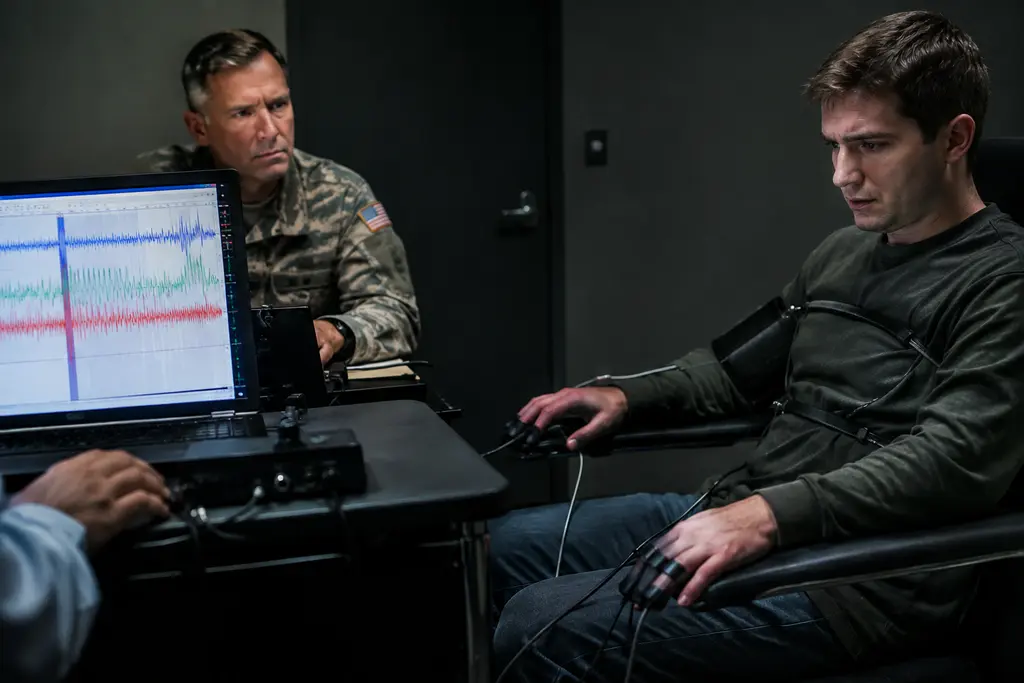
Military Polygraph Testing gained wider attention after the August 2026 Joint Staff leak probe, but the useful lesson for HR and integrity teams is not that polygraphs deliver certainty. The stronger lesson is that any testing program tied to workplace conduct needs a defined purpose, fair procedures, careful records, and restraint in how results are interpreted.
The Joint Staff matter was a military case, not a private-sector HR case. Even so, it offers a practical example for employers that already use sensitive-access controls, internal investigations, or integrity screening in regulated settings. A polygraph may support an inquiry when it is lawful and properly scoped, but it should not replace corroborating evidence, interviews, document review, and consistent workplace policy.
Why Military Polygraph Testing Expanded In 2026
Public reporting described the August 2026 Joint Staff probe as unusually broad. Roughly 50 officers and civilian employees were given polygraph tests in a leak investigation involving suspected disclosures to journalists about reduced U.S. munitions stocks, including long-range missiles and Patriot missile interceptors, according to New York Times reporting. The same reporting said the Joint Staff had between 1,500 and 2,000 officers and officials, placing the August testing round at about 2% to 3% of that workforce.
That scale matters because workplace integrity programs often expand after leaders perceive a serious information-security failure. A targeted inquiry can become a signal to the broader workforce: sensitive information is being protected, access duties are being reviewed, and leadership is prepared to use available tools. The risk is that scale can also create anxiety if employees do not understand why they were selected, what questions were asked, how records were handled, and what the result could mean.
Military Polygraph Testing In A Narrow Probe
Military Polygraph Testing in the Joint Staff matter appeared tied to a defined leak concern rather than general performance management. That distinction is essential. A credible workplace process should start with the question under investigation, not with a desire to test as many people as possible. In practice, that means identifying the information at issue, who had access, what policies applied, what non-polygraph evidence exists, and whether testing would add information that cannot be obtained through less intrusive steps.
For HR teams, the narrowness of purpose is a trust safeguard. Employees may accept difficult investigative steps more readily when the organization can explain the business need in clear terms. They are less likely to view a process as fair if the scope shifts during the inquiry or if testing appears detached from evidence.
A Broader Proposal Before The August Tests
The August 2026 probe also followed earlier policy discussion. A 2025 Pentagon proposal, reported on October 1, 2025, would have required random polygraph testing for personnel in the Office of the Secretary of Defense and the Joint Staff and would have required nondisclosure agreements for more than 5,000 uniformed personnel, civilian employees, and contractors, according to Washington Post reporting.
That earlier proposal shows the difference between an investigation-based test and a recurring screening program. The ethical questions are not identical. A specific investigation asks whether a tool can help answer a defined question. A random testing program asks whether ongoing deterrence and security benefits justify routine intrusion into employee privacy. Both require governance, but the second requires even more clarity about selection criteria, frequency, permissible uses, and record protection.
Joint Staff Facts That HR Should Read Carefully
The Joint Staff case has been discussed in public as an example of increased use, but HR leaders should resist treating it as a simple success story. The confirmed facts show scale, seriousness, and senior-level concern. They do not, by themselves, prove that testing identified a leaker, improved morale, or resolved the underlying information-control problem.
That caution is not anti-polygraph. It is a professional standard. Good workplace integrity work separates what is known from what is inferred. The reported facts support a narrower claim: the case demonstrated how polygraph testing can be mobilized quickly inside a high-security organization after a suspected disclosure, and how that mobilization raises practical trust questions for any employer considering a similar tool.
What The Numbers Suggest
Testing about 50 people out of a staff of 1,500 to 2,000 suggests a selected group rather than universal testing. That selection may have been tied to access, role, or investigative need, though the public facts available here do not establish the exact criteria. In a workplace program, selection criteria should be documented before testing begins. Without that record, employees may suspect favoritism, retaliation, or reputational targeting even when the employer had legitimate reasons.
A practical integrity program should also record why other employees were not tested. That may sound administrative, but it helps show that the process was evidence-led. It also gives decision-makers a way to review whether the scope was too broad, too narrow, or unsupported by the facts known at the time.
What The Word “Unprecedented” Should And Should Not Mean
As of September 4, 2026, officials described the August polygraph sweep as unprecedented in modern history because of the size involved and the senior ranks affected. That description signals importance, but it should not be read as proof of effectiveness. Unusual action can be justified by unusual risk, yet unusual action also calls for stronger internal controls.
For employers, the word “unprecedented” should prompt questions rather than applause. Who approved the process? Was the scope documented? Were employees informed of the purpose? Were results reviewed alongside other evidence? Who could access the records? A high-stakes inquiry is precisely where procedure matters most.
Integrity Benefits Without Overclaiming Certainty
A polygraph records physiological responses associated with stress and arousal during a structured examination. Those responses may provide investigative leads or support follow-up questioning, but they are not a direct reading of truth. Treating a result as one piece of information is more defensible than treating it as a standalone verdict.
This is where workplace “success” should be defined carefully. A successful process is not one that guarantees a confession or proves deception without error. A successful process is one that helps an organization ask better questions, protect sensitive information, narrow investigative focus, and maintain fairness under pressure.
What The Process Can Support
In appropriate settings, polygraph services can support integrity programs by clarifying the subject matter of an inquiry, encouraging employees to review their own conduct, and creating a structured record of questions asked and answers given. They can also help investigators prioritize follow-up when multiple people had access to the same sensitive information.
That support is strongest when the examiner’s role is limited and transparent. The examiner should not become the decision-maker on discipline, clearance, or employment status. Management should evaluate the full record, including documents, access logs, witness interviews, policy language, and any explanation offered by the employee.
What The Process Cannot Prove Alone
No ethical program should promise that a polygraph can identify truth with certainty. It also cannot repair a weak policy, unclear classification rule, poor access control, or a culture where employees fear raising concerns. If the surrounding system is disorganized, testing may create the appearance of action while leaving the root problem untouched.
That is why I often advise employers to view testing as a narrow supplement, not the center of the integrity program. The same principle applies to public interpretation of the Joint Staff probe. The fact that testing occurred is meaningful; the fact that it occurred does not answer every question about fairness, effectiveness, or long-term trust.
Governance Safeguards For Workplace Use

Employers that consider any form of polygraph-related process should begin with governance. Legal rules vary by jurisdiction and sector, and this article is not legal advice. From an ethics and HR practice standpoint, however, several safeguards are consistently relevant.
- Define the purpose. State the specific incident, access concern, or integrity question before testing begins.
- Limit the scope. Questions should stay connected to the stated purpose and should not become a general search for unrelated misconduct.
- Document selection criteria. Keep a clear record of why each person was included or excluded.
- Protect records. Results and related notes should be shared only with people who have a valid need to know.
- Use corroboration. Treat results as one input, reviewed with independent evidence.
- Plan employee communication. Explain the process in plain language without overstating accuracy or outcomes.
Scope, Notice, And Records
Military Polygraph Testing should remind HR teams that procedure is not paperwork for its own sake. Scope, notice, and record controls are how an organization shows that a serious inquiry has not become arbitrary. Employees do not need every investigative detail, but they do need enough information to understand the nature of the process and the boundaries around it.
For readers comparing workplace integrity coverage across public-interest sites, related network publications such as Old Norse News can serve as a reminder that responsible analysis depends on separating documented facts from assumption. The same discipline should apply inside an organization before leaders act on sensitive allegations.
Trust After Testing
The period after testing is often overlooked. Employees who were tested may wonder whether the result will follow them, whether colleagues will learn about it, or whether silence means suspicion remains. Leaders should decide in advance how they will close the loop, how they will handle inconclusive information, and how they will correct records if later evidence changes the interpretation.
For a related discussion of military leak inquiries and practical safeguards, see this analysis of Pentagon polygraph testing lessons. The common thread is that trust is easier to preserve when organizations set boundaries before pressure rises.
Military Polygraph Testing And Workplace Trust
The Joint Staff leak probe showed how quickly a high-security workplace can turn to polygraph testing after a suspected information breach. It also showed why employers should avoid simple narratives. A large testing round may demonstrate seriousness, but seriousness is not the same as fairness or effectiveness.
Military Polygraph Testing offers its strongest workplace value when it is used with restraint: a defined question, a lawful basis, qualified administration, careful records, and decision-makers who understand the limits. The real success story is not the idea that a test can settle every doubt. It is the more practical lesson that integrity programs earn trust by being clear about what they know, what they do not know, and how each decision will be reviewed.