
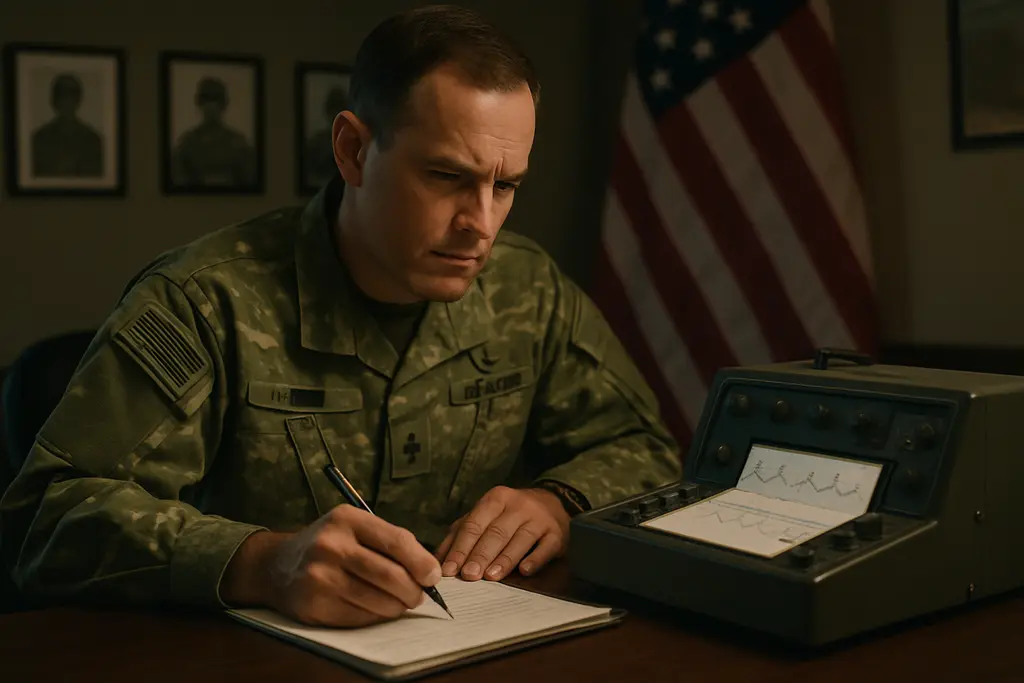
Polygraph transparency matters most when testing is used in high-pressure settings where careers, clearances, discipline, or institutional trust may be affected. The recent U.S. military examples described in public reporting, including the August 2026 leak inquiry involving about 50 Joint Staff military and civilian personnel, show why procedure is not a secondary issue. If examinees, supervisors, and reviewing officials cannot explain who was selected, what questions were relevant, how consent was handled, and how results were weighed, the test can become a source of doubt rather than a tool for fact-finding.
That point does not require treating every polygraph program as improper. Polygraph examinations are used in national security, law enforcement, and sensitive workplace contexts. The practical concern is narrower and more important: a physiological test should not be presented as a stand-alone verdict. Clear rules, documented decisions, and independent review help separate appropriate use from coercive or poorly controlled use. The same principle applies outside government, including private-sector integrity programs, where policy language and employee communication often determine whether testing is seen as fair.
Why Polygraph Transparency Matters In Military Testing
Polygraph Transparency Begins Before Consent
Consent is meaningful only when the person has enough information to understand the examination. In the military context, U.S. law requires safeguards for polygraph use, including written consent, notice of the right to legal counsel, question relevance to the inquiry, program monitoring, and reporting to Congress under 10 U.S.C. § 1564a. Those requirements point to a larger operational lesson: transparency is not a public-relations preference; it is part of the control system that makes the practice reviewable.
In an investigation, officials may have legitimate reasons to protect sensitive facts. That does not mean the process should be opaque. A well-structured examination can still tell the examinee the purpose of the test, the general subject matter, the right to seek counsel where applicable, the fact that questions must be relevant, and how post-test statements or admissions will be recorded. The practical test for polygraph transparency is whether an independent reviewer could later reconstruct the decision path without relying on memory or authority alone.
Recent Military Practice Shows The Trust Problem
The August 2026 Joint Staff testing episode was reported after media stories about depleted U.S. munitions connected to the war with Iran. Public accounts described a broad leak investigation and noted that the Defense Department had not released full details about who was selected, what questions were asked, or what employment consequences followed. Because those details remained limited, outside observers could not fully assess fairness, proportionality, or whether similarly situated personnel were treated consistently.
That gap is where trust declines. Employees may comply because refusal carries perceived risk, yet still believe the process is being used to pressure rather than clarify. Leaders may view the same test as a necessary security measure. Without documented selection criteria, question relevance, and consequence rules, both sides can talk past each other. For a related discussion of military leak inquiries and employee confidence, see this analysis of Pentagon polygraph testing.
What A Transparent Polygraph Program Should Document
Selection Criteria And Question Scope
Selection criteria should be written before testing begins. In a leak inquiry, for example, the relevant group might be defined by access to the information, timing, distribution lists, document handling, or other case-specific factors. A transparent program does not need to disclose classified facts to everyone involved, but it should record why each person fell within the testing pool. That record protects examinees and decision-makers alike.
Question scope deserves the same discipline. Polygraph questions should connect to the stated purpose of the examination. Overbroad questioning can create unnecessary personal exposure, increase anxiety, and weaken confidence in the result. Narrow questioning, by contrast, helps keep the examination tied to the investigative need. In workplace settings, this is also a communication issue: employees should know that relevant questions are not the same as unlimited questions.
Records, Admissions, And Follow-Up Review
Documentation is not only about the chart result. It should cover pre-test notices, consent forms, the question list, any admissions, examiner notes, quality control review, and how the information was used. A 2024 Department of Justice Inspector General audit of the Drug Enforcement Administration’s polygraph use from January 2017 through September 2023 found gaps involving documentation of failure-rate comparisons, uneven reporting of admissions, and limited comparative analysis of effectiveness against other methods in pre-employment and foreign vetting processes, as detailed in the DEA polygraph audit.
Although that audit did not concern the military, it offers a useful caution for any agency or employer. If results, admissions, and comparison data are not tracked consistently, leaders cannot credibly assess whether the program is improving decisions or merely adding pressure. Polygraph transparency therefore depends on records that permit later review. A test may be professionally administered on the day of examination, yet still be weak as a governance tool if the surrounding documentation is incomplete.
Reliability Concerns Require Cautious Use
Physiology Is Not A Direct Measure Of Truth
A polygraph records physiological responses such as respiration, cardiovascular activity, and skin conductance. Those measurements can be relevant to an examination, but they do not directly display truth or deception. Public criticism of recent government testing has focused partly on reliability because false positives and false negatives can occur depending on context, examiner practice, question design, and examinee condition. That is why a result should be treated as one investigative data point, not as a self-executing finding.
Transparent programs acknowledge this limitation in policy language. They avoid promising certainty, avoid using charts as a substitute for corroboration, and build review steps before employment or disciplinary action is taken. In workplace integrity matters, the safest decision process compares the polygraph information with documents, access logs, witness accounts, timelines, and any voluntary statements. The more serious the consequence, the more important independent support becomes.
Pressure Can Distort Both Process And Perception
High-pressure settings create special risk. If an examinee is brought into an intimidating setting, given little explanation, and told the test is the only path to prove innocence, the process can feel coercive even if an examiner follows technical steps. That perception matters because institutional integrity relies on more than rule compliance. It requires confidence that procedures are not being used to force admissions, punish dissent, or create a record after a decision has effectively been made.
Plain-language documentation helps reduce that risk. Policy teams can benefit from reviewing how other sectors explain sensitive processes to non-specialist audiences; related resources such as the writing-service comparison resource can be useful for thinking about clarity, structure, and audience expectations, though polygraph policies still require qualified legal and operational review. Clear writing will not fix an unfair process, but unclear writing can make a fair process appear suspect.
Practical Safeguards For Workplace Integrity Programs

Controls That Support Fairness
Employers and agencies considering polygraph examinations should begin with purpose, authority, and proportionality. The examination should answer a defined question that cannot be handled more appropriately through less intrusive means. The organization should also decide in advance who may authorize testing, how examinees will be notified, what records will be kept, and who reviews examiner conduct. These are governance decisions, not technical afterthoughts.
- Use written consent and clear notice before the examination, subject to applicable rules.
- Limit questions to the stated investigative or screening purpose.
- Record selection criteria so similarly situated people are treated consistently.
- Separate examiner findings from final employment or security decisions.
- Require corroboration before serious adverse action is considered.
- Track outcomes, admissions, and review findings so program effectiveness can be assessed.
These safeguards do not make testing error-free. They make decisions more reviewable. That distinction is central to polygraph transparency because the goal is not to remove every dispute; it is to create a record that lets reasonable reviewers see what happened, why it happened, and whether the process stayed within defined limits.
Communication With Examinees And Teams
Communication should be direct and restrained. Examinees should not be told that a polygraph can prove guilt or innocence with certainty. Supervisors should not imply that an inconclusive or unfavorable result automatically resolves the matter. Human resources, security, and compliance teams should use consistent language that describes the examination, the rights or options available under applicable rules, and the role of other evidence.
This is not legal advice, and specific obligations can vary by setting. Still, the operational lesson is clear: a program that cannot explain itself should not expect trust from the people subject to it. The military examples from 2025 and 2026 show that secrecy around selection, frequency, contest procedures, and consequences can become as damaging as the underlying leak concern. A fair process should be able to protect sensitive information while still giving participants a clear account of the rules.
Military Polygraph Transparency Standards In Practice
A Practical Standard For Leaders
Military and workplace leaders should judge a polygraph program by a simple standard: can the organization show lawful authority, informed consent, relevant questions, qualified administration, documented review, and careful limits on how results are used? If the answer is no, the program needs correction before it is expanded. If the answer is yes, the organization is still responsible for explaining limits and avoiding claims of certainty.
The recent military practices are a reminder that sensitive missions do not remove the need for accountability. They increase it. Polygraph transparency gives leaders a way to protect investigations without treating personnel as obstacles to be managed. It also gives examinees a clearer basis for understanding what is being asked of them and how the information may be used. In high-stakes settings, that balance is not just good procedure; it is a practical condition for institutional trust.