

A suspicious betting pattern, an unexpected result and an athlete denying wrongdoing can create a difficult problem for sports investigators. A polygraph test may seem like a way to settle the dispute, but a lie-detector result cannot independently establish that a match was fixed.
Polygraphs measure physiological responses during questioning. They do not directly detect dishonesty, identify who placed suspicious wagers or establish whether an athlete deliberately manipulated a sporting event. Those conclusions require evidence connecting individual conduct to an alleged integrity breach.
The distinction also matters when assessing the credibility of betting businesses. Someone researching Why pick BetOnline? may encounter information about betting markets, withdrawals, identity verification and customer complaints. Those are useful consumer considerations, although a commercial review cannot independently guarantee an operator’s reliability. Determining whether a sporting contest was manipulated requires a different investigation, focused on betting activity, communications and the actions of those involved.
The question is not whether polygraphs have any investigative value. It is whether their findings can contribute reliable information that investigators cannot obtain more directly.
Why Lie-Detector Tests Entered the Match-Fixing Debate
The suggestion that polygraph testing could help combat sports corruption is not new.
In July 2011, former Australian cricket captain Steve Waugh publicly supported considering voluntary lie-detector testing as part of cricket’s response to match-fixing concerns.
Waugh, then a member of the Marylebone Cricket Club’s World Cricket Committee, underwent a polygraph examination intended to demonstrate that he had not participated in cricket corruption.
The MCC announced that he had passed the examination. Waugh argued that voluntary participation could help restore confidence in the game and potentially deter dishonest behavior.
The proposal followed a period of intense scrutiny surrounding corruption in international cricket, including the 2010 Pakistan spot-fixing scandal.
However, Waugh’s reported result was not independent scientific validation of the technique, nor did it establish that polygraph testing could reliably identify athletes involved in match manipulation.
The proposal was controversial because physiological reactions can have multiple explanations, and the potential consequences of an incorrect interpretation are serious.
The historical episode illustrates a tension that still exists in sports integrity investigations: officials may want an immediate credibility assessment, while the evidence necessary to establish wrongdoing takes longer to collect and evaluate.
How Match-Fixing Investigations Actually Develop
Match-fixing, sometimes called competition manipulation, involves deliberately influencing an event or part of an event to obtain an improper advantage or benefit.
The manipulation does not necessarily determine the final score.
An individual might attempt to influence a specific passage of play, disclose confidential team information or arrange an incident that affects a particular betting market.
That makes modern sports integrity investigations increasingly dependent on information from different organizations.
A suspicious betting alert might be the starting point, but it is not the final finding.
Betting activity provides an early warning
Integrity monitoring systems examine betting information for unusual activity.
Investigators may examine changes in wagering volume, timing, market movement and other available transactional information.
An unexpected pattern could justify further investigation, especially where activity appears inconsistent with the surrounding sporting circumstances.
Yet unusual betting is not automatically evidence of corruption.
Market prices can change because of legitimate developments, including team announcements, injuries, changes in expected performance or newly available information.
Investigators must therefore determine whether an alert has an innocent explanation before treating it as evidence of intentional manipulation.
Financial and digital records can identify connections
The next investigative stage may involve identifying accounts associated with unusual betting and examining whether relevant individuals had access to confidential information.
Depending on lawful access and the available evidence, investigators may review financial transactions, communications, account records and relationships between participants.
For example, a suspicious wager placed shortly before a match might become more significant if independently verified communications establish a connection between the account holder and someone with inside information.
Without that connection, the timing of a wager may remain ambiguous.
Interviews help establish conduct and intent
Interviews remain important because records do not always explain why someone acted.
An athlete may have received an improper approach but rejected it. A staff member may have disclosed confidential information without understanding its potential use.
Investigators need to distinguish those situations from knowing participation in corruption.
The objective should be to compare accounts with independently established facts, not simply decide which person appears more convincing.
The strongest finding comes from evidence that supports an explanation, rather than confidence in one investigative technique.
What Polygraph Tests in Match-Fixing Investigations Can Actually Establish
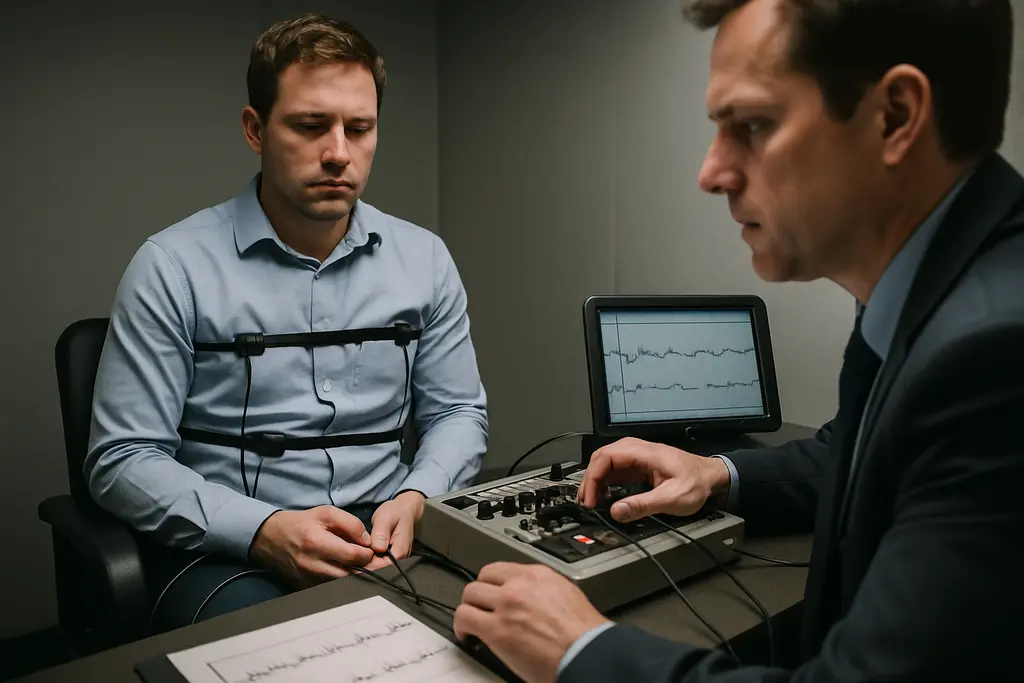
A traditional polygraph examination measures physiological activity associated with processes such as breathing, cardiovascular responses and skin conductance.
The examiner evaluates patterns recorded during structured questioning.
These measurements can be influenced by psychological and physiological factors other than dishonesty.
An athlete accused of serious misconduct may experience significant anxiety because the allegation threatens a career or reputation, even if the accusation is false.
Conversely, the absence of a distinctive physiological response does not prove that an examinee is truthful.
The scientific evidence supports a cautious interpretation.
The US National Research Council’s 2003 examination of polygraph research concluded that specific-incident testing can distinguish truthful from deceptive examinees at rates above chance under certain studied conditions, but substantially below perfect accuracy. It also identified significant limitations when laboratory findings are applied to real investigations.
This matters particularly in sporting cases, where the questions may concern several people, multiple events and disputed motives.
A narrowly structured polygraph examination might contribute information during an investigation where testing is lawful and appropriate.
It cannot independently demonstrate that suspicious wagers were placed by a particular person, that a player intentionally underperformed or that a sporting result was corrupted.
Polygraphianz’s existing explanation of how accurate polygraph tests are provides further background on the distinction between recorded physiological activity and conclusions about deception.
A Practical Example: Suspicious Bets Before a Football Match
Consider a hypothetical second-division football match.
Shortly before kickoff, betting analysts notice an unusually large concentration of wagers involving one team.
During the game, that team performs unexpectedly poorly. An investigation begins, and one player denies having any involvement in manipulating the result.
A polygraph might appear useful because investigators are dealing with conflicting explanations.
But the more valuable starting point is to examine the available records.
Investigators would need to determine whether the betting activity was genuinely unusual, which accounts were involved and whether any relevant communications or financial connections existed.
They would also need to examine ordinary sporting explanations for the result.
Perhaps the team was missing important players. Perhaps a tactical change affected performance. Perhaps bettors responded to legitimate information before the match.
Now imagine the player undergoes a polygraph and receives a result interpreted as indicating deception.
That result would not resolve those possibilities.
It would not establish that the player communicated with a betting syndicate, received money or deliberately influenced the match.
The reverse is equally important.
A result interpreted as showing no deception would not erase independently verified evidence of payments, communications or prohibited betting activity.
This illustrates why polygraph findings should not determine the outcome of a sports corruption case by themselves.
Sports Integrity Investigations Need More Than a Betting Alert
Sporting authorities increasingly recognize competition manipulation as a problem requiring cooperation among regulators, governing bodies, betting operators and law enforcement.
In Australia, Sport Integrity Australia’s competition manipulation and sports wagering framework explains how different organizations coordinate their response to betting-related threats.
The agency identifies a range of prohibited behaviors beyond deliberately fixing a result.
Depending on the applicable sporting rules, these can include misuse of inside information, prohibited betting by participants, bribery and failure to report corrupt approaches.
The distinction is important because not every sports integrity violation requires proof that a match’s final outcome changed.
An athlete who shares confidential information with someone intending to use it for betting may breach relevant rules even when the match itself proceeds normally.
Similarly, participating in a prohibited betting arrangement may create disciplinary consequences without proof that an athlete intentionally altered the result.
Investigations must therefore identify the particular allegation before determining which evidence is necessary.
Australia’s National Integrity Framework policies were updated in July 2026. Sports that have adopted the updated framework apply those provisions, while others may continue operating under earlier arrangements during the transition period.
A sporting organization should establish which policy applies before pursuing disciplinary action.
This is another reason a generic lie-detector examination cannot replace a properly defined investigative process.
The relevant question may concern an undisclosed approach, a prohibited wager or the sharing of inside information rather than whether the athlete fixed a match.
Why Voluntary Polygraph Testing Still Raises Ethical Questions
Supporters of polygraph examinations sometimes argue that voluntary testing provides an opportunity for someone facing an allegation to demonstrate cooperation.
In theory, an athlete who agrees to testing may believe it offers a way to answer questions that remain unresolved.
However, voluntary participation can become complicated when professional pressure is involved.
A player may worry that refusing an examination will be interpreted as suspicious, even where the test is not required and its results have recognized limitations.
This creates three important safeguards for organizations considering such examinations.
First, the legal and contractual basis for testing must be established. Permission to conduct a polygraph cannot be assumed simply because an investigation concerns integrity.
Second, participants need a clear explanation of the procedure, intended use of the results and potential limitations.
Third, investigators must avoid treating refusal, an inconclusive result or an unfavorable interpretation as automatic proof of misconduct.
The protections available may vary between countries, professional leagues, governing bodies and employment arrangements.
Any examination must comply with the relevant rules and should be considered only alongside properly gathered independent evidence.
Separating Operator Trust From Match Integrity
Another important distinction concerns the responsibilities of betting operators.
A sportsbook may have procedures for customer identity verification, account security, wager settlement and complaint handling.
Those procedures are relevant to consumer protection and financial accountability.
Sports integrity investigations require something additional: the ability to recognize potentially suspicious activity and, where appropriate and legally permitted, share relevant information with authorized investigators.
Neither function alone guarantees that a sporting event is free from manipulation.
An operator might process legitimate customer withdrawals properly while still encountering suspicious activity connected to an event.
Likewise, a betting alert could arise in a market without proving that the operator or any athlete acted dishonestly.
Maintaining this distinction helps prevent accusations from being directed at people or businesses without supporting evidence.
For consumers, the practical approach is to examine an operator’s rules, regulatory position, complaint procedures and available payment protections.
For sports investigators, the priority is to establish the actual conduct behind the suspected manipulation.
These are related questions about trust, but they require different kinds of proof.
The Future of Match-Fixing Investigations Is Evidence-Led
Advances in betting analytics, financial monitoring and digital investigation can help sporting authorities identify concerns that might otherwise remain hidden.
However, improved detection does not automatically establish wrongdoing.
An unusual betting pattern is an investigative signal. A physiological reaction is a measured response. An allegation is a claim that must be examined.
Each may justify further inquiry, but none should be treated as conclusive evidence without appropriate corroboration.
Polygraph tests may still have a limited role in carefully defined investigations, subject to scientific, legal and ethical safeguards.
Their usefulness depends on the circumstances, the questions being examined and the availability of independent supporting evidence.
The most credible approach to match-fixing allegations is therefore not to replace one uncertain judgment with another.
It is to construct a defensible account of what happened, who was involved and what the evidence actually establishes.
A polygraph may raise questions. Betting records, communications and corroborated investigative findings are what can help answer them.