

Ever wonder if that lie detector test is more science fiction than science fact? Let’s pull back the curtain on the truth machine.
The American Polygraph Association claims near-perfect results. Their 2011 meta-analysis of 38 studies shows 85-89% success rates for validated techniques.
But here’s the catch: they’re basically grading their own homework. These exams measure sweaty palms and racing hearts – not some Minority Report-style precrime detection.
Yet employers and law enforcement treat these results like gospel. They make life-altering decisions based on what amounts to emotional weather forecasting.
The real question isn’t whether polygraphs work. It’s whether we trust our futures to technology about as reliable as predicting sunshine in Seattle.
Review of Scientific Studies
If scientific research were Hollywood, polygraph studies would be like a franchise that keeps getting rebooted. Each version has the same basic idea but with new faces and endless debates about its accuracy.
The American Psychological Association’s meta-analysis is like a thriller novel’s data appendix. It includes 38 studies, 32 samples, 45 experiments, 295 scorers, and 11,737 scored results from 3,723 examinations. This is a lot of data that could make even the most enthusiastic statistician weak in the knees.
Now, the plot thickens: 13% of these results were inconclusive. Imagine a restaurant where 13% of meals might be secretly poisoned, yet it expects a Michelin star. That’s the level of confidence we’re dealing with here.
The National Research Council’s 2003 findings are similar. But similarity doesn’t mean accuracy. It’s like two people agreeing the earth is flat – consensus doesn’t make it true.
When we look at the error rate, something fascinating emerges. The real issue might be how we interpret these studies, not the polygraphs themselves. Researchers have been debating polygraph validity for 80 years, with judicial opinions and government debates piling up like medical school debt.
What does this mean for real-world use? The error rate is concerning, mainly because of false positives. These are innocent people flagged as deceptive. It’s like a smoke detector that goes off every time you toast bread.
The controversy over polygraph validity isn’t just about numbers. It’s about whether we’re measuring truth or just physiological responses to stress. The difference is more important than most people think.
Looking at the data as a whole, we see patterns. The inconclusive rates create a gray area where certainty dies. This uncertainty factor makes it hard to do clean statistical analysis.
Ultimately, the scientific community is split. Some see promise in the technology, while others view it as modern phrenology. It’s dressed up with wires and sensors but is equally questionable in its basic ideas.
The real error rate discussion isn’t just about numbers. It’s about understanding what these machines measure versus what we want them to measure. The gap between what we expect and what we get is where the most interesting science happens.
What Factors Affect Accuracy?
Think of your polygraph examiner as a master sommelier, but instead of swirling fine wine, they’re tasting your autonomic nervous system. The catch? Your body might be serving up a questionable vintage thanks to yesterday’s espresso martinis or this morning’s anxiety medication.
The reliability of polygraph tests depends on more variables than a NASA launch sequence. We’re talking about a perfect storm of psychological, physiological, and human factors that can turn truth-tellers into apparent liars.
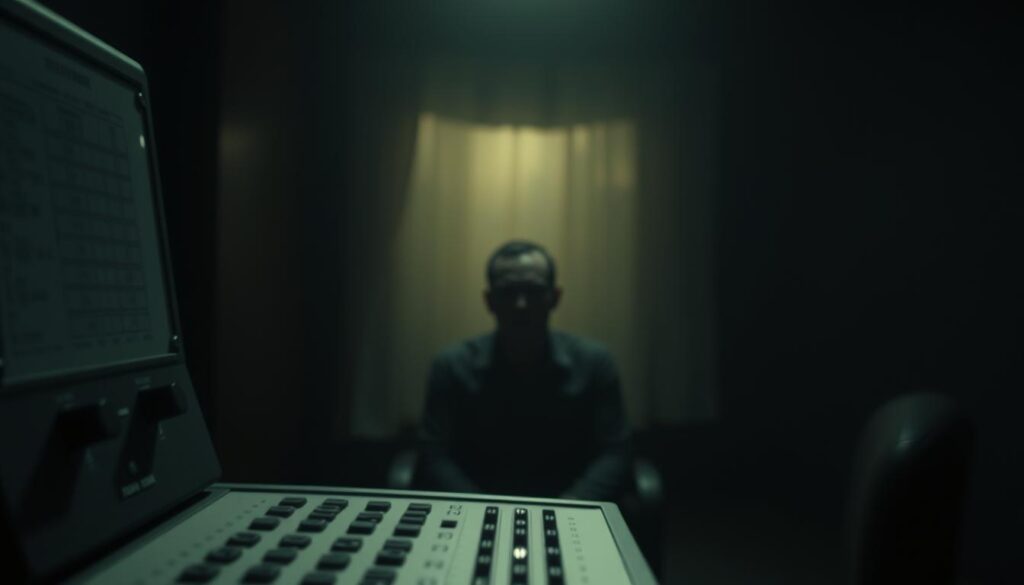
Your mental state plays quarterback in this game. Anxiety isn’t just uncomfortable—it can mimic deception patterns on the charts. Even innocent people get nervous when hooked up to machines that could determine their future.
Stress acts like static on the line between truth and false positives. The mere act of being tested creates psychological pressure that affects physiological responses.
Physical Factors and Medical Conditions
Your body’s chemistry lab might be working against you. Certain medications and conditions directly impact the autonomic nervous system—the very system polygraphs measure.
Parkinson’s disease, alcohol use disorder, and nicotine addiction can all send mixed signals. Even cholinesterase inhibitors (used for Alzheimer’s and myasthenia gravis) can throw the results curveball.
It’s like trying to read a sundial during an eclipse—the tools weren’t designed for these complications.
The Examiner Variable
Are you getting a seasoned professional or someone who just binge-watched detective shows? Examiner experience makes a massive difference in interpretation accuracy.
Human judgment enters the equation at multiple points: question formulation, baseline establishment, and chart interpretation. Each step introduces possible bias or error.
| Factor Category | Specific Examples | Impact on Reliability |
|---|---|---|
| Psychological | Anxiety, stress, nervousness | High – can create false positives |
| Medical Conditions | Parkinson’s, heart conditions | Moderate to High – affects nervous system |
| Substances | Alcohol, nicotine, caffeine | Moderate – alters physiological responses |
| Medications | Cholinesterase inhibitors, beta-blockers | High – directly impacts measurements |
| Examiner Factors | Experience, training, bias | Variable – critical for interpretation |
The OTA study on polygraph validity confirms that these factors significantly impact test reliability. It’s not just about lying or truth-telling—it’s about untangling a web of physiological responses that might have completely innocent explanations.
So the next time someone suggests a polygraph test, remember: you’re not just testing truthfulness. You’re testing how well your nervous system behaves under pressure while accounting for everything from your medical history to your examiner’s coffee break.
Comparing Polygraph to Other Methods
Lie detection is like picking from a bunch of unreliable options. Our legal system uses evidence in a way that’s hard to understand. It’s like a friend who thinks organic ketchup is better, but they’re eating fries.
In 1993, the Daubert ruling set standards for scientific evidence. These include practicality, peer evaluation, known error rates, and general acceptance. Polygraphs often struggle to meet these standards, while other methods pass easily.
Psychiatric predictions of dangerousness are another issue. The Supreme Court said these predictions are not very accurate. Yet, they can greatly affect sentencing and change lives.
Jury intuition is also a concern. It’s seen as very reliable, but studies show it can be influenced by biases. This can lead to unfair sentences, like giving a pretty defendant a lighter sentence.
| Method | Estimated Accuracy | Daubert Compliance | Common Use Cases |
|---|---|---|---|
| Polygraph Testing | 65-85% (highly contested) | Often excluded | Employment screening, law enforcement |
| Jury Intuition | No reliable metrics | Not applicable | Criminal trials, civil cases |
| Psychiatric Predictions | 50-60% (coin flip range) | Rarely challenged | Sentencing, parole decisions |
| Behavioral Analysis | 54-60% (studies vary) | Mixed acceptance | Security screening, interviews |
The real issue isn’t just about polygraph accuracy. It’s about our legal system’s uneven standards. We expect science from some methods but not others, based on tradition or convenience.
It’s like seeing a health inspector close a food truck for small issues. Yet, a fancy restaurant next door can serve raw chicken without a problem. This shows our discomfort with the fact that many “truth detection” methods are just guesses.
This issue matters because real consequences are at stake. Jobs are lost, cases are decided, and lives are changed based on these imperfect tools. By understanding these comparisons, we can demand better standards for everyone.
Talking about polygraph accuracy becomes more important when we see it in the context of human judgment’s fallibility.
Legal and Industry Standards
If polygraph standards were a marriage, they’d be on the brink of divorce. The American Psychological Association wants 90% accuracy, like a strict teacher. Critics say the real accuracy is closer to 64%, a mix of grade inflation and reality TV judging.
The APA’s 2010 Standards of Practice seem overly optimistic. They demand 90% accuracy, similar to requiring all restaurants to earn Michelin stars. The difference between what’s hoped for and what actually happens is staggering.
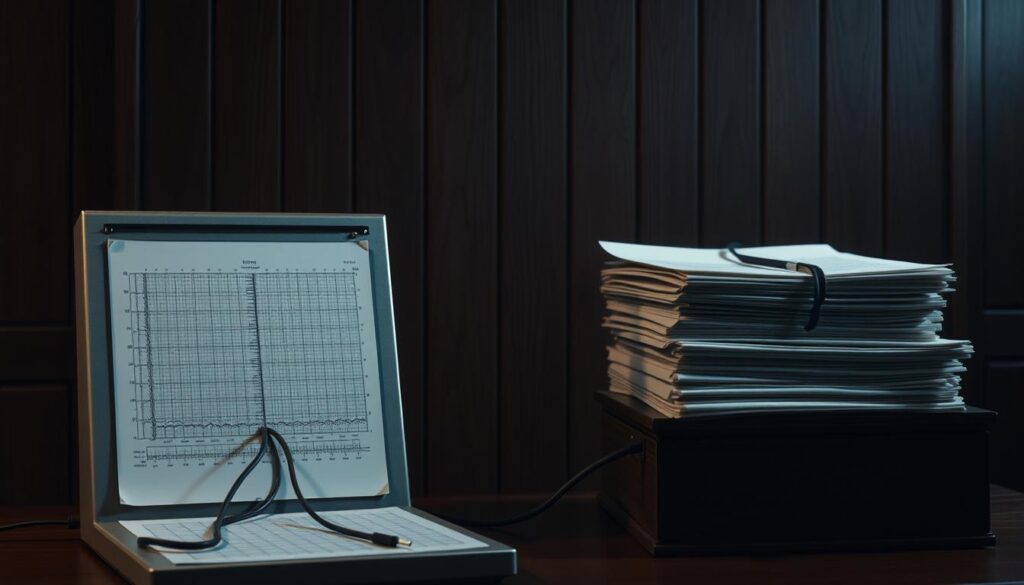
The legal world is like a patchwork quilt with unclear vision. The 1923 Frye case set a “general acceptance” test for polygraph admissibility. Courts have been debating it ever after, like philosophers discussing angels dancing on a pinhead.
Today, eighteen states plus DC have laws on polygraph use in jobs. This creates a complex regulatory maze. Some states ban them, while others see them as fun but not serious.
There’s no clear agreement on the error rate. Is it the APA’s 10% or the critics’ 36%? It depends on whether you’re selling or questioning polygraphs.
Using polygraphs for job screening is tricky in this legal landscape. The Employee Polygraph Protection Act of 1988 set some rules. But states have their own rules, leading to different outcomes.
The only thing consistent about polygraph standards is their inconsistency. This shows how little to take them seriously. They’re more like suggestions from an eccentric uncle than strict rules.
Steps to Improve Reliability
If polygraph reliability were a Broadway show, its improvement suggestions would be the understudy that never gets to perform. The industry’s proposed upgrades are like trying to teach a vintage Mustang to compete in Formula 1. You can add racing stripes and a spoiler, but the engine remains fundamentally outdated.
Let’s examine the three pillars of supposed improvement:
- Standardized testing procedures: Pre-test interviews, controlled in-test phases, and post-test analysis
- Examiner training requirements: APA-accredited education, supervised internships, professional network membership
- Technical enhancements: Better countermeasure detection and proper sensor calibration
On paper, these measures sound reasonable. In practice? They’re like putting a gourmet chef in a fast-food kitchen – the ingredients remain fundamentally limited. No amount of training can overcome the core issue: polygraphs measure physiological arousal, not deception itself.
The training requirements amuse me. Imagine requiring neurosurgeon-level credentials for someone interpreting sweat glands and heart rates. Does an APA accreditation suddenly make anxiety indistinguishable from deception? The emperor’s new clothes have never been more fashionable.
Countermeasure detection represents the ultimate arms race. For every technological advancement, there’s a countermove developed in some basement laboratory. It’s cybersecurity versus hackers, but with more sweating and less actual science.
True reliability improvement would require admitting that we might be trying to measure the unmeasurable. Until then, these “improvements” remain cosmetic changes to a fundamentally flawed concept.
The quest for better reliability reminds me of that friend who keeps trying to fix a toxic relationship with couple’s counseling. Sometimes, the foundation itself is the problem. No amount of communication can overcome fundamental incompatibility.
So where does this leave us? With a system that’s been polished, trained, and calibrated within an inch of its life – yet can’t reliably distinguish nervous truth-tellers from calm liars. The real step toward improvement might be the one the industry fears most: moving beyond polygraphs entirely.
Guidance for Employers
Thinking about using polygraph tests for hiring? It’s like asking a Magic 8 Ball for advice. The accuracy of polygraphs in work settings is shaky, like a weather forecast during a tornado.
That survey saying 96% of applicants would take a test? It’s not excitement, but desperation. People facing rent payments will agree to almost anything called “voluntary.” If you must use these tests, consider hiring APA members. It’s like getting diet advice from a soda company – it’s better than nothing.
Here’s the real advice: If your hiring process focuses on sweat instead of skills, you’re not evaluating candidates. You’re running a psychological thriller where the goal is to avoid false accusations. Instead, invest in better interview methods. Your company culture will appreciate it more than pseudo-science.