
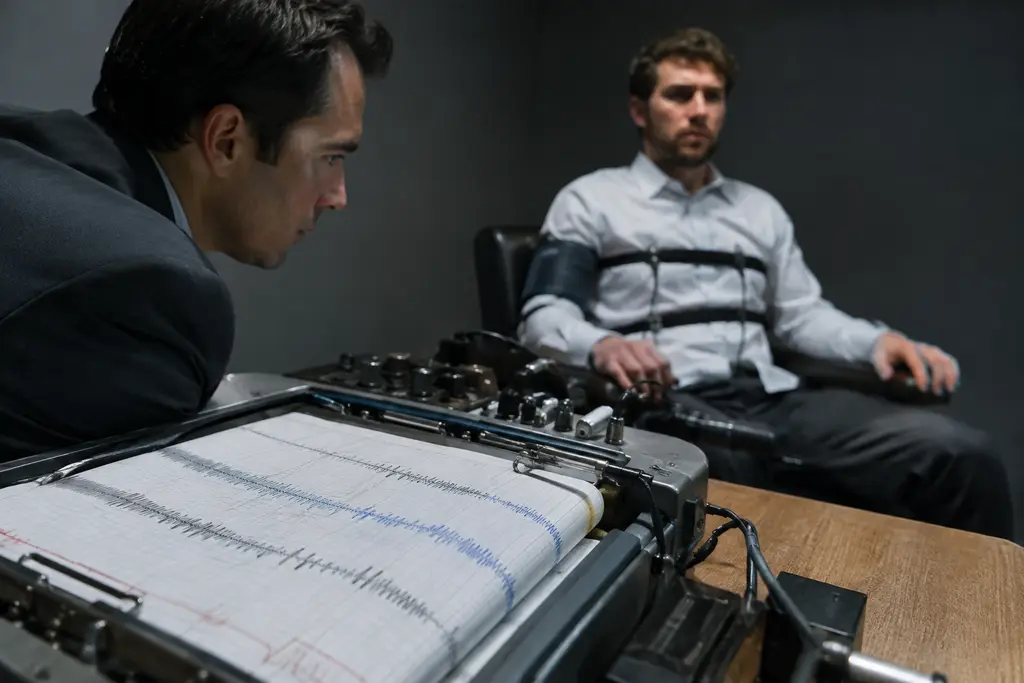
Federal polygraph testing received renewed attention after reports that Kurt Olsen, a Justice Department attorney, lost his DOJ security clearance in September 2026 after failing a polygraph exam. Reuters reported on October 7, 2026, that two people familiar with the matter said the failed exam played a key role in the clearance decision. Olsen disputed the idea that all clearance access had ended, saying he still held an active clearance from another federal agency, while the DOJ stated that he had no active clearance with the Department of Justice.
The case matters because it shows how a polygraph result can affect access to classified material without proving misconduct in the courtroom sense. It also shows why agencies and employers that use polygraph services need written procedures, careful interpretation, and restraint. A failed examination may trigger risk review, but it should not be treated as a standalone finding of dishonesty.
Federal Polygraph Testing And Clearance Consequences
What The Olsen Record Shows
According to the reported timeline, Olsen’s DOJ clearance was revoked in September 2026. On September 28, 2026, he stepped down from a Southern District of Florida investigation described in reports as a “grand conspiracy” matter. That work involved review of classified materials tied to intelligence assessments from former administrations and the Mar-a-Lago classified documents matter. After the clearance issue, Olsen remained employed as senior counsel in the DOJ’s Miami office, but he was no longer assigned to that probe.
Those facts are significant for clearance administration. A person may remain employed while losing access to a particular category of classified information. The practical effect can still be substantial: if the assignment depends on classified records, loss of a department clearance can limit participation even without criminal charges or a public finding that classified information was mishandled.
What Federal Polygraph Testing Can And Cannot Show
Federal polygraph testing records physiological responses during an examination. Those responses may give investigators information to assess, but they are not a direct measurement of truth. Legal experts cited in reporting on the Olsen matter noted that a failed polygraph alone does not necessarily prove misconduct. They also noted that polygraph results are generally inadmissible in most U.S. state and federal courts because of reliability concerns.
That distinction is central. Clearance decisions and courtroom proof use different standards and serve different purposes. A security office may act on risk indicators that would not be enough to prove wrongdoing in litigation. Yet that does not mean agencies should treat a failed test as decisive. Sound practice calls for corroboration, documented reasoning, and review of whether the examinee received a fair process.
Legal Standards That Shape Clearance Decisions
Regulatory Signals For Cooperation
Federal clearance rules allow agencies to consider cooperation with required procedures. Under 32 CFR § 155.6, failure or refusal to cooperate, including refusal to provide relevant information or failure to comply with security processing requirements, can support suspension or revocation of access to classified information under stated procedures in the federal clearance regulation. That does not make every adverse polygraph result a valid revocation on its own. It does show why participation, candor, and documented process matter in clearance review.
A 2009 Office of Legal Counsel opinion also reflects that polygraph examinations in federal service are not ordinary employment tools. They are tied to limited settings, such as applicants or employees in highly sensitive positions, intelligence or counterintelligence functions, or investigations involving serious administrative or criminal misconduct, as described in the Justice Department opinion. That framework helps explain why the Olsen matter sits closer to clearance governance than routine workplace screening.
For readers comparing federal practices with private employment limits, related analysis of polygraph employment rules may be useful. Private employers face different legal limits than agencies handling classified access, and treating the two settings as interchangeable can lead to poor policy decisions.
Practical Lessons For Federal And Corporate Employers
Use Results As One Input, Not A Verdict
The Olsen case shows how federal polygraph testing can become a gatekeeping factor for sensitive assignments. That is not the same as saying the test establishes misconduct. Employers and agencies should separate three questions: whether the test was authorized, whether the examination was administered under proper procedures, and whether the result is supported by other information.
Corporate integrity programs can learn from that distinction, even when they do not operate under federal clearance rules. A workplace investigation is stronger when polygraph services are used only within lawful boundaries, with informed consent where required, clear scope, and a record of why the test is relevant. The result should be weighed with documents, interviews, access logs, financial records, or other evidence when those materials exist.
- Define the business or security reason before scheduling an exam.
- Explain the scope of the questions and avoid unrelated personal inquiries.
- Record who reviewed the result and what other evidence was considered.
- Avoid public statements that imply certainty beyond what the evidence supports.
These safeguards reduce the risk that a polygraph result becomes a shortcut for a decision that should require fuller review. They also help employees understand the process, which can protect trust even when the outcome is unfavorable.
Procedural Fairness And Limits

Why Process Matters More Than A Single Data Point
A clearance decision may restrict access quickly when classified information is involved. Still, speed should not replace fairness. The reported Olsen facts show a practical consequence: he remained on the payroll but lost the ability to work on a matter requiring DOJ clearance. That type of employment effect makes procedural consistency essential.
Fair process does not mean an agency must ignore risk. It means the agency should be able to explain what procedure applied, what the examinee was asked to do, what result was obtained, whether the person had a chance to respond, and how the result connected to the access decision. In sensitive work, documentation protects both the agency and the employee.
For corporate users of polygraph services, a similar standard is prudent even when classified information is not involved. A policy that treats one exam as conclusive can expose an organization to claims of unfairness, poor investigation practice, or inconsistent discipline. A policy that treats the result as one piece of a larger record is easier to defend and easier to explain.
Readers interested in workplace integrity issues can further explore professional ethics topics through resources available at Wakefield Rep, a site known for covering ethics and accountability. The shared lesson is simple: trust depends on rules that people can understand before a dispute arises.
Federal Polygraph Testing After Olsen
The Olsen clearance matter should not be read as proof that every failed examination warrants removal from sensitive work. It should be read as evidence that polygraph outcomes can carry real employment and assignment consequences in federal security settings. On the reported facts, the DOJ said Olsen had no active department clearance, and that loss constrained his role in a classified investigation even though he remained employed.
Federal polygraph testing sits at the intersection of risk management, individual reputation, and access to classified information. The cautious lesson is not to reject the tool outright or to treat it as certain. The better standard is controlled use: clear authority, narrow scope, trained administration, corroborating evidence, and a written explanation of how the result affected the decision.
For federal agencies, the Olsen matter is a reminder that clearance actions should be consistent and reviewable. For corporate employers, it is a warning against importing federal security practices without understanding legal limits. Polygraph services can support integrity programs, but only when decision-makers acknowledge what the test can show, what it cannot prove, and why fair process must remain part of the record.