
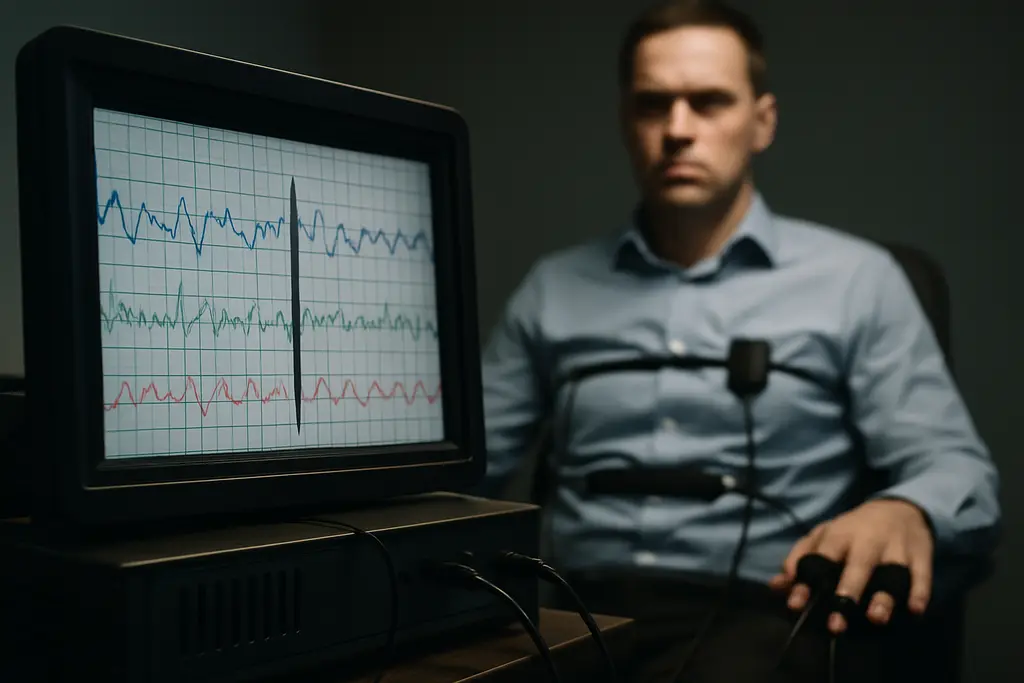
Polygraph Accuracy challenges deserve careful attention in workplace settings because the results can affect trust, reputation, and employment decisions. As a workplace ethics advocate, I see the value of structured questioning and professional examination standards, but I also see the harm that follows when a test result is treated as certainty. LegalClarity’s May 15, 2026 review of false positives and error rates gives HR leaders a timely reason to reassess how polygraph services are used, documented, and explained to examinees.
The practical question is not whether polygraph testing has any use. It is whether the evidence produced by an exam is strong enough for the decision being made, and whether the organization has safeguards for error, ambiguity, and human impact. That distinction matters most in screening, where a single flagged result may be asked to carry more weight than it can safely bear.
Polygraph Accuracy Findings From LegalClarity
What The Reported Numbers Say
LegalClarity reported on May 15, 2026 that a 2019 peer-reviewed study found the Comparison Question Test method had a false positive rate of about 17.8%, meaning nearly one in six truthful examinees were wrongly flagged as deceptive. The same review described laboratory studies of specific-incident tests as commonly reporting overall accuracy between 80% and 90%, while cautioning that field accuracy is almost certainly lower because real examinations involve higher stakes, less controlled settings, and more ambiguous questions. The review also reported that the Directed Lie Screening Test had a false positive rate around 14.6% and an inconclusive rate near 10%, based on meta-analytic data attributed to the American Polygraph Association LegalClarity accuracy review.
For HR teams, Polygraph Accuracy should be treated as a probability question, not a pass-fail label that resolves every concern. A useful result may support further inquiry, but a false positive can damage a truthful applicant or employee. An inconclusive result can also create uncertainty that managers may misread as suspicion rather than as a limitation of the method.
Why False Positives Matter At Work
False positives carry a distinct workplace ethics risk because they fall on people who may have done nothing wrong. If an employer relies too heavily on the result, a truthful person can lose an opportunity, face reputational harm, or be pressured into explaining physiological reactions that may have innocent causes. That risk does not mean every exam is unfair. It means the organization needs a policy that anticipates error before a case arises.
A sound policy defines the purpose of the exam, the question scope, the qualifications expected of the examiner, the process for documenting results, and the steps required before any adverse decision is considered. It should also explain how the organization handles inconclusive findings and contested interpretations. Without those controls, technical limits become management failures.
Why Screening Creates More Risk
Polygraph Accuracy In Screening Decisions
Screening differs from a specific-incident investigation because the test may be used to search broadly for undisclosed conduct, risk factors, or inconsistencies. LegalClarity reported that false positives in specific-incident testing cluster between 10% and 25%, while accuracy in screening applications almost certainly drops further. That distinction is central for HR because pre-employment or integrity screening often involves broad questions and people who may be anxious about the process even when truthful.
The base rate problem makes this risk easier to misunderstand. LegalClarity described a hypothetical agency with 10,000 employees and only 10 actual spies. Even if a test identified 80% of the actual spies, the number of false positives could still run into the hundreds or thousands, depending on the error rate. The lesson for employment screening is direct: when the condition being searched for is rare, even a test that performs above chance can flag many more innocent people than true cases.
Countermeasures And Motivation
LegalClarity also reported that physical or mental countermeasures can reduce detection of deception, especially in screening contexts or among highly motivated examinees, while evidence remains insufficient to reliably detect such tactics. For ethical HR practice, the most responsible response is not to share techniques or create an adversarial tone. The better response is to limit overreliance, strengthen examiner selection, and treat results as one element in a documented review.
Screening programs also require careful communication. Employees and applicants should understand the purpose of the exam, what categories of questions may be asked, how information will be stored, who may see the results, and what review process exists if the result is disputed. Trust suffers when the process feels secretive, open-ended, or disconnected from written policy.
HR Controls That Reduce Misuse
Policy Before Procedure
A workplace Polygraph Accuracy review should begin before any vendor is selected. The organization should decide whether the test is being used for a specific incident, a screening purpose, or a follow-up inquiry. Those categories should not blur. A broad screening result should not be treated like evidence from a focused investigation, and a focused investigation should not expand into unrelated personal questioning without a clear policy basis.
The DOJ Office of Inspector General released a 2023 management advisory memorandum about concerns in the Drug Enforcement Administration’s use of polygraph examinations in pre-employment vetting. The advisory described inconsistencies in how failed polygraph tests were used, including cases where some task force officers who failed exams remained in roles and some hires proceeded despite failures DOJ Office of Inspector General advisory. That finding is a management lesson as much as a testing lesson: if a workplace cannot explain how results affect decisions, the exam process may lose credibility.
- Define the exam purpose in writing before scheduling.
- Use qualified examiners and document the technique selected.
- Separate test interpretation from the final employment decision.
- Give examinees clear information about scope, privacy, and review steps.
- Require corroborating evidence before any serious adverse action.
Vendor Review And Professional Presentation
Vendor selection should focus on credentials, method disclosure, data handling, question design, and reporting practices. Brand presentation is separate from evidence quality; even related professional sites such as Finest Image remind HR teams that a polished public presence is not a substitute for transparent procedures and careful documentation.
Organizations comparing service models may also benefit from reading about accuracy reliability challenges before adopting a policy. The goal is not to reject every polygraph service. The goal is to place the service within a fair decision structure that recognizes uncertainty.
Reading Results Without Overclaiming

What A Result Can And Cannot Do
A polygraph result can organize an interview, identify topics that need follow-up, and provide a structured record of physiological responses during questioning. It cannot directly read truth, intent, or character. Polygraph Accuracy cannot repair vague questions, weak intake procedures, poor documentation, or a workplace culture that already lacks trust.
That distinction should shape how managers discuss results. Words such as deceptive, non-deceptive, or inconclusive may be part of an examiner’s reporting framework, but HR should avoid turning them into moral labels. A cautious report should describe what was tested, what the result was, what limitations apply, and what other evidence supports or conflicts with the result.
Trust As A Decision Standard
Trust in employment relationships grows when people see fair rules applied consistently. A polygraph program that surprises employees, shifts standards, or treats a result as unquestionable can weaken the integrity it was meant to protect. A program that uses consent, defined scope, privacy controls, and independent review is more likely to support workplace confidence.
Managers should also consider proportionality. The more serious the possible consequence for an applicant or employee, the stronger the supporting evidence should be. A flagged result may justify more review. It should not automatically replace corroboration, documentation, and human judgment.
Polygraph Accuracy Challenges In Workplace Integrity
Polygraph services can complement integrity programs when they are used with clear boundaries. They fit best as part of a wider process that includes written policies, consistent interviews, records review, privacy safeguards, and a documented path for reconsideration. They fit poorly when they are used to create an appearance of certainty or to avoid difficult management judgment.
The strongest lesson from the 2026 LegalClarity findings is practical: error rates are not abstract. They affect real people and real employment relationships. HR leaders should ask whether the test purpose is narrow enough, whether the examiner’s method is documented, whether the organization has a plan for false positives and inconclusive results, and whether decision-makers are trained not to overstate what the exam can prove.
Used carefully, polygraph testing may add information to a workplace integrity review. Used carelessly, it can create unfair suspicion and inconsistent decisions. A trust-focused approach treats results as evidence to be weighed, not as a verdict to be obeyed.