
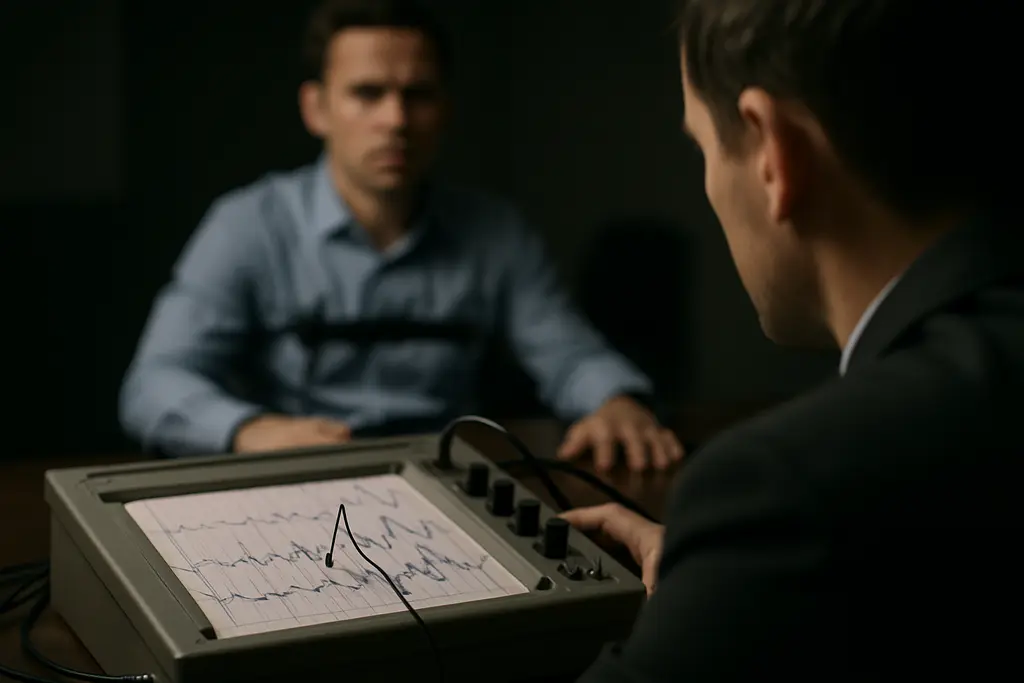
Polygraph accuracy limits should be part of every responsible workplace discussion about testing, trust, and integrity. A polygraph can add structured information to an investigation or screening process, but it does not read minds, prove intent, or remove the need for corroborating evidence. For HR teams, the practical value lies in using the tool with restraint, clear communication, and a documented decision process.
The British Polygraph Society has published useful figures for understanding where confidence is stronger and where caution is needed. Its discussion of error rates reports that a properly conducted single-issue test has average accuracy of about 0.89, with a 95% confidence interval of 0.83 to 0.95, when inconclusive results are excluded. It also reports lower average accuracy for screening tests, about 0.85 with a 95% confidence interval of 0.77 to 0.93, and estimates false positives and false negatives for both diagnostic and screening settings in its polygraph error guidance.
What Polygraph Accuracy Limits Mean in Practice
Accuracy figures can be useful, but only if they are read with the right level of caution. A number such as 0.89 does not mean that every workplace test will be correct nine times out of ten. It describes an average finding under specific conditions, with exclusions and assumptions that may not match a particular HR matter. The quality of the questions, the suitability of the examinee, the examiner’s training, and the purpose of the test all affect how much weight the result deserves.
Polygraph Accuracy Limits and Test Type
Polygraph accuracy limits are easiest to see when single-issue testing is compared with screening. A single-issue test is tied to a defined event or allegation. In workplace terms, that might mean a focused inquiry into a known loss, data access incident, or policy breach. Screening, by contrast, often asks broader questions across a wider population. The research notes supplied here show that screening is more vulnerable to error, especially when very few people in the group are actually deceptive.
This distinction matters for HR because a test used after a specific incident is not the same as a general integrity screen. Treating both as equally strong evidence can create unfair pressure on employees and poor decisions for employers. A successful integrity process does not rely on a single result. It asks whether the result fits with documents, access logs, interviews, timelines, and other independently reviewable information.
Why Inconclusive Results Deserve Planning
Inconclusive outcomes are not a minor footnote. The British Polygraph Society figures cited above report inconclusive results for roughly 13% of truthful examinees and 9% of deceptive examinees in diagnostic testing. That means workplace policies should say in advance how an inconclusive result will be handled. If the policy treats an inconclusive result as suspicious by default, the organization risks converting uncertainty into an accusation.
A better process defines inconclusive results as information requiring further review. That may mean collecting more records, refining the scope of questions, interviewing relevant witnesses, or deciding that the available evidence is still insufficient. This approach is slower than treating the polygraph as a shortcut, but it is more consistent with workplace trust.
Why Context Changes the Result
The National Research Council’s 2003 review reached a similar cautionary point from a broader evidence base. For specific-incident testing, it reported an accuracy index between 0.81 and 0.91 for the middle 26 of 52 datasets, while warning that screening applications raise harder interpretation problems. Its chapter on polygraph test performance is still useful because it separates better-supported event-specific uses from broader screening claims.
Base Rates and False Positives
Base rates are one of the least intuitive issues in workplace testing. If a large group is screened and only a small number of people are actually involved in misconduct, even a test with respectable sensitivity and specificity can produce a meaningful number of false positives. In plain terms, the lower the true rate of deception in the tested group, the greater the risk that some truthful people will be flagged.
That is why screening results should be framed as risk indicators, not findings of fact. A workplace integrity program that recognizes this point can still use testing in limited settings, but it should avoid language that implies certainty. For more on reliability concerns in employment settings, the related discussion of HR vetting challenges is a useful companion resource.
Physiology Is Evidence, Not a Verdict
A polygraph records physiological activity associated with respiration, cardiovascular response, and skin conductance. Those reactions may be relevant during a structured examination, but they are not direct proof of truthfulness or deception. Stress, fear, misunderstanding, medical conditions, poor question design, and the testing environment can all affect interpretation. The value of the method depends on careful administration and disciplined scoring, not on the machine alone.
In my work as a workplace ethics advocate, I see the strongest programs treat polygraph results as one layer of evidence. They do not use dramatic language, promise certainty, or ask employees to accept unexplained conclusions. Instead, they explain the process before testing, document the scope of the examination, and keep decision authority separate from the examiner’s technical role.
HR Use Requires Guardrails

A useful policy starts by naming polygraph accuracy limits directly. That choice can feel counterintuitive to leaders who want testing to project confidence. Yet transparency often improves trust because employees are less likely to view the process as coercive or predetermined. Clear limits also protect managers from giving a result more weight than it can support.
Examiner Quality and Administration
The research supplied for this article emphasizes examiner quality, validated methods, instrument calibration, examinee suitability, and controlled administration. These are not technical details to be left out of HR planning. They are conditions that influence whether published accuracy figures are even relevant to the organization’s use of testing.
Before commissioning a test, an HR team should be able to answer practical questions:
- Is the test tied to a clearly defined issue, or is it a broad screen?
- What validated method and scoring approach will be used?
- How will inconclusive, deceptive, and truthful classifications be documented?
- What non-polygraph evidence will be reviewed before any employment decision?
- How will employees be told about the purpose, limits, and next steps?
These questions do not make the process slow for its own sake. They create a record that the organization considered reliability before drawing conclusions. That record is part of workplace integrity, not a barrier to it.
Success Looks Like Better Decisions, Not Perfect Results
In the “success stories” category, it is tempting to look for a decisive test result that solved a problem. That is not the right measure. A stronger example is an employer that used a polygraph result to guide further inquiry, then made a decision only after the result was checked against other evidence. Success is a process that reduces speculation while protecting people from overstatement.
That process may also include communication resources, manager training, and written standards for investigations. For readers interested in comparing workplace integrity topics, the related workplace resources may provide useful context. The key point remains the same: trust grows when organizations explain what a tool can and cannot show.
Polygraph Accuracy Limits as a Trust Practice
Handled this way, polygraph accuracy limits become more than a scientific caution. They become a workplace trust practice. Employees deserve to know that a test result will not be treated as automatic proof. Employers deserve a process that helps them assess risk without overstating the evidence. Both interests are better served when the method is used narrowly, interpreted carefully, and supported by other facts.
The British Polygraph Society figures and the National Research Council review point in the same practical direction: polygraph testing can be informative, especially in focused event-specific settings, but screening and low base-rate use require greater caution. HR leaders should resist the appeal of certainty and instead ask whether the evidence supports a fair, proportionate next step. That is where polygraph services can contribute to workplace integrity without weakening the employment relationship they are meant to protect.