
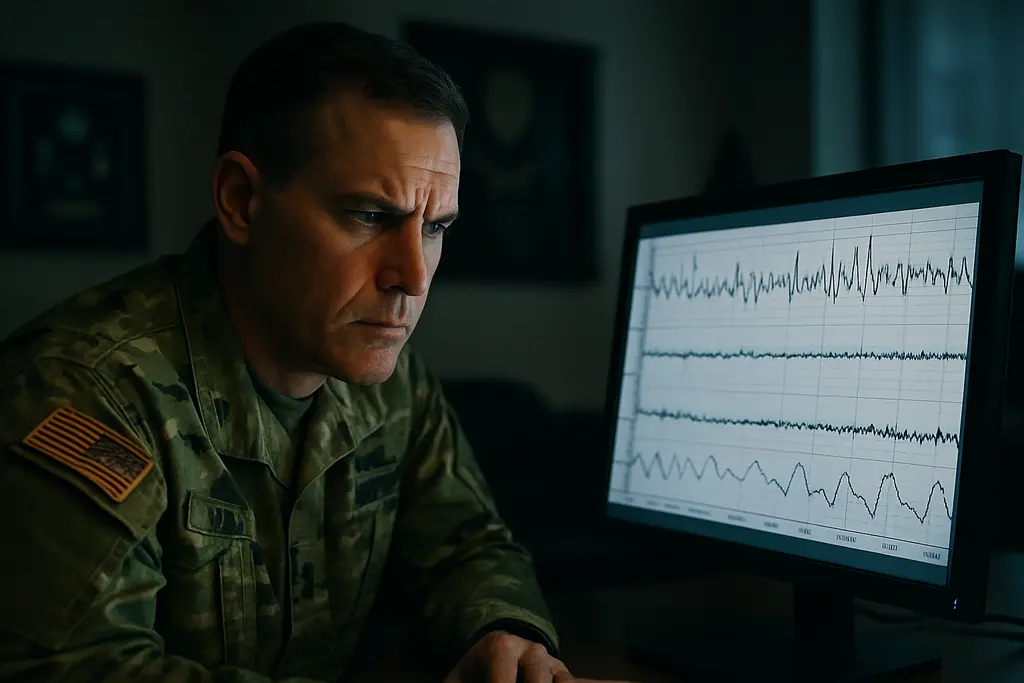
Military polygraph testing became a management and ethics concern after reports that roughly 50 members of the U.S. military’s Joint Staff, including officers and civilians, were tested in August 2026 during an expanded leak inquiry tied to reporting about depleted U.S. munitions stockpiles after the war with Iran, as The New York Times reported. For HR, security, and integrity leaders outside the military, the practical lesson is not to copy a national security model. It is to study what happens when a credibility tool is used among senior personnel under intense institutional pressure.
The military setting is unusual because it combines classified information, chain-of-command expectations, career consequences, and public scrutiny. Those conditions can make any investigative step feel more consequential than it would in a routine workplace inquiry. A polygraph service may support an investigation, but it cannot repair a weak process, replace careful interviewing, or substitute for clear communication about why a test is being used.
Military Polygraph Testing In A High-Pressure Inquiry
Military Polygraph Testing As An Investigative Signal
Used responsibly, military polygraph testing is best understood as one investigative signal within a wider fact-finding process. In the 2026 Joint Staff matter, the reported use of testing followed a broader leak inquiry rather than a stand-alone workplace screening exercise. CBS News reported that the Justice Department and Pentagon had formed a joint task force in July 2026 to identify and prosecute suspected leaks of sensitive national security information, and that no individuals failed the specific polygraph questions asking whether they had leaked classified information to the media, according to sources cited by CBS News.
That reported no-failure outcome matters, but it should not be overread. It does not prove that every concern in the wider inquiry was resolved, and it does not prove that testing caused a better institutional outcome. It shows why decision-makers should define the purpose of each question before testing begins. A narrow question about leaking classified information is different from a broad judgment about loyalty, judgment, or fitness for a role.
Scope, Seniority, And Pressure
The reported scale and seniority of the August 2026 testing made the episode especially sensitive. When a process reaches officers, civilian personnel, and high-level staff, the signal sent to the workforce can be as important as the information gathered. Staff may interpret the test as a search for facts, an assertion of control, or a sign that leadership distrusts its own people.
That perception risk is practical, not abstract. In a high-pressure organization, people often watch how peers are treated before deciding whether they can safely report concerns, admit mistakes, or challenge inaccurate assumptions. If the process appears overly broad, poorly explained, or disconnected from evidence, it can reduce cooperation even among people who have nothing to hide.
What The 2026 Reports Show
Interpreting A No-Failure Report
The reported finding that no one failed the specific leak-related questions is useful for workplace integrity leaders because it separates two ideas that are often combined. First, an organization may have a serious reason to investigate. Second, the use of a polygraph does not guarantee a decisive result. Those two points can coexist.
For a private employer, nonprofit, contractor, or public agency, the lesson is restraint. A test should not be presented as a shortcut to certainty. It should be framed as part of a documented inquiry that may include access logs, interviews, policy review, chain-of-custody records, and other evidence that can be checked independently. Where a polygraph service is considered, leaders should be clear about what the examination can and cannot answer.
Readers comparing workplace integrity services sometimes move between subjects such as HR documentation, writing standards, and service evaluation. A useful site in the same network, TopTenWritingServices.com, offers insights into plain-language communication, which can be beneficial, but an employee-facing polygraph notice still needs to match the organization’s own policies and the specific inquiry at hand.
Why Process Can Affect Trust
Trust is affected by more than the test result. Employees and service members also assess whether the scope was fair, whether questions were relevant, whether records were accurate, and whether leadership treated people with respect. In a military environment, those concerns are sharpened by rank, duty expectations, and the possible effect on assignments or reputation.
That is why military polygraph testing should be treated as a governance issue as well as an investigative technique. A defensible process identifies who authorized testing, what the factual basis was, how questions were selected, who reviewed the outcome, and how the information would be used. Without that structure, even a technically completed examination can create avoidable distrust.
Practical Controls For HR And Security Leaders

Documentation Before Testing
The practical value of military polygraph testing depends heavily on preparation. Before any examination is scheduled, leaders should be able to explain the operational problem in plain terms. In a leak inquiry, that means defining the suspected disclosure, identifying the information involved, and separating confirmed facts from assumptions. Vague concerns produce vague testing decisions.
A disciplined process can reduce avoidable harm. It can also help leaders avoid using the exam as a public symbol of seriousness rather than as a focused investigative step. The question is not whether the organization looks decisive. The question is whether the decision can be explained later to affected staff, oversight bodies, and other reviewers without relying on unsupported claims.
- Define the event or conduct being investigated before discussing testing.
- Limit questions to matters directly tied to the inquiry.
- Keep records of authorization, scope, examiner instructions, and result review.
- Separate test information from unrelated performance judgments.
- Communicate what the process does not decide on its own.
These safeguards are not a promise that every employee will feel comfortable. They are practical controls that help prevent a stressful process from becoming unnecessarily opaque. For readers focused on leak cases, this site’s recent leak-probe analysis discusses related concerns about scope and safeguards.
Communication During High-Pressure Reviews
Communication should be accurate, limited, and consistent. Overstatement is a common risk in any credibility-based inquiry. If leaders imply that an exam will identify the source of a leak with certainty, they set expectations the process may not meet. If they say too little, staff may fill the gap with rumor.
A cautious notice can explain the reason for the inquiry, the type of information sought, the role of the examiner, and the way results will be reviewed. It should avoid loaded language that assumes guilt. It should also avoid public claims about individual cooperation or outcomes unless disclosure is authorized and necessary.
Practical Implications For Military Leak Inquiries
The 2026 reporting shows how quickly a polygraph program can become a test of institutional trust. In a high-pressure military setting, the exam is not experienced only as a technical procedure. It is experienced as a statement about suspicion, accountability, and the relationship between leadership and staff.
For private employers, military polygraph testing offers a cautionary comparison rather than a simple model. Most workplaces do not operate under the same national security pressures, and most should not treat exceptional military investigations as routine HR practice. Still, the same ethical themes carry over: define the purpose, keep the scope narrow, record the basis for decisions, communicate limits, and avoid treating any single tool as a final answer.
A strong workplace integrity process protects information without sacrificing fairness. It recognizes that pressure can affect how people experience an investigation, even when leaders believe the inquiry is justified. Polygraph services can support fact-finding in some settings, but they work best when paired with transparency, careful documentation, and a willingness to acknowledge uncertainty.