
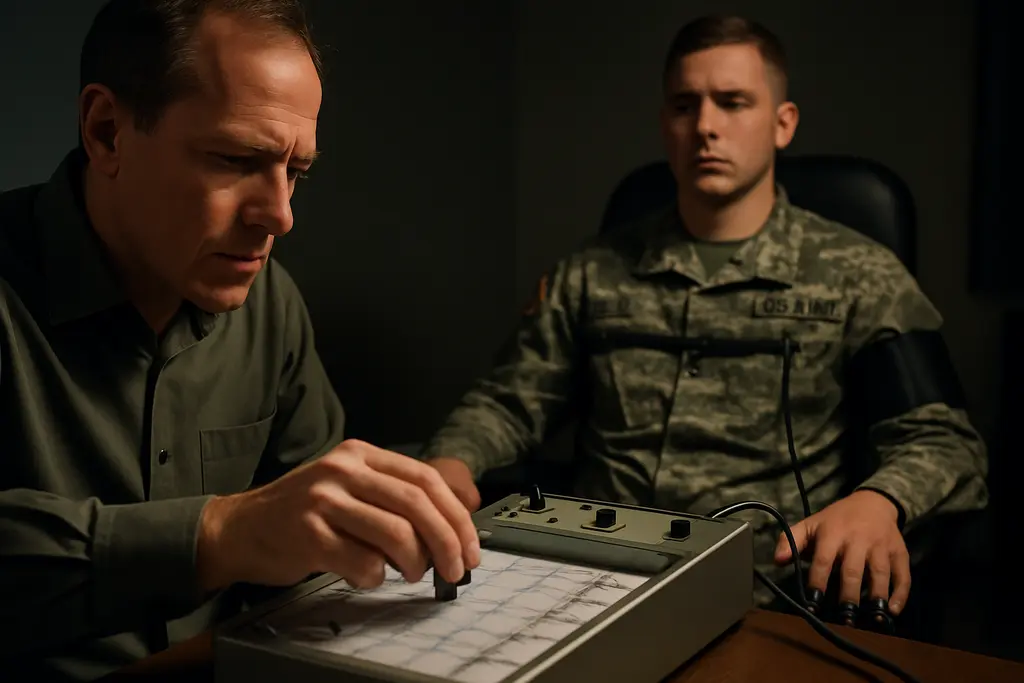
Military Polygraph Testing is often discussed as if it either solves a leak investigation or proves too uncertain to use. The case record is less simple. In military and national-security settings, polygraph examinations have been used to focus questioning, test specific denials, and sometimes prompt admissions. They have also produced inconclusive public outcomes, employee-trust concerns, and questions about whether the examination was integrated with interviews and corroborating evidence.
A case-study approach is useful because leak inquiries differ from ordinary workplace investigations. The information at issue may be classified, the subject group may include senior officials or cleared staff, and the harm may involve operational security rather than only internal policy. That raises the standard for planning, documentation, and fairness. For insights into related integrity and publishing topics, explore more from Interline Publishing, a platform within the same network dedicated to responsible communication and source handling.
Military Polygraph Testing As An Investigative Tool
What Military Polygraph Testing Can And Cannot Show
Military Polygraph Testing does not replace a leak investigation. It is one tool that may sit beside document review, access analysis, witness interviews, and timeline reconstruction. The strongest use is usually narrow: questions tied to a defined disclosure, a defined class of information, and a defined group of people with possible access. The weaker use is broad screening without enough prior investigative work, because the result may be hard to interpret and even harder to defend.
That distinction matters for any workplace integrity program. A polygraph result may create investigative leads, but it should not be treated as a standalone finding of misconduct. The practical value often appears in the pre-test and post-test discussion: what the subject clarifies, what records can confirm, and whether the inquiry identifies facts that were not available before. The risk appears when leaders use testing mainly to signal urgency, without a clear plan for interviews, evidence preservation, and follow-up.
The Success Standard Should Be Evidence, Not Drama
Calling a case a “success story” requires care. In leak investigations, success may mean identifying the source of a disclosure. It may also mean ruling out a suspected group, narrowing the timeline, documenting that specific questions were asked, or finding procedural weaknesses that allowed sensitive information to circulate too widely. Those outcomes are less dramatic than a confession, but they can still help an organization make better decisions.
The available research shows mixed outcomes. Some reported cases link polygraph-related questioning with admissions or discipline. Other cases show no public identification of a leaker. That mixed pattern is why employers and government agencies should define success before testing begins. A test designed to support an inquiry should have a written purpose, relevant questions, consistent administration, and a plan for what happens if the result is non-deceptive, significant, inconclusive, or contradicted by other evidence.
Case Study: Military Polygraph Testing In August 2026
The Joint Staff Leak Probe
On September 4, 2026, reporting described an August 2026 Pentagon leak probe in which roughly 50 members of the U.S. military’s Joint Staff, including officers and civilian employees, were subjected to polygraph tests. The investigation followed disclosures about U.S. munitions shortages tied to the Iran war, including reports about depleted long-range missiles and Patriot interceptors, according to the September 4 report.
The questions reportedly focused on whether individuals had disclosed classified information to journalists and whether they had provided information about diminished munitions stocks. Multiple sources cited in that report said no one in the tested group was found to have failed in terms of leaking to the media. That outcome is significant because it shows a practical limit: a large testing effort can fail to identify a leaker, even when the questioning is tied to a specific disclosure.
The case can still offer an operational lesson. If no one in the tested group was found to have failed on the media-leak question, investigators had to consider other possibilities: the source may have been outside the tested group, the disclosure path may have been indirect, or the available information may not have been enough to support a definitive finding. A workplace investigation should be built to absorb those possibilities without forcing the polygraph to carry more weight than it can reasonably bear.
Trust Costs In A Mass Testing Setting
Large-group testing can affect morale even when no individual is publicly accused. Cleared personnel may understand the need to protect classified information, yet still question the fairness of being included in a broad inquiry. That tension is not unique to military organizations. Corporate security, defense contractors, and public agencies face a similar problem when they respond to leaks, fraud concerns, or policy breaches.
The practical safeguard is transparency about process, not disclosure of sensitive investigative details. Subjects should know the general purpose of the examination, the category of conduct under review, how results will be handled, and what follow-up process exists. A related discussion of Pentagon polygraph ethics explains why consent, scope, and fair-use safeguards become central after high-profile leak testing.
The 1982 GAO Case And Interview Design
What The GAO Found
A useful historical comparison comes from the October 7, 1982 GAO report GGD-83-15, which reviewed a Department of Defense investigation into a leak of classified information to The Washington Post. The report described a meeting involving 24 high-level officials and staffers where classified briefings were discussed. In that investigation, many individuals were polygraphed without prior interviews, and some were not interviewed afterward. The GAO breakdown said 21 attendees were polygraphed only, while others were interviewed before or after the examination or not interviewed at all, as shown in GAO report GGD-83-15.
That finding remains relevant because it separates testing from investigation design. A polygraph examination may be more useful when investigators first establish access, opportunity, known statements, document flow, and plausible alternative explanations. If a person is tested before basic interviewing occurs, the examination may become a substitute for investigative groundwork rather than a focused follow-up.
The GAO case also shows why “polygraphed” is not the same as “fully investigated.” Without consistent interviews before and after testing, investigators may miss context that affects the meaning of an answer. A person may know about a topic without being the source of a leak. Another person may have had access but no opportunity. A third may provide relevant background only after being asked a narrower question. Those distinctions matter when careers, clearances, and organizational trust are at stake.
Reported Admission Cases And Their Limits

Why Rare Admissions Should Not Define The Policy
The research record includes older reported cases in which polygraph-related examinations were associated with admissions or employment consequences. One often-cited federal intelligence example from April 2006 involved CIA analyst Mary McCarthy, who was fired after failing more than one polygraph examination connected to leak concerns and who reportedly acknowledged unauthorized contacts with reporters and sharing classified intelligence. That case is relevant as a nearby national-security example, though it is not a military Joint Staff case.
Such examples can show why agencies continue to use polygraph-supported questioning in sensitive inquiries. A person may disclose information during the examination process that had not surfaced earlier. Yet rare admission cases should not become the model for every leak inquiry. If policy assumes that the next examination will produce an admission, investigators may underinvest in records, access logs, document-control review, and carefully sequenced interviews.
Department of Defense program reporting from 1998, as described in the research provided for this analysis, stated that polygraph examinations in criminal investigations and counterintelligence matters sometimes developed significant information not obtained through earlier investigative means. Some examinees reportedly admitted issues such as mishandling classified material during polygraph-related discussions. That is a meaningful practical point, but it supports limited use rather than unchecked reliance.
Practical Safeguards For Leak Investigations
Controls Before Testing Begins
For employers, agencies, and contractors, the central lesson is that process quality determines whether testing helps or harms the inquiry. Before any examination, leaders should identify the protected information, the suspected disclosure path, the relevant time period, and the population with actual access. Testing a large group without that foundation may create pressure, but pressure is not the same as proof.
- Define the precise disclosure or policy issue being investigated.
- Interview key personnel before testing when doing so will clarify access, timing, and context.
- Use questions tied to the investigation rather than broad character judgments.
- Document how results will be evaluated alongside other evidence.
- Plan follow-up interviews so the examination does not become the last investigative step.
These safeguards do not guarantee a finding. They reduce the chance that a polygraph result will be misunderstood, overstated, or used inconsistently. They also help preserve internal trust by showing that the organization is asking focused questions rather than casting suspicion without structure.
Controls After Results Are Known
After testing, the organization should avoid treating any single outcome as the entire case. A non-deceptive result does not prove that no leak occurred. A significant reaction does not prove misconduct. An inconclusive result does not justify an assumption of guilt. Each outcome should trigger a defined follow-up path: record comparison, further interviewing, access review, or closure with documented reasons.
Communication also matters. Leaders do not need to disclose classified or confidential details to explain that the process has limits. A careful message can state that testing is one investigative method, that results are reviewed with other information, and that employment or clearance decisions require more than rumor or pressure. That type of communication is especially valuable after a mass examination, where uninvolved employees may still feel personally scrutinized.
Case Lessons For Military Leak Investigations
The strongest lesson from the 1982 GAO review and the August 2026 Joint Staff probe is that Military Polygraph Testing works best when it is disciplined, narrow, and integrated with other evidence. The GAO case warned against relying on polygraphs without consistent interviews. The 2026 case showed that even a major testing effort involving roughly 50 people may not identify a leaker, at least based on the public reporting available by October 9, 2026.
For workplace integrity leaders, the case-study record supports a cautious success standard. A useful polygraph process may prompt clarification, develop leads, or help rule out a suspected path. It should not be advertised as certainty. In sensitive leak inquiries, the more credible measure of success is whether the organization used relevant questions, fair procedure, documented follow-up, and corroborating evidence before taking action.