
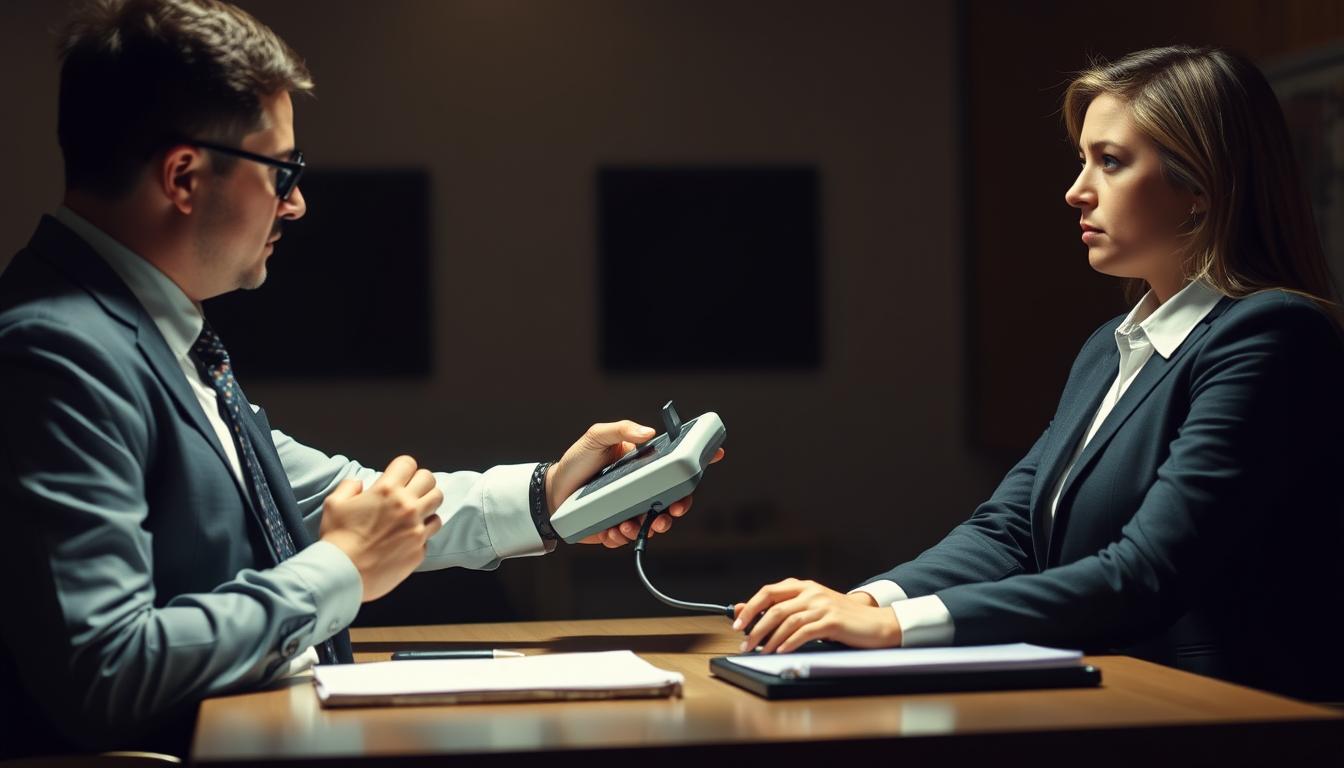
Ever wonder why companies use polygraphs? They’re like security detectives, searching for everything from big-time spies to small-time thieves.
The Employee Polygraph Protection Act is a legal puzzle. It’s so strict, there are only a few times you can legally use these tests on employees.
Polygraphs claim to be 70-90% accurate. That’s a scary thought, like having a super-accurate lie detector. But is it really reliable?
This isn’t just about catching liars. It’s about building trust in the workplace. Are you ready to explore the truth behind these tests?
When Polygraph Helps: Deterring Dishonesty & Resolving Disputes
Imagine running a big pharmaceutical company with employees linked to cartels. The squiggly lines on a polygraph chart might seem like a show. But the real magic is in stopping dishonesty, not just catching it.
The polygraph pros have a secret: these tests work best as a kind of corporate watchtower. They create a “corporate guardrail effect.” This makes people act honest because they think they’re being watched, even if they’re not.

Studies show something interesting. Companies using polygraph tests see a 15-20% drop in theft. It’s like having a fake security sign in your yard. People act as if they’re being watched, even if they’re not.
Here are four situations where polygraph tests really help:
- High-stakes hiring: When you’re checking employees for sensitive jobs
- Post-incident investigations: Finding out who’s behind big thefts or data breaches
- Ongoing risk management: Keeping a safe work environment in finance or security
- Conflict resolution: Clearing innocent people and finding the real problem
Take a tech firm that stopped corporate espionage by saying they’d do random polygraph tests. They didn’t actually test most people. Just the chance of being tested was enough to stop leaks.
The best polygraph pros know it’s not about catching lies. It’s about making the workplace safer. With professional polygraph services, these tests are more about psychology than science.
Think of it as a show of honesty with real effects. The polygraph machine is a prop in a play where the chance of being tested changes everything. It’s not about being 100% sure. It’s about making people act honest because they think they’re being watched.
Understanding the Limits: Error Rates, Legal Admissibility, Employee Relations
Let’s get real about polygraph tests. Those 70-90% accuracy claims? More like empty promises.
The 2003 National Research Council report was a big blow to polygraph tests. They often wrongly accused innocent people. This is a huge problem, not just a small mistake.
Legal rules around polygraph tests are strict. Breaking the Employee Polygraph Protection Act can hurt your business a lot. It’s like inviting financial trouble into your company.
These tests don’t just check your body’s reactions. They also hurt your team’s spirit. It feels like you don’t trust your employees from the start.
In court, polygraph results are not trusted. Judges see them as unreliable. It’s like having a friend who always lies.
| Polygraph Limitation | Impact Level | Legal Consequences | Employee Relations Damage |
|---|---|---|---|
| False Positive Rates | Severe | Wrongful termination lawsuits | Destroyed trust and morale |
| EPPA Violations | Critical | Department of Labor fines up to $21,563 per violation | Class action lawsuits |
| Constitutional Challenges | High | Fourth Amendment violations | Union organizing campaigns |
| State Law Variations | Moderate to High | Varying restrictions across states | Difficulty in multi-state operations |
There are big legal issues with polygraph tests. They might violate your rights under the Fourth Amendment. It’s like inviting a lawsuit into your office.
Damage to your team goes beyond the test. It creates a bad atmosphere. It’s like turning your workplace into a prison.
These problems are real and can hurt your business a lot. Think twice before using polygraph tests. It’s not just about checking people; it’s about running a business.
Alternative Integrity Screening Tools
Polygraphs are like blunt tools for finding the truth. But today, we have more precise methods. These tools are subtle and sustainable, unlike polygraphs.
Behavioral analysis is like reading human expressions with the skill of a poker champion. It spots the tiny signs of deception, like micro-gestures and speech patterns. These signs are natural, not forced.

Computerized Voice Stress Analysis (CVSA) is a big leap from old polygraphs. It checks for tiny voice tremors that might show deception. This method is less invasive and could be more accurate.
Psychological assessments give deep insights into people without breaking the law. They use employee integrity tests to measure honesty and reliability. These tests are based on science.
The best approach is to build a culture where honesty is valued. This means creating a place where people feel safe to tell the truth. Polygraphs don’t understand this about humans.
Here are some examples of companies that did well without polygraphs:
| Company | Method | Result | Timeframe |
|---|---|---|---|
| TechStart Inc. | Behavioral analysis training | 37% reduction in internal fraud | 18 months |
| Northwest Retail | Voice stress analysis implementation | 42% fewer inventory discrepancies | 2 years |
| Global Finance Corp | Psychological assessment integration | 51% improvement in ethical compliance | 3 years |
| Manufacturing Plus | Leadership development program | 40% reduction in policy violations | 16 months |
These companies chose leadership over lie detectors and saw better results. They learned that building trust is more effective than forcing honesty.
The best way to screen for integrity is to use a mix of methods. This includes watching behavior, doing psychological tests, and building a positive culture. This approach tackles both immediate and future risks.
In the end, the best alternative to polygraphs is to create a workplace where honesty is the norm. When people feel respected, they naturally choose to be truthful.
How to Decide if Polygraph is Right for Your Business
Thinking about using a polygraph in your company? It’s like considering a risky investment. The cost of legal advice alone could be more than your coffee budget for a year. Plus, the psychological impact of regular tests can be huge.
Think about the risks in your industry and the chance of EPPA violations. Making a wrong move could cost you more than any theft. Polygraphs are best for high-security jobs like government work or transporting medicines. They’re not needed for most retail or tech businesses.
The best use of polygraphs is when they’re rarely needed but always available. It’s like having a nuclear deterrent in your workplace. They create more psychological barriers than they catch criminals.
Let’s look at the cost-benefit analysis. It’s something that even Warren Buffett might think twice about. Sometimes, the best security is just paying well and treating employees right. Polygraphs should be your last choice, not your first.
Before starting any integrity tests, ask yourself: Are we solving a real problem or making new ones? The answer might shock you more than a polygraph needle.