
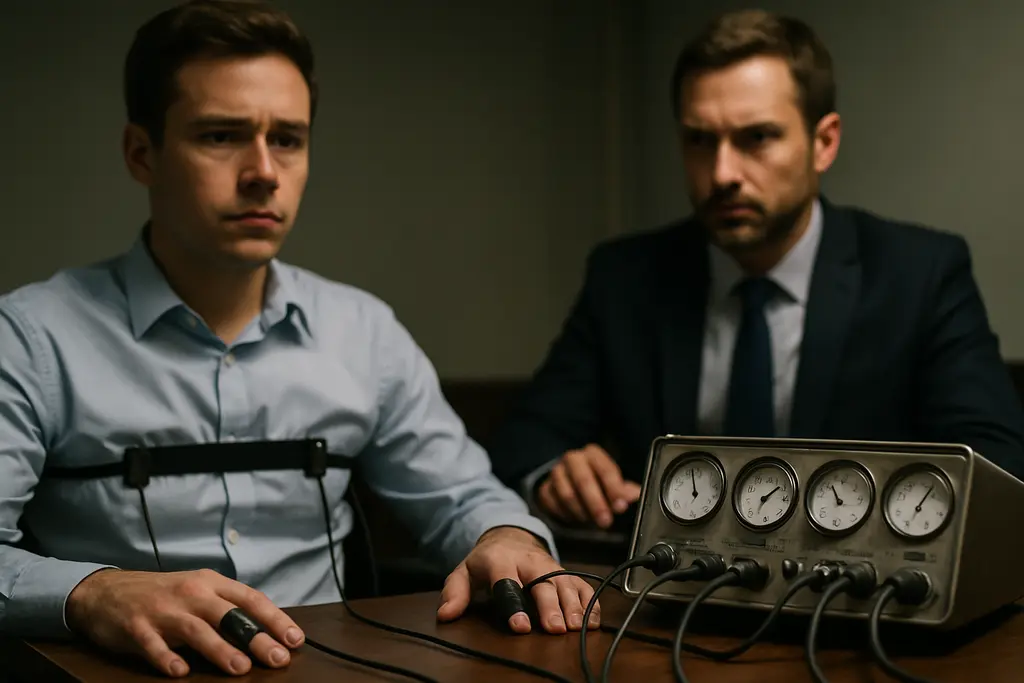
Polygraph Accuracy is best understood as a managed risk, not a guarantee. In workplace integrity programs, the challenge is not only whether a test can detect deception under certain conditions. The harder question is whether an employer, investigator, or compliance team can use the result lawfully, ethically, and proportionately when careers, privacy, and organizational trust are at stake.
Recent research and legal developments point in the same direction: physiological testing may provide useful investigative information, but it should not be treated as a stand-alone verdict. Accuracy varies by method, test format, examiner judgment, examinee condition, and the purpose of the exam. For employers, that means the value of a polygraph process depends as much on governance as on instrumentation.
Why Polygraph Accuracy Remains Conditional
What The 2026 Eye-Tracking Comparison Shows
A controlled 2026 study compared an eye-tracking method with polygraph testing using the Concealed Information Test. Under the conditions tested, the eye-tracking method reached 94.9% accuracy, while the polygraph reached 88.2%; five of the 39 polygraph tests were excluded because the examiner could not reach a conclusion, according to the Scientific Reports study. Those figures are significant, but they should be read narrowly. The finding does not prove that eye-tracking will outperform polygraph testing in every workplace investigation, nor does it show that either method can resolve every credibility dispute.
The study is useful because it shows how much the testing protocol matters. A Concealed Information Test asks whether a person recognizes crime-relevant or incident-relevant information. That is different from asking a broad employment screening question or assessing an allegation with limited independent evidence. Workplace decision-makers should therefore avoid lifting a percentage from one setting and applying it to another without asking whether the same assumptions hold.
Polygraph Accuracy And Inconclusive Results
Inconclusive outcomes are not administrative noise; they are part of the accuracy problem. If an examiner cannot reach a defensible conclusion, the result should not be reshaped into a pass or fail for managerial convenience. The 2026 comparison is a reminder that excluding unresolved tests can affect how performance figures are interpreted.
The main lesson for Polygraph Accuracy is that error has more than one form. A false positive can wrongly cast suspicion on a truthful employee. A false negative can allow a real concern to remain unresolved. An inconclusive result can create pressure to draw inferences that the data do not support. Each outcome requires a different management response, and none should be hidden from the person responsible for the final employment or investigative decision.
| Issue | Workplace Meaning | Practical Control |
|---|---|---|
| False positive | A truthful person may be treated as deceptive | Require corroborating evidence before adverse action |
| False negative | A concern may be missed | Use polygraph results with records, interviews, and access logs |
| Inconclusive result | The test does not support a clear inference | Document uncertainty and avoid treating it as misconduct |
| Method mismatch | A test designed for one purpose is used for another | Match the format to the investigative question |
Legal Boundaries For Workplace Use
EPPA Limits In Private Employment
In the United States, the Employee Polygraph Protection Act remains a central boundary for private employers. The statute generally bars most private employers from requiring, requesting, suggesting, or causing an employee or applicant to take a lie detector test, and from using or accepting test results, subject to specific exemptions listed in the law; the operative prohibition appears in the EPPA text. The research record identified the statute as still in force in 2026, and employers should treat it as an active compliance constraint unless qualified counsel confirms otherwise.
For workplace integrity teams, this legal boundary changes the starting point. The question is not, “Would a test be useful?” The first question is, “Is this employer legally permitted to request or use the test for this purpose?” Some exemptions exist, including limited contexts tied to security services, controlled substances, national security, and certain economic loss investigations, but exemptions do not erase duties around notice, consent, examiner qualifications, and fair treatment.
Court Treatment And Workplace Caution
Recent court examples from 2026, as described in the research materials, also show why workplace programs should avoid overstating test meaning. One state case excluded polygraph results after finding them unreliable, not relevant, and unduly persuasive. Another allowed results only after specific prerequisites were met, including stipulation, examiner qualification, cross-examination rights, and a jury instruction. Those are court settings, not ordinary HR processes, but the caution transfers well: a result that seems persuasive can receive too much weight if the limits are not made explicit.
Employment decisions are often reviewed later through documents, timelines, and fairness standards. A file that says only “failed polygraph” is weak risk management. A stronger file records the lawful basis for the process, the question under investigation, the evidence already known, the limits disclosed to the employee, and the reason any action did or did not follow.
Ethical Controls In Integrity Programs
False Positives, Stress, And Fair Process
Ethical concerns are not separate from accuracy; they shape how much harm an error can cause. Nervousness, stress, medical issues, psychological conditions, and fear of job loss can all complicate the interpretation of physiological responses. A test may measure arousal, but the ethical dispute begins when arousal is treated as deception without enough supporting context.
That concern is especially serious in hiring, discipline, internal theft inquiries, data leak reviews, and safety-sensitive roles. A person who is wrongly labeled deceptive may lose reputation, employment opportunity, or trust with colleagues. A person who is wrongly cleared may remain in a role where unresolved risk persists. For that reason, workplace integrity programs should treat Polygraph Accuracy limits in HR integrity work as a governance issue, not just a testing issue; a related discussion of Polygraph Accuracy limits explains why corroboration and fair process matter.
Using Results With Corroboration
A defensible integrity process uses the polygraph as one source of information. It should sit beside access records, financial records, incident timelines, witness interviews, device logs, inventory controls, and policy acknowledgments. If those other sources point in a different direction, the conflict should be investigated rather than ignored.
- Define the specific issue before any exam is considered.
- Confirm that the employer has a lawful basis for the request.
- Use qualified examiners and documented procedures.
- Disclose limits clearly to the examinee and decision-maker.
- Prohibit adverse action based only on an unsupported result.
Documentation should also separate examiner opinion from management judgment. The examiner may report test data and an interpretation within the relevant method. Management must decide what, if anything, the result means when combined with other evidence and legal obligations.
Method Choice And Transparency

Newer Tools Do Not Remove Accountability
The 2026 eye-tracking comparison is useful partly because it shows promise and caution at the same time. Newer deception detection tools may produce attractive performance numbers in controlled settings, yet they can raise transparency concerns if employers cannot explain how a model reached its classification. A black box result is not ethically stronger simply because it appears more technical.
Traditional polygraph methods also require transparency. The examinee should understand the procedure, the general purpose of the questions, and the consequences of participation or refusal where the law permits testing. Decision-makers should understand whether the format is event-specific, screening-oriented, or designed to test recognition of concealed information. These distinctions affect how much weight a result deserves.
Organizations that publish integrity policies, employee guidance, or related educational material should be careful not to imply certainty where none exists. Editorial and compliance teams can compare how related professional content is presented through Interline Publishing, while still grounding workplace polygraph policy in primary legal sources, validated procedures, and transparent internal rules.
Polygraph Accuracy In Workplace Integrity
Polygraph Accuracy can support workplace integrity only when the organization treats the test as a limited investigative aid. The responsible standard is not blind acceptance or blanket rejection. It is a structured process that asks whether the test is lawful, whether the method fits the issue, whether the examinee was treated fairly, whether the result is conclusive, and whether independent evidence supports the employment decision.
That approach protects both sides of the workplace relationship. Employers gain a clearer way to assess risk without pretending that one instrument can settle every fact. Employees gain a process in which uncertainty, health factors, stress, and procedural safeguards are visible rather than dismissed. In practice, the strongest integrity programs are the ones that record what the test can show, what it cannot show, and why any decision remains proportionate to the full evidence file.