
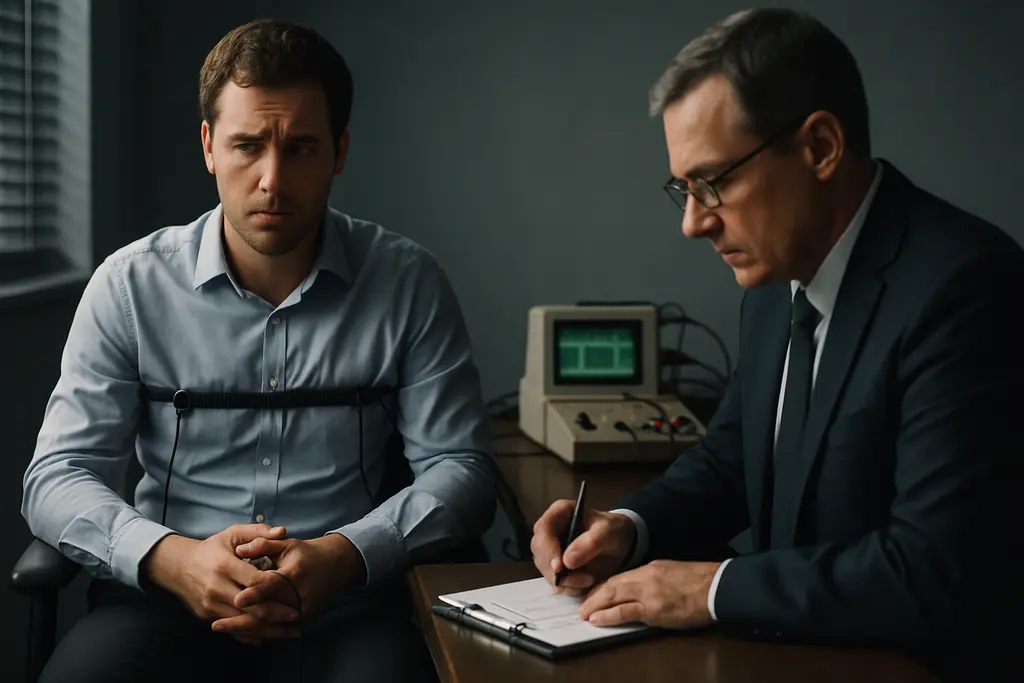
Examinee rights during Pentagon polygraph tests are not an abstract compliance issue; they are written into Department of Defense policy and, as of September 28, 2026, addressed in federal statute. For workplace integrity teams, the Pentagon setting is useful because it shows how high-pressure investigations can still be bounded by consent, question limits, notice, and review. A polygraph may inform an inquiry, but it should not be treated as a substitute for evidence, policy discipline, or fair process.
Recent Pentagon practices have drawn attention because September 2026 reporting described several dozen senior military officials undergoing polygraphs during a leak inquiry, with no one reported to have failed questions about media leaks. That episode did not suspend the governing safeguards. It instead reinforced a practical point: the more sensitive the matter, the more visible the process protections become.
Examinee Rights In Pentagon Polygraphs
How Examinee Rights Begin Before Testing
The starting point is consent. DoD Instruction 5210.91 states that a Pentagon polygraph or credibility assessment generally requires written consent, while identifying limited exceptions for foreign national screening, human intelligence operations, and counterintelligence operations. The same instruction addresses notice, the nature of the instrument, question relevance, termination of the examination, and restrictions on how results may be used. Those policy details are set out in the Department of Defense credibility assessment instruction.
Consent is not meaningful if the person does not understand what is being requested. DoD policy requires that examinees be informed about the characteristics and nature of the polygraph instrument, the test procedures, and whether observation or recording may occur. That includes matters such as video recording or observation through a two-way mirror when applicable. In practical terms, a person should know the setting, the process, and the purpose before deciding whether to proceed.
Where Examinee Rights Meet Question Limits
Question scope is another central safeguard. Substantive questions must be relevant to the matter at issue. Technical questions about the test format or physiological response may be used, but DoD policy disallows questions that are unnecessary, degrading, embarrassing, or unrelated. This distinction matters because a polygraph examination can feel broader than the stated issue if the boundaries are not made clear.
For a compliance leader, the Pentagon model suggests a basic rule: the test plan should be narrower than the workplace dispute, not broader. A polygraph used in a leak inquiry, access review, or other sensitive investigation should not become a general character inquiry. The questions should track the stated purpose and leave room for other evidence to carry weight.
Consent, Counsel, And Scope
Legal Counsel Before A Test
Title 10 U.S. Code § 1564a, effective as of September 28, 2026, requires safeguards for certain Department of Defense polygraph examinations, including timely notification of the examination and its purpose, consent, and advice about the right to consult with legal counsel before the examination. The statutory language is available in 10 U.S.C. § 1564a.
Counsel access is especially significant because the person being examined may face career, clearance, assignment, or disciplinary concerns. This article is not legal advice, and individual situations require qualified legal review. From a process standpoint, though, a clear opportunity to consult counsel reduces the risk that the examination will later be viewed as rushed, unclear, or coercive.
Termination During Any Phase
DoD policy also provides that examinees may withdraw consent and terminate the examination during the pre-test, in-test, or post-test phase. That is a practical protection, not merely a formality. The ability to stop the process matters if the person no longer understands the scope, believes the questioning has moved outside the stated purpose, or wishes to consult counsel before continuing.
Workplace teams sometimes focus heavily on whether the test was scheduled and less on whether consent remained valid throughout the session. A stronger policy treats consent as continuing. If the process changes materially, the person should not be left guessing about whether the original consent still covers what is happening.
What Recent Pentagon Practices Show
Leak Inquiries Do Not Remove Safeguards
The September 2026 leak-related reports drew attention because senior officials were reportedly tested in a sensitive national security setting. Yet intensity does not erase procedure. Under the authorities described above, testing remains tied to consent, notification, question relevance, and restrictions on unnecessary or unrelated questions. That is the central lesson for other organizations: pressure is not a reason to lower standards; it is a reason to document them with more care.
The Pentagon example also cautions against overstating what a polygraph result can prove. A result may support follow-up questioning or help investigators assess lines of inquiry, but it should be weighed with documents, access logs, witness information, digital records, and other evidence. The absence of a reported failed result in a leak inquiry does not prove who leaked information, nor does it prove that no leak occurred. It only shows why restrained interpretation is essential.
Administrative Action And Unresolved Results
DoD policy addresses another sensitive point: adverse administrative action should not be based solely on refusal of a periodic screening polygraph or unresolved results, subject to defined circumstances. For workplace integrity professionals, that principle is central. A polygraph process becomes far riskier when a single refusal, inconclusive outcome, or unresolved chart pattern is treated as the whole case.
Organizations outside the Pentagon operate under different laws and policies, including rules that may be stricter in private employment settings. Readers comparing federal practice with private workplace testing may find this Pentagon employee rights discussion useful as a related reference. Additionally, Wakefield REP offers insights into governance, accountability, and institutional trust.
Practical Questions For Workplace Integrity Teams

A Process Checklist For Managers
A careful workplace process does not copy Pentagon rules without legal review, but it can learn from their structure. Before requesting any examination, managers should be able to answer several questions in writing:
- What specific issue is being examined, and why is a polygraph being considered?
- Has the person received notice of the purpose and general process?
- Is consent documented and capable of being withdrawn?
- Are the substantive questions limited to the matter at issue?
- Has the person been told whether observation or recording will occur?
- How will the result be weighed with independent evidence?
Those questions help separate legitimate fact-finding from pressure tactics. They also create a record that the organization considered fairness before the examination rather than trying to defend the process after a dispute arises.
Trust Depends On Restraint
Examinee rights are not obstacles to workplace integrity. They are part of the integrity system itself. Employees are more likely to view an inquiry as fair when the scope is explained, counsel rights are respected where applicable, recording is disclosed, and no single test result is treated as conclusive.
A transparent process also protects the organization. If a later decision is challenged, the employer or agency can show that the examination was not a fishing exercise, that the person had meaningful notice, and that the result was considered alongside other evidence. That does not guarantee agreement from every participant, but it strengthens the defensibility of the decision-making process.
Examinee Rights During Pentagon Polygraph Tests
The most practical insight from recent Pentagon practice is that formal safeguards matter most when the pressure is highest. Written consent, the ability to stop the examination, counsel consultation, relevant questions, disclosure of observation or recording, and restraint in using unresolved results all serve the same purpose: they keep the process tied to evidence rather than fear.
For compliance teams, the lesson is not that every workplace should use polygraphs. The lesson is that any credibility assessment must be framed with clear authority, limited scope, and honest communication about limits. Polygraph testing can support an investigation only when it is one part of a broader evidence review. Used without those boundaries, it risks damaging the trust it was meant to protect.