

Polygraph Limitations are most visible when a test result is treated as more than one piece of evidence. Recent research on false confessions does not say that every polygraph use is abusive, nor does it prove that every failed result is wrong. It does show a serious compliance lesson: examiner feedback, test interpretation, suspect vulnerability, and investigative context can change how a person responds under pressure.
For workplace integrity programs, the criminal false-confession research should be read with caution. Employment screening, internal investigations, and criminal interrogations are different settings. Still, the ethical message travels well. A polygraph process should not be presented as a machine-based verdict, and no employer should use a result as a substitute for corroborated facts, clear policy, and fair procedure. Our related discussion of what polygraph tests can and cannot do expands on that practical boundary.
Polygraph Limitations In False Confession Research
Why Polygraph Limitations Matter In Interrogation Settings
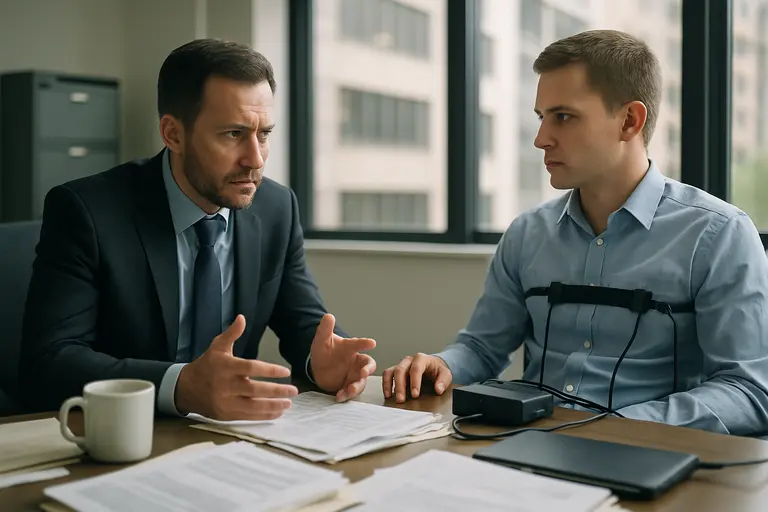
False confession research is not just an academic concern. A confession can reshape an investigation, affect plea decisions, and influence how other evidence is interpreted. When polygraph feedback is used inside an interrogation, the concern is not only the physiological recording. The concern is the message delivered to the person after the test and whether that message is accurate, proportionate, and supported by other evidence.
These Polygraph Limitations do not mean physiological testing has no investigative value. They mean the value depends on the question format, the evidence available before testing, the examiner’s conduct, and how results are explained. A cautious examiner should distinguish between a reported reaction, an inconclusive result, and a deception opinion. Treating those categories as interchangeable can create avoidable risk.
What Counts As A False Confession Concern?
A false confession concern arises when a person admits wrongdoing that later evidence shows they did not commit. In the research supplied for this topic, the strongest direct evidence comes from documented false-confession cases in the National Registry of Exonerations. That matters because the cases were not hypothetical training scenarios; they involved people later cleared after the legal system had relied on confessional evidence.
The practical issue is feedback. A person who is told they failed may believe resistance is pointless, even where the test record was inconclusive or did not support that statement. That risk is higher if the person is young, has low intellectual ability, has mental health vulnerabilities, or faces questioning without strong independent evidence. Those factors do not make every statement unreliable, but they do call for stricter safeguards.
What The 2026 Case Review Found
How The Study Framed Polygraph Feedback
Denkinger and colleagues, first published on March 8, 2026 in Legal and Criminological Psychology, analyzed 56 documented false-confession cases in the National Registry of Exonerations in which polygraphs had been used during interrogations. In the 36 cases where the examiner’s decision was reported, only eight outcomes were accurate; in all but one of the other cases, suspects were told they failed even when the results were inconclusive or exoneratory, according to the Denkinger false-confession study.
The same study identified a tactic the authors called the “Polygraph Self-Incrimination Ploy.” As described in the research, this refers to the use of polygraph feedback, especially false or misleading feedback, to pressure or mislead suspects toward confession. The label is useful because it separates the test instrument from the interrogation tactic. The ethical problem is not merely that a chart may be difficult to interpret; it is that a claimed result can be used as psychological evidence of guilt.
Why Vulnerability Factors Change The Risk Assessment
The Denkinger study also reported that many exonerees in these cases shared known vulnerability factors, including low intellectual ability, mental health issues, or being minors. The study further noted that polygraphs were often administered without strong incriminating evidence. For a compliance professional, that combination is a warning sign. A test used in a weak-evidence case may begin to carry more weight than it can safely bear.
In workplace settings, vulnerability may look different, but the principle remains. Employees may feel pressure because of job loss risk, immigration concerns, professional reputation, power imbalance, or limited understanding of the process. An ethical process should explain the voluntary or policy-based nature of the test, the limits of interpretation, and the difference between a test opinion and a disciplinary finding. Plain-language policy writing can help; a related site in the same network, Top Ten Writing Services, highlights the value of clear and effective written communication even though it is not directly related to the polygraph studies discussed here.
Eye-Tracking Comparison And Test Interpretation
What The 2026 Concealed Information Test Study Reported
A different 2026 study compared eye-tracking with polygraph measures during a Concealed Information Test. The study, published on June 3, 2026 in Scientific Reports, reported 94.9% classification accuracy for the eye-tracking method and 88.2% for polygraph under the same conditions, while also noting that five polygraph recordings were excluded because of inconclusive or defective data, as summarized in the PubMed study record.
That comparison should be read carefully. The reported figures do not prove that eye-tracking is ready to replace field polygraph practice, and they do not prove that polygraph results are useless. The study itself noted limits, including the exclusion of inconclusive polygraph data, possible recording artefacts or physical countermeasures, and differences in test-item formats between the methods. Those qualifications matter because a clean research comparison may not reflect every operational setting.
Why Accuracy Numbers Need Context
Accuracy figures can create a false sense of precision if they are repeated without context. A percentage from a controlled Concealed Information Test does not automatically transfer to workplace screening, misconduct investigations, or post-incident interviews. The sample, the question design, the ground truth standard, and the treatment of inconclusive outcomes all affect interpretation.
For service users, the better question is not “What is the single accuracy number?rdquo; but “What does this test protocol support in this case?rdquo; That question invites a more disciplined review: Was there a clear issue under investigation? Were relevant questions specific and fair? Were examinee rights and policy notices handled consistently? Was the result corroborated before any adverse decision?
Workplace Integrity Lessons From False Confession Research
Controls That Reduce Misuse
Workplace polygraph programs should avoid importing criminal interrogation pressure into employment decisions. The research on false confessions points toward a practical control set: separate the test from the final decision, document the evidence available before testing, avoid overstating failed or inconclusive results, and ensure the examinee understands the process. These steps do not guarantee accuracy, but they reduce the chance that a single procedure overwhelms the rest of the evidence.
- Use polygraph results as one input, not as a stand-alone finding of misconduct.
- Record how inconclusive, no-opinion, or technically defective outcomes will be handled.
- Train decision-makers not to present a result as proof of guilt.
- Screen for vulnerability factors that may affect consent, comprehension, or pressure.
- Require corroboration before discipline, termination, referral, or reputational action.
Employers should also keep legal compliance separate from examiner confidence. This is not legal advice, and employment rules vary by jurisdiction and sector. The compliance point is narrower: a fair policy should state what the test can show, what it cannot show, who receives the result, and what review occurs before action is taken.
How To Read A Report Without Overreading It
A sound report should describe the issue tested, the method used, the examiner’s opinion, and any limits that affect interpretation. If a recording was incomplete, a result was inconclusive, or the examinee showed signs of distress or confusion, those points should not disappear from the file. A report that hides uncertainty may look cleaner, but it is less useful for decision quality.
For HR, security, and compliance teams, the safest reading is evidence-based and modest. A deception-indicated opinion may justify further inquiry, but it should not close the inquiry. A no-deception opinion may be helpful, but it should not erase credible contrary evidence. An inconclusive result should not be converted into a failed result for convenience.
Applying Polygraph Limitations To False Confession Risk
A Cautious FAQ Answer For Practitioners
Can a polygraph contribute to a false confession risk? The recent case-review research supports that concern where feedback is false, misleading, or used to intensify pressure, especially with vulnerable individuals and weak independent evidence. Can polygraph testing still be used responsibly? Yes, but only with transparent limits, trained examiners, proportionate use, and corroboration.
A practical reading of Polygraph Limitations is not anti-testing. It is anti-overclaiming. The test should never become a shortcut around evidence quality, and examiner feedback should never be shaped to produce an admission. In workplace integrity settings, the most defensible approach is to treat the polygraph as a structured investigative aid, document uncertainty, and make decisions that can be explained without relying on the test alone.