
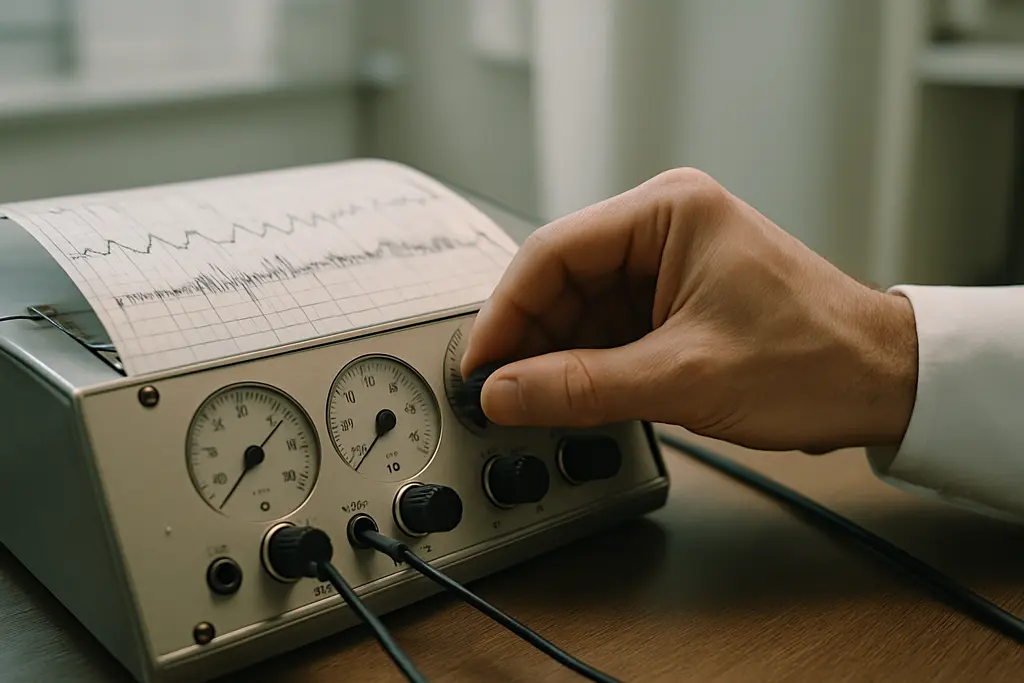
The phrase APA Standards refers here to the American Polygraph Association’s practice standards for examiners. In workplace settings, those standards matter because a polygraph examination can influence reputations, internal trust, and investigative decisions. A standard does not make a test infallible. It does, however, create a clearer process for consent, test structure, recordkeeping, analysis, and reporting.
That distinction is central to ethical use. Polygraph work should not be presented as certainty, and it should not replace ordinary fact-finding, documentation, interviews, or policy review. Its more defensible role is narrower: a structured assessment conducted under defined conditions, explained in advance, preserved for later review, and reported with appropriate limits.
Why Polygraph Integrity Needs Standards
The Risk Of Unstructured Testing
Integrity in a polygraph examination begins before sensors are attached. If the referral question is vague, the examinee is unclear about the purpose, or the examiner’s method is not documented, the result may be difficult to interpret later. That does not only create technical problems. It can also weaken trust between an employer, an employee, and any third party asked to review what occurred.
Standards reduce that risk by creating expectations for each phase of the examination. A workplace decision-maker should be able to ask basic questions: What was the purpose of the examination? What questions were reviewed? What equipment and sensors were used? Was the session recorded where permitted? Was the examinee told how results could be used? A process that cannot answer those questions is hard to defend, even if the examiner appears confident.
For readers comparing examiner practice with broader professional expectations, this site’s discussion of professional testing standards addresses related issues of competence, consent, reporting, and trust.
What APA Standards Require In The Examination
APA Standards And Informed Consent
The American Polygraph Association’s Standards of Practice, effective August 23, 2024, address examination structure, examiner responsibilities, informed consent, suitability, recording, data retention, and reporting duties. They describe the examination as a process that includes interview activity, physiological data collection, and analysis rather than a single instrument reading. The standards also require examinees to receive information about the nature and purpose of the examination, the instrumentation and sensors, recording practices, cooperation expectations, and how results may be used, as reflected in the APA practice standards.
Under APA Standards, informed consent is not a decorative form. It is part of the integrity control. A person who does not understand the purpose of the test, the role of sensors, or the expected use of results cannot meaningfully participate in the process. In workplace matters, that is especially sensitive because the examination may occur after an allegation, an inventory loss, a policy breach, or another event involving stress and possible employment consequences.
Records, Review, And Replication
Record retention is another practical integrity safeguard. The research supplied for this article states that the standards require examiners to keep original physiological data, test questions, referral information, and material that allows later review of the analysis. It also states that audio or video recording is required for all phases where law or agency policy allows. Those requirements support accountability because another qualified reviewer can examine what was asked, how the examination was conducted, and whether the analysis is consistent with the recorded material.
This matters because a conclusion without a record asks others to trust memory and authority. A conclusion supported by preserved data, clear questions, and documented methods gives reviewers more to evaluate. It does not remove all disagreement, but it narrows the space for unsupported interpretation.
Where Ethics And Limits Fit
Ethical Assessment Requires More Than Procedure
Technical rules are necessary, but they are not the whole integrity picture. The American Psychological Association’s ethics code, which applies to psychologists rather than the American Polygraph Association, states that assessment work should use techniques with established validity and reliability, conclusions should rest on sufficient information, and limits should be clarified while confidentiality and test security are protected. Those principles are stated in the psychologists’ ethics code.
The practical lesson is cautious reporting. A polygraph report should not imply that the instrument directly reads truth or intent. It records physiological responses that are interpreted under a testing model. That interpretation can be useful in some contexts, but it should be weighed with other evidence. Documents, access records, witness accounts, security footage, admissions, and policy history may all change the significance of a polygraph outcome.
Reporting Should Match The Evidence
The research notes state that in evidentiary examinations, examiners must report probabilistic results and/or the rendered opinion, along with questions, recording methods, sensors used, and analytic parameters. This type of reporting is valuable because it discourages overstated conclusions. A workplace reader should be able to see not only the opinion but also the basis for that opinion.
The practical value of APA Standards is that they make overstatement easier to spot. If a report lacks the relevant questions, does not identify methods, or fails to describe limits, the user should hesitate before giving it significant weight. A careful report may still support a decision, but it should invite review rather than demand unquestioned acceptance.
Practical Use In Workplace Integrity Programs

How Employers Can Use Standards Without Overreliance
Workplace integrity programs often involve policies on theft, safety, harassment, confidentiality, drug diversion, fraud, or sensitive access. A polygraph examination, where permitted and appropriate, may be one tool within a wider process. It should not become the entire process. The better practice is to define the referral question, document the reason for requesting the examination, identify what other evidence exists, and decide in advance how the result will be weighed.
That approach protects both the organization and the examinee. It reduces the chance that a single result will override conflicting evidence. It also gives managers a more disciplined way to explain decisions. A workplace that treats a polygraph result as one evidence item, rather than a verdict, is more likely to maintain trust after the examination is complete.
- Confirm that the purpose of the examination is specific and work-related.
- Ask whether informed consent, suitability review, and recording practices were documented.
- Require a report that identifies questions, methods, sensors, and stated limits.
- Keep the result separate from unrelated personnel judgments.
- Review the result alongside independent evidence before making any decision.
Transparency also matters outside formal employment settings. Public-facing organizations, including a related site in the same network, face a similar communication issue: people are more likely to trust processes that explain what they can show, what they cannot show, and who is accountable for the decision.
Quality Control And Continuing Education
The research notes state that the American Polygraph Association requires quality control in member practices and continuing education through supervised contact or continuing education hours over a two-year period. That expectation supports integrity because examiner skill is not static. Testing methods, instrumentation requirements, scoring practices, and reporting expectations can change.
Quality control also separates a professional process from a personality-driven one. In a workplace matter, an employer should not have to rely solely on an examiner’s confidence. The file should show that the examination was conducted under recognized expectations and that the examiner’s work is capable of review.
APA Standards For Workplace Polygraph Integrity
A Standard Is A Safeguard, Not A Guarantee
APA Standards enhance integrity by making the polygraph process more transparent, reviewable, and ethically bounded. They define what should happen before, during, and after the examination. They also support informed consent, retained records, structured reporting, and ongoing professional development.
Those safeguards do not prove that every result is correct, and they do not answer legal questions about whether a workplace may require or use a polygraph in a particular situation. They do provide a practical benchmark for responsible service selection and cautious interpretation. For employers, the most defensible posture is to ask whether the examination followed recognized standards, whether the report explains its limits, and whether the final decision rests on more than one source of evidence.
Used that way, a polygraph examination can contribute to workplace integrity without being treated as a shortcut to certainty. The ethical value is not in claiming more than the process can support. It is in documenting the process clearly, respecting the examinee, preserving the record, and allowing the result to be reviewed with care.