
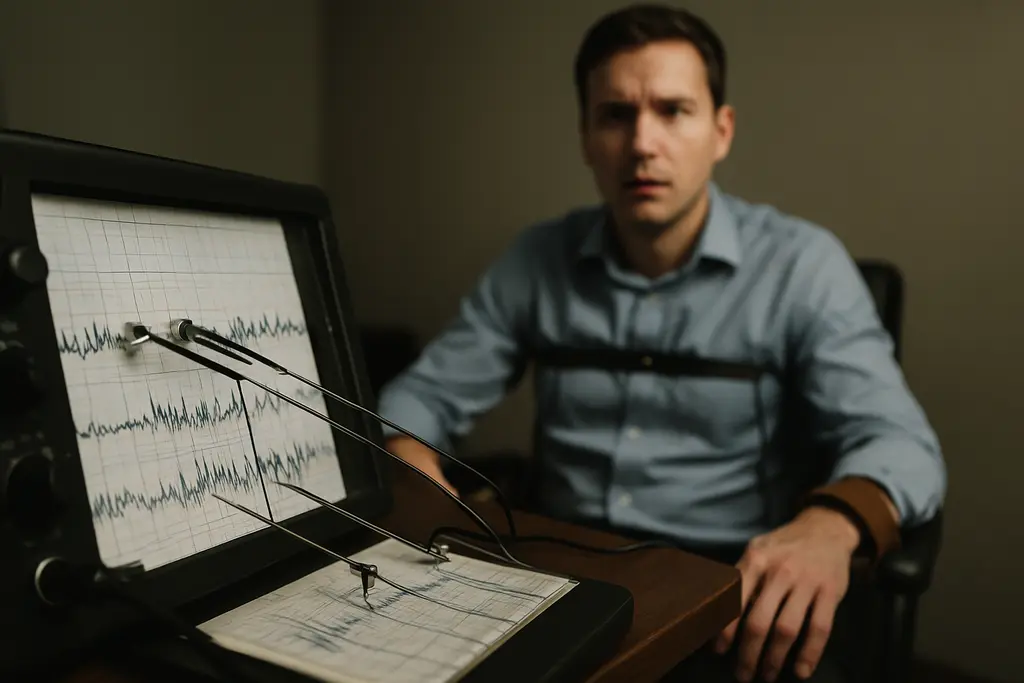
Polygraph testing remains attractive to employers, investigators, and legal teams because it promises structured information in situations where credibility is disputed. The harder question is how much weight that information deserves. Recent findings do not support treating a result as a stand-alone answer. They support a narrower, more disciplined view: a polygraph may contribute to an inquiry, but its value depends on test purpose, examiner conduct, question design, and the evidence already available.
That distinction matters in corporate and legal settings. A workplace integrity program succeeds when it improves decision quality without overstating what any single tool can prove. A failed program may create the appearance of certainty while increasing the risk of unfair accusation, damaged trust, or a poorly supported employment decision. For a resource on professional-integrity tools within the same network, AGHEIRO offers valuable insights. However, any organization using examination services still needs its own policy controls and evidence standards.
What New Findings Say About Polygraph Testing
Polygraph Testing And False Confession Risk
The most serious recent warning comes from research involving exoneration cases. A study published on March 8, 2026, in Legal and Criminological Psychology analyzed 56 exoneree cases in which polygraphs were used during interrogation. Among 36 cases with reported examiner decisions, only 8 decisions were accurate. The same research reported that, in nearly all remaining cases, subjects were told they had failed even where the result was inconclusive or exculpatory, according to the 2026 exoneration study.
That finding does not mean every examination is unreliable. It does mean the use of results during interrogation can create a separate risk: the way a result is communicated may become more influential than the underlying measurement. In an employment context, the parallel risk is not a false confession in the criminal sense, but pressure on an employee to accept a damaging interpretation before the organization has checked other evidence.
Why Accuracy Claims Need Context
A 2019 review of forensic lie detection using the comparison question technique reaffirmed a central point from the 2003 National Research Council report: the technique can perform better than chance, but broad claims of about 90% accuracy can be misleading because many field studies have quality concerns and true error rates in real forensic settings remain largely unknown, as summarized in the 2019 forensic review.
For a workplace decision maker, that is the key practical issue. A high-sounding accuracy claim may not describe the actual setting in which the examination is being used. A single-incident inquiry with a defined allegation is not the same as a broad screening examination. A case with strong independent evidence is not the same as a case built mainly on suspicion. A test administered to a vulnerable person or under strong pressure may carry risks that are not visible in a simple percentage.
Where Inaccuracy Risks Affect Workplace Decisions
False Positives Can Damage Trust
False positives are the main concern for employers that want to protect workplace integrity without harming employees who are truthful. If a truthful person is incorrectly labeled deceptive, the consequences can extend beyond the immediate inquiry. Supervisors may start treating the person as untrustworthy, colleagues may hear rumors, and the organization may shift attention away from other evidence. Even where no formal discipline follows, the perceived finding can affect reputation and morale.
This is why polygraph testing should not be framed internally as a machine-based verdict. It is better treated as one data point that may justify further inquiry, clarification, or corroboration. Organizations that already use structured interviews, access logs, inventory records, audit trails, witness statements, and written policies have a stronger basis for deciding how much weight an examination result deserves.
Screening Is Not The Same As A Case-Specific Inquiry
Risk increases when the question is broad. Screening can involve multiple concerns without a single known incident. That creates a different decision problem from a focused inquiry into a specific allegation. The research notes supplied for this review distinguish between event-specific examinations and screening uses, with screening generally described as more vulnerable to lower specificity and false-positive concerns.
In practice, that means a broad integrity screen should be approached with extra caution. If the organization cannot define the issue clearly, cannot explain how results will be used, or cannot describe what independent evidence would be needed before action is taken, the process may be too weak to support a high-stakes decision. For a deeper discussion of how recent reliability research affects workplace safeguards, see this related analysis of polygraph reliability findings.
How Employers Can Use Results More Responsibly

Set The Decision Rule Before The Examination
The most practical safeguard is to decide in advance what an examination result can and cannot do. A result might trigger a follow-up interview, document review, or expanded audit. It should not automatically settle responsibility. This protects both the organization and the examinee because it prevents decision makers from changing the standard after seeing a result they find persuasive.
A written protocol should define the purpose of the examination, the issue being tested, who may receive the result, what language may be used when communicating findings, and what corroboration is required before employment action is considered. The protocol should also address inconclusive outcomes. Treating an inconclusive result as a failure is one of the most concerning patterns identified in the exoneration research, and a workplace policy should avoid that ambiguity.
Separate Investigation From Pressure
Another safeguard is procedural separation. The person interpreting the examination should not be the only voice shaping the employment decision. Human resources, security, compliance, and management may each hold different pieces of the evidence. A review process that requires these pieces to be compared can reduce the chance that one result dominates the file.
Communication also matters. Employees should not be told that a result proves misconduct if the science does not support that level of certainty. A better approach is precise language: the examination produced a result that may be consistent with concern, or it did not resolve the issue, or it requires comparison with other evidence. That may feel less decisive, but it is more accurate and easier to defend.
- Define the specific issue before scheduling the examination.
- Document what independent evidence already exists.
- Decide how inconclusive findings will be handled.
- Limit distribution of results to people with a genuine need to know.
- Require corroboration before serious employment action.
Polygraph Testing Effectiveness In Practice
A defensible use of polygraph testing starts with modest claims. The examination may help structure questioning, identify areas needing corroboration, or test competing accounts. It should not replace ordinary investigation. The 2026 exoneration findings show the danger of overstated interpretations, especially where people are told they failed despite inconclusive or contrary information. The 2019 forensic review shows why broad accuracy claims should be read with caution.
The practical question is not whether polygraph testing works in an absolute sense. The better question is whether a particular use is narrow, transparent, and supported by other evidence. In workplace integrity programs, success should be measured by fairer decisions, clearer documentation, and reduced reliance on unsupported suspicion. If an organization cannot explain the limits of the tool as clearly as it explains the reason for using it, the process is not ready for a high-stakes decision.
For corporate and legal teams, the most reliable policy position is cautious integration. Use examination services only where the issue is clearly defined, the examinee is treated fairly, the result is reviewed in context, and the organization is willing to say what remains uncertain. That approach does not promise certainty. It does offer a more credible path for using investigative tools without allowing them to outrun the evidence.