
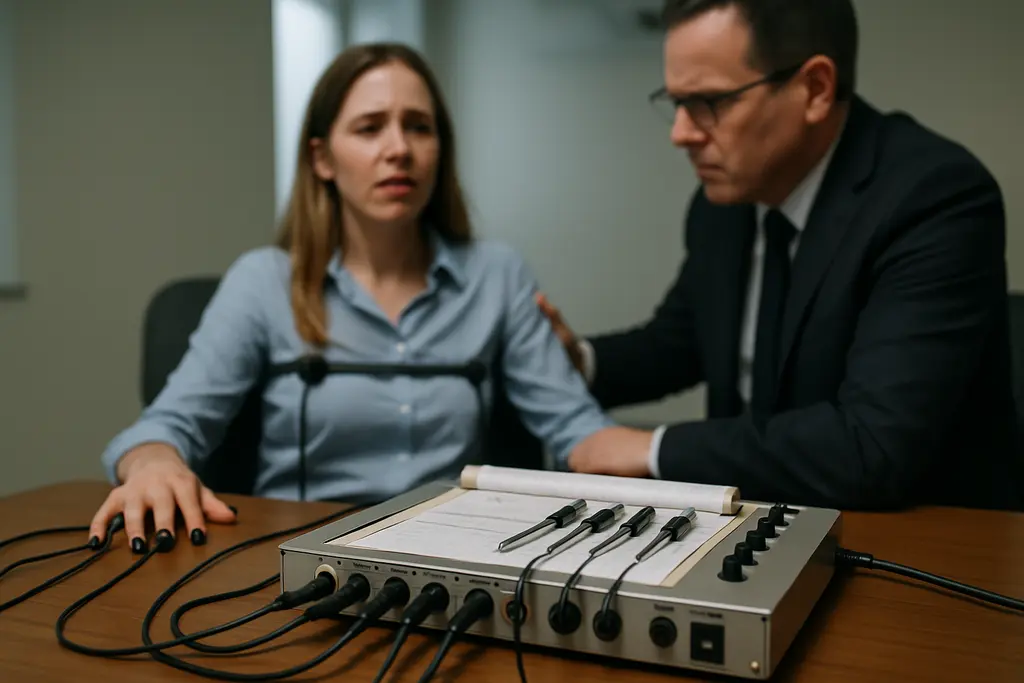
Polygraph compliance has become a practical hiring issue in the legal challenge over Amazon’s Workstyle Assessment, even though the tool at issue is not described as a traditional polygraph examination. The case matters because it tests how far a state lie-detector statute may reach when an employer uses a written or AI-supported assessment that flags truthfulness, honesty, or suspicious applicant behavior.
On February 18, 2026, U.S. District Judge William G. Young ruled that Korn v. Amazon.com, Inc. could proceed, finding at the motion-to-dismiss stage that Amazon’s Workstyle Assessment could qualify as a lie detector under Massachusetts law, according to Bloomberg Law’s report. That ruling did not decide the final merits. As of October 5, 2026, the dispute remained in an early post-motion-to-dismiss phase, with no trial judgment establishing whether the assessment legally was a lie detector or what remedy, if any, would apply.
Polygraph Compliance And The Amazon Assessment
Why Polygraph Compliance Reaches Beyond Hardware
The core issue is statutory scope. The research record describes Massachusetts General Laws chapter 149, section 19B as defining lie detector tests broadly enough to include a written examination used or interpreted for the purpose of assisting in the detection of deception, verification of truthfulness, or a diagnostic opinion about honesty. That framing is significant for employers because a hiring screen need not use sensors, cuffs, or a conventional examiner to raise a lie-detector question under that state law.
The plaintiff, Justin Korn, alleged that he applied for three Amazon positions in summer 2024 and was required to complete the Workstyle Assessment without receiving the written notice required by Section 19B’s notice provision. Court materials cited in the research also describe Amazon’s application language as warning applicants that the company used mechanisms to detect suspicious test behavior and responses, including attempts to plagiarize, fabricate, or use outside assistance, with possible effects on current or future applications, including disqualification or legal action; those allegations appear in the filed federal court document.
Amazon argued that the Workstyle Assessment was a personality test rather than a lie detector. The court did not accept that argument as enough to end the case at the dismissal stage. That procedural posture matters. A denied motion to dismiss means the plaintiff’s theory survived an early legal challenge; it does not mean the plaintiff proved the assessment violated Massachusetts law.
What The Paired-Statement Format Adds
The assessment described in the research presented applicants with paired statements about work behavior and asked them to choose which statement better represented their work style. Examples included a statement about rarely missing deadlines paired against a statement about feeling good when a plan works out. On its face, that type of format can resemble a workplace style or personality instrument. The legal risk arises from how the tool is described, used, interpreted, and connected to suspicious behavior, fabrication, honesty, or applicant truthfulness.
For hiring teams, polygraph compliance should not be reduced to the label placed on a test. A tool called a workstyle assessment, personality measure, integrity screen, or AI assessment may still attract scrutiny if its function appears to help determine deception or honesty. The Amazon case is useful precisely because it separates marketing language from legal characterization. Courts may ask what the assessment does, how the employer describes it, and what consequences follow from flagged responses.
Why The Ruling Matters For Hiring Processes
Notice Duties Can Be Operational Risks
The plaintiff’s notice theory is not a minor administrative point. The research states that Massachusetts law both bans lie detector tests in hiring and requires specific notice to applicants. If the Workstyle Assessment is ultimately treated as a lie detector under state law, the alleged lack of required notice could become central to liability. The class-related risk described in the research is also practical: potential exposure could extend beyond one applicant to other people required to take the assessment in Massachusetts if they qualify as aggrieved persons under the statute.
That uncertainty creates a lesson for employers using hiring technology. Compliance review should happen before a tool is introduced, not after an applicant challenges it. Product teams, HR leaders, and legal reviewers may need to compare the assessment’s wording, scoring logic, applicant warnings, and disqualification rules against state restrictions on lie-detector testing. This is not a recommendation to abandon all structured assessments. It is a caution that tools addressing honesty or suspicious conduct may sit closer to regulated lie-detector territory than their labels suggest.
| Assessment Feature | Why It May Matter | Practical Review Question |
|---|---|---|
| Statements about work behavior | May appear similar to personality or style screening | Is the tool used only for job fit, or also for honesty judgments? |
| Warnings about suspicious responses | Can suggest detection of fabrication or outside assistance | Does the language imply truth verification? |
| Disqualification consequences | Connects the assessment to hiring outcomes | Are adverse consequences tied to alleged deception? |
| Notice to applicants | Central to the Massachusetts claim described in the case | Does state law require a specific written notice? |
AI And Algorithmic Tools Add Scrutiny
The research notes that the case may affect employers using algorithms, assessments, or AI tools in hiring when those systems evaluate honesty, integrity, or suspicious behavior. That risk is not limited to Amazon. Any employer relying on a third-party assessment or internal scoring tool may need to understand whether the tool is framed as detecting truthfulness or deception. A vendor’s description may not be enough if the employer’s applicant-facing language or internal use tells a different story.
For readers tracking related employment-screening concerns, this site’s discussion of the polygraph recruitment process covers why notice, recordkeeping, timing, and applicant rights can affect hiring workflows. Additionally, for those interested in exploring related topics covered within the same network, Old Norse News offers insightful commentary.
Limits Of The Amazon Ruling

No Final Finding Has Been Made
A cautious reading is necessary. The court allowed the lawsuit to proceed; it did not make a final factual finding that Amazon’s Workstyle Assessment was a lie detector. It also did not decide what damages, remedies, or class-wide consequences would follow. As of October 5, 2026, the available research supports only a limited conclusion: the plaintiff’s theory survived the dismissal stage, and the legal questions remained unresolved.
That distinction should shape how employers and applicants read the case. It would be inaccurate to treat the ruling as proof that all personality tests, all AI hiring tools, or all workstyle questionnaires are lie detectors. It would also be risky to assume the opposite. The case shows that courts may be willing to examine whether a written hiring assessment is used in a way that fits a broad lie-detector definition.
- Employers should identify whether any hiring tool refers to honesty, truthfulness, deception, fabrication, suspicious behavior, or integrity scoring.
- Applicant-facing notices should be checked against state-specific requirements before the assessment is used.
- HR teams should ask vendors how the tool is interpreted and whether it contributes to disqualification decisions.
- Any compliance review should distinguish between job-fit measurement and truth-detection functions.
Federal Questions Remain Open
The research also identifies a possible federal-law connection through the Employee Polygraph Protection Act. The available facts do not establish how a federal EPPA claim would be resolved in this case, and no final judgment described in the research has answered that question. The safer analytical point is narrower: state lie-detector statutes and federal polygraph restrictions can both become relevant when an employer uses hiring tools that appear to evaluate deception or truthfulness.
For employers, polygraph compliance should be treated as a cross-functional review issue rather than a narrow examiner issue. That review may involve HR, counsel, procurement, privacy teams, and the staff responsible for applicant communications. The purpose is not to guarantee a lawful outcome, because only a court can resolve disputed legal claims. The purpose is to reduce avoidable ambiguity before applicants are asked to complete a screening tool.
Amazon Case And Polygraph Compliance
The Amazon litigation shows how hiring integrity tools can create exposure when their purpose, wording, and consequences are not clearly separated from deception detection. The most useful lesson is not that every employer must avoid structured assessments. The lesson is that assessments touching honesty or suspicious conduct should be reviewed with the same seriousness that employers bring to more familiar regulated screening methods.
Polygraph compliance in this setting means asking disciplined questions before deployment: What does the assessment claim to measure? Does applicant-facing language suggest fabrication detection or truth verification? Are applicants given any notice required by state law? Are adverse decisions tied to suspected dishonesty rather than job-related work preferences? Until Korn v. Amazon.com, Inc. reaches a later merits ruling or resolution, those questions remain practical safeguards, not definitive answers.