
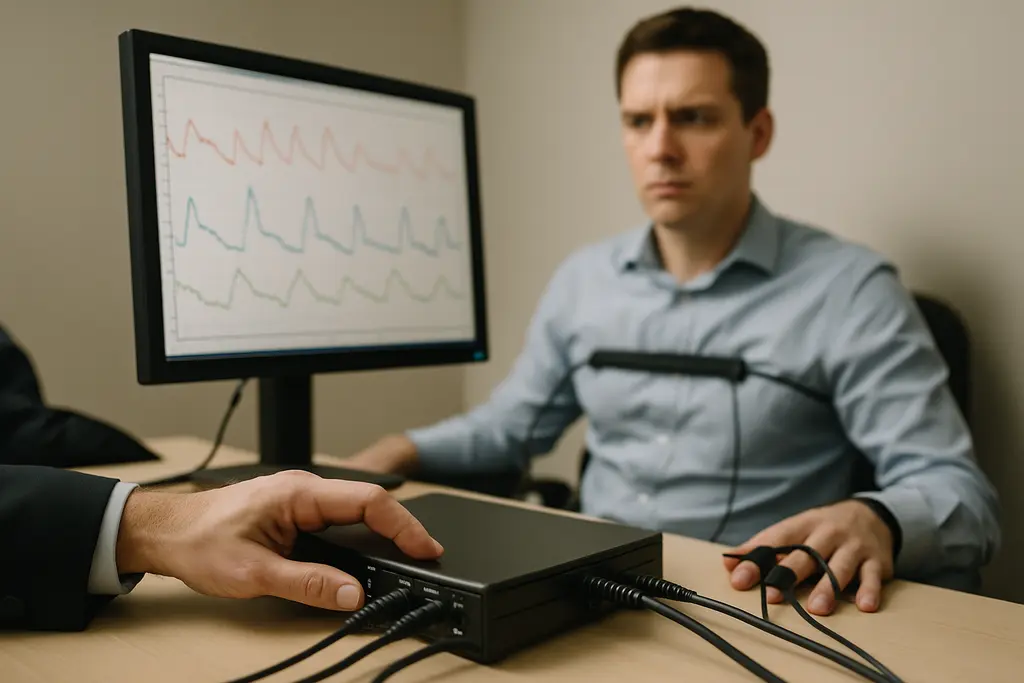
A polygraph examination can feel more intimidating than it should because many people arrive with only fragments of information: sensors, questions, charts, and a result that may affect employment, trust, or an investigation. Recent reports reinforce a more cautious view. The process is structured, the questions should be reviewed in advance, and the result is an examiner’s opinion based on physiological data rather than a direct measure of truth.
That distinction matters for both examinees and referring organizations. A transparent process helps reduce confusion, but it does not remove uncertainty. The strongest use of polygraph services is usually as one part of a wider integrity review, supported by policies, documentation, interviews, and fair decision procedures.
The Polygraph Examination Framework
Pre-Test Interview And Consent
A well-structured exam generally begins with a pre-test interview. During this phase, the examiner explains the procedure, discusses the issue under review, checks whether physical or psychological factors may affect testing, reviews the questions, and documents consent. The State Department’s Foreign Affairs Manual describes this pre-test work, consent, and the post-test opportunity to respond as part of official investigative polygraph procedures in the Foreign Affairs Manual.
For an examinee, the practical lesson is simple: this is the time to ask procedural questions. If a question is unclear, ambiguous, or too broad, it should be addressed before chart collection begins. For an employer or investigator, the lesson is equally direct: an unclear referral question can weaken the value of the entire process.
What A Polygraph Examination Records
The in-test phase is often called chart collection. The Department of Justice archive describes the technique as recording physiological activity while the person answers questions, including respiration, cardiovascular activity, and skin conductivity through the Justice Manual technique summary. These measurements can be relevant to the examiner’s scoring and interpretation, but they are not a literal recording of honesty or deception.
That is why the surrounding process carries so much weight. The setting, question structure, issue definition, and examiner conduct all affect how useful the recorded charts may be. A polished report cannot repair a poorly framed test issue.
Question Review And Chart Collection
Relevant, Comparison, And Control Questions
Recent process descriptions continue to separate question types. Relevant questions address the matter being examined. Comparison or control questions are used to evaluate responses against other questions. Screening settings, such as certain employment or background reviews, may use a different structure from a single-issue diagnostic exam.
The examinee should not be surprised by the substance of the test questions during chart collection. The questions should have been reviewed during the pre-test stage, and the person should understand what each question means. That is not a courtesy detail; it is central to obtaining interpretable data.
Why Surprise Questions Do Not Fit The Process
Surprise content can create confusion, fear, or a response to wording rather than to the issue being assessed. A fair process reduces those avoidable sources of reaction. It also protects the referring organization from overvaluing a result that may have been affected by preventable ambiguity.
Professionally, the better question is not whether the exam felt forceful. It is whether the process was clear enough that the examinee understood the issue, the questions, the right to respond, and the limits of the outcome.
How Results Should Be Read
No Result Should Be Treated As Certainty
A polygraph examination result is usually expressed in terms such as deception indicated, no deception indicated, or inconclusive. The exact terminology can vary by method and policy. None of these categories should be treated as a perfect finding. A result may assist decision-makers, but it should not replace corroborating evidence, documented admissions, witness information, digital records, or other investigative material.
This point is especially relevant in workplace integrity matters. A result that appears supportive of one side can still be incomplete. A result that appears unfavorable can still require review of context, medical factors, question wording, and whether other evidence supports the same conclusion.
Inconclusive Findings Are Not Failures
Recent research summaries in the field continue to recognize inconclusive outcomes as a real category, not an examiner’s failure to choose. Inconclusive results can occur when the data do not support a reliable opinion. For compliance teams, that should be treated as information: the test did not resolve the issue at the confidence level needed for a conclusive call.
The post-test phase is also significant. The examinee may be asked about reactions observed during charting and may offer explanations. Those explanations do not automatically prove or disprove anything, but they may identify issues that need follow-up.
Recent Reports And Legal Lessons

Court Use Is Fact Specific
Reports from 2026 described different judicial treatments of polygraph-related evidence. In one August 17, 2026 decision, testimony connected to a polygraph was discussed in relation to the circumstances of a confession rather than as proof that the test result was true. In another April 29, 2026 report, an effort to use failed polygraph results as part of a defense was rejected because reliability and jury-confusion concerns outweighed the claimed value.
The practical lesson is not that every court will treat these issues the same way. The lesson is that polygraph material is often limited, contested, and dependent on purpose. Employers should take the same cautious approach even outside court. A workplace decision that depends on a single test result is easier to challenge than one grounded in multiple forms of evidence and a fair process.
Workplace Screening Needs Added Care
For workplace integrity teams, a polygraph examination may be used in certain settings as one component of screening or investigation, but it should sit within a defined policy. That policy should address consent, permissible questions, confidentiality, record handling, who receives the report, and how the result will be weighed. Organizations comparing professional-service information across related sites can use Finest Image as a reference point for how service pages should present claims plainly rather than promising outcomes that cannot be guaranteed.
Practical Preparation For Examinees And Employers
For The Person Being Tested
Preparation should focus on clarity, not tactics. A person scheduled for testing should understand the referral issue, disclose relevant medical or psychological concerns when asked, listen carefully during the pre-test explanation, and speak up if a question is unclear. The goal is not to perform for the instrument; it is to participate in a process where the questions are understood before the charts are collected.
- Ask what issue the exam is intended to address.
- Confirm that every test question has been reviewed before chart collection.
- Raise concerns about wording, health factors, or misunderstanding during the pre-test phase.
- Use the post-test discussion to explain reactions or context truthfully.
For The Referring Organization
Employers and investigators should prepare just as carefully. The referral question should be narrow enough to test. The examiner should receive accurate background information without being pushed toward a preferred result. Decision-makers should decide in advance how much weight the result will receive and what other evidence is needed before any adverse action is considered.
For readers who want a step-by-step process discussion, this related article on what to expect in testing provides a useful companion to the issues raised here.
Polygraph Examination Lessons For Workplace Integrity
A polygraph examination is best understood as a structured investigative tool with defined phases, practical safeguards, and real limits. Recent reports do not support treating it as a stand-alone answer. They support a more disciplined approach: clear consent, reviewed questions, professional chart collection, a chance to respond after testing, and careful handling of the final opinion.
For workplace integrity programs, that approach can support trust when it is used transparently and proportionately. It can harm trust when it is presented as certain, used without policy controls, or disconnected from other evidence. The safest professional standard is to respect what the process can contribute while refusing to make it carry more weight than the data justify.