
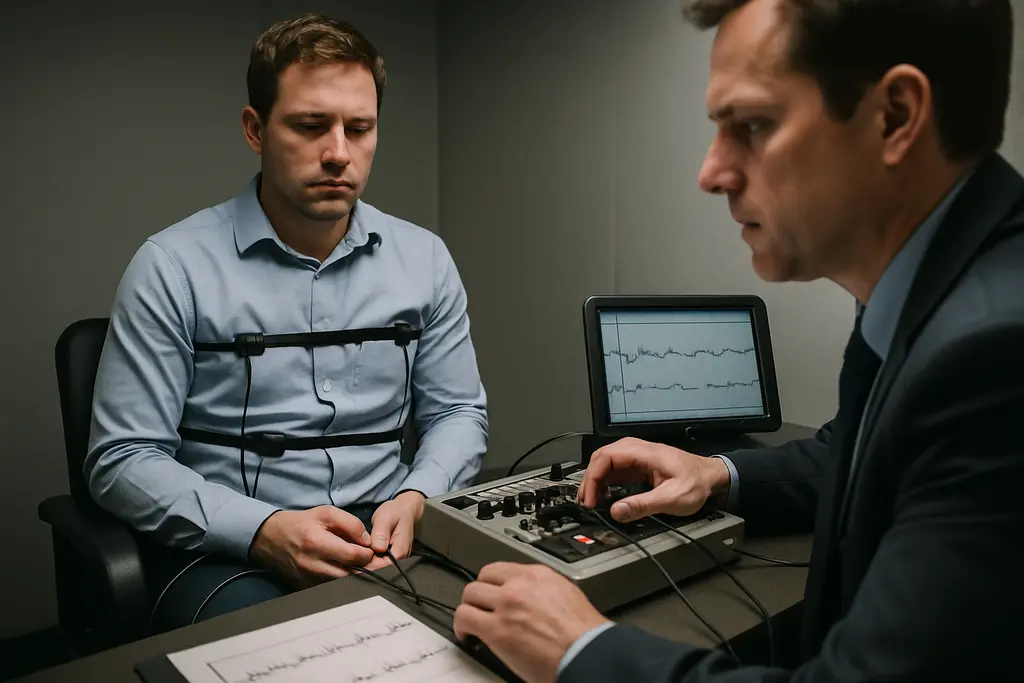
Employment Polygraph Use remains a sensitive compliance issue for employers, even though there has been no recent new EEOC guidance specifically changing the agency’s position on polygraphs as of September 28, 2026. The practical point is that older federal rules still matter: the test itself is treated one way, while the questions asked during the test may trigger separate disability-related inquiry rules.
That distinction is where many policies become weak. A polygraph program can look procedural on paper, yet still create risk if the question set touches medication, diagnoses, impairments, treatment, or other disability-related topics at the wrong hiring stage. Employers also need to separate EEOC concerns from the Department of Labor’s Employee Polygraph Protection Act framework, because both can affect policy design in different ways.
Employment Polygraph Use And The EEOC Position
The EEOC’s existing ADA guidance states that polygraph examinations are not medical examinations. That does not mean every question asked in a polygraph setting is safe. The EEOC explains that a polygraph may include disability-related questions, and those questions remain subject to ADA limits on timing and content under the agency’s ADA inquiry guidance.
Employment Polygraph Use Is Not A Medical Exam
The non-medical classification matters because employers sometimes assume that polygraph administration fits neatly into either a medical-testing category or a general background-screening category. The EEOC position is more specific. The examination is not classified as a medical exam, but the content of the examination can still cross into disability-related inquiry territory.
For compliance purposes, the key question is not only whether a polygraph instrument was used. The key question is what the employer asked, when the employer asked it, who was asked, and how the response influenced the employment decision. A policy that ignores those four points can expose an organization to avoidable claims, even if the examiner and HR team did not intend to ask prohibited questions.
Pre-Offer Questions Require Special Care
Before a conditional job offer, employers may not ask disability-related questions. That restriction still applies if the questions are embedded in a polygraph-administered assessment. A pre-offer question about lawful medication use, treatment history, or a condition that could reveal disability information may be treated differently from a question about job-related conduct that does not seek medical or disability information.
The safest policy approach is to review question pools before any exam is scheduled. That review should include HR, compliance personnel, and counsel where appropriate. A polygraph examiner may understand testing formats, but the employer remains responsible for the employment process in which the test is used. Materials related to workplace communication and trust, such as those found on Talk and Play, can be useful resources, but employer policy decisions should rest on the governing federal standards.
How ADA Rules Affect Polygraph Questions
The ADA issue is not limited to whether an applicant is asked a direct medical question. Employers should also consider whether a question is likely to elicit disability-related information. That requires looking at wording, context, and follow-up practices. A broad question may be defensible in one setting and risky in another if the predictable answer reveals protected information unrelated to the job decision.
Post-Offer Consistency Matters
After a conditional job offer, the EEOC framework allows more room for disability-related questions, but not unlimited discretion. The research indicates that post-offer polygraph questions containing disability-related content should be applied consistently to all entering employees in the same job category and should satisfy the relevant job-related and business-necessity principles where those standards apply.
Consistency is not a cosmetic requirement. If one candidate is asked disability-related questions and another similarly situated candidate is not, the employer may have difficulty explaining the difference. The same concern applies if an applicant is singled out after disclosing a prior condition, requesting accommodation, or participating in protected EEO activity. Even where a claim later fails, the process can draw scrutiny if the employer cannot show a neutral policy basis.
Question Pools Should Be Audited
A practical audit should compare each proposed question against the hiring stage. Pre-offer questions should avoid disability-related content. Post-offer questions should be reviewed for consistency across the same job category. The employer should also document who approved the question set, what job-related purpose the exam was meant to serve, and how results would be weighed against other evidence.
This is especially relevant because Employment Polygraph Use can create a misleading sense of precision. A physiological response is not a direct recording of truth. In a workplace setting, the test result should not replace independent evidence, witness information, inventory records, access logs, or other materials that can be checked. Sound policy treats a polygraph as one possible investigative tool only where lawful and appropriate, not as a standalone decision engine.
Policy Controls For Permitted Testing

EEOC concerns sit beside a separate federal statute: the Employee Polygraph Protection Act. The Department of Labor states that EPPA generally bars most private employers from using lie detector tests for pre-employment screening or during employment, and from firing, disciplining, discriminating against, or penalizing a person for refusing a test or based on test results, subject to defined exceptions under the DOL polygraph rules.
Private Employer Limits Under EPPA
EPPA applies mainly to private employers. The research also notes that federal, state, and local government agencies are not restricted by EPPA in the same way. That distinction is significant for employers that compare their practices with law enforcement or national security hiring models. A private employer should not copy a government agency process without checking whether EPPA permits that use.
The recognized private-sector exceptions are narrow. The research identifies examples involving certain security service applicants, certain pharmaceutical-related employers, and current employees suspected of a workplace incident such as theft causing specific economic loss. Even then, an exception should not be treated as a blank authorization. Notice, scope, question content, and employment action all need separate review.
- Identify whether EPPA applies to the employer and the role.
- Confirm whether a statutory exception is available before scheduling any test.
- Remove pre-offer disability-related questions from any applicant process.
- Use the same post-offer process for all entering employees in the same job category where disability-related questions are included.
- Document how non-polygraph evidence will be evaluated before any employment action.
For a narrower discussion of private-employer restrictions, the related article on employer polygraph tests addresses legal limits that often arise before a workplace exam is considered.
Employment Polygraph Use Policy Impacts
Employment Polygraph Use should prompt a written policy review rather than a one-time decision by a supervisor or investigator. The policy should state when testing is prohibited, when an exception may be reviewed, who approves the request, what notices are required, how questions are screened, and how results are stored and used. It should also explain that refusal, inconclusive results, or examiner impressions cannot be handled in a way that violates EPPA or ADA protections.
The most useful policies are restrained. They do not promise certainty, and they do not present polygraph results as proof by themselves. They require decision-makers to ask whether the same facts could be established through records, interviews, access controls, surveillance evidence, or ordinary performance documentation. That helps protect employees from overreliance on a single test and protects employers from weak employment decisions.
As of September 28, 2026, the key point is continuity rather than a new EEOC rule. The agency’s existing ADA framework still affects question content, while EPPA still restricts most private-sector testing. Employers that keep those two tracks separate, review questions before use, apply post-offer procedures consistently, and avoid unsupported claims about accuracy will be in a stronger position than employers that treat polygraph testing as a shortcut.