

A polygraph examination is best understood as a structured interview and recording procedure, not a machine-generated verdict. The instrument records physiological activity while an examiner asks questions that have already been reviewed with the examinee. For workplace integrity matters, internal investigations, and other professional settings, the value of the process depends heavily on clarity: the issue must be defined, the questions must be understood, and the result must be treated with appropriate caution.
People often arrive expecting the short version seen in entertainment: sensors attached, a few sharp questions, and an immediate answer. The real process is slower and more procedural. A typical appointment includes a pre-test interview, an in-test chart collection phase, and a post-test discussion. The examiner should explain what the instrument records, what questions will be asked, and how the session will proceed before any data collection begins.
The Polygraph Examination Timeline
Expected Length And Session Structure
A typical session lasts between one and three hours, depending on the issue, the number of questions, and the amount of discussion needed before testing begins, according to The Polygraph Guy. That time estimate covers more than the period when sensors are attached. In many properly managed sessions, the pre-test conversation is the longest and most detailed part because the examiner needs to confirm that the examinee understands the issue and the exact wording of the questions.
This matters in professional settings because the appointment should not feel like an ambush. A responsible polygraph examination allows time for explanation, question review, and clarification. If the examinee does not understand a question, the response data may be less useful, because uncertainty about meaning can interfere with a clean testing format.
Why The Process Is Slower Than Many Expect
The pace is deliberate. The examiner has to establish the topic, identify the relevant issue, explain the general function of the polygraph, and review the questions that will be used. The examinee also needs an opportunity to raise confusion about wording. This does not mean the examinee controls the test; it means the test should not depend on surprise phrasing or vague accusations.
For employers, this is where process discipline supports trust. If a workplace uses polygraph services as part of an investigation or a sensitive integrity review, employees should understand why the test is being requested and what the procedure involves. Clear internal communication is often as significant as the test itself; organizations planning this step may benefit from guidance on communicating polygraph testing to employees before the appointment is scheduled.
Before Sensors Are Attached
The Pre-Test Interview
The pre-test interview is the foundation of the examination. The examiner explains the polygraph’s function, discusses the matter under review, and goes through the questions that will later be asked during data collection. This phase is not a casual warm-up. It helps define the scope of the session and reduces the chance that a person reacts to a question because it is confusing, broad, or emotionally loaded rather than because it relates to the issue under investigation.
In workplace matters, the issue might involve a specific incident, a disputed account, or a sensitive role. The examiner’s task is to keep the session focused on the agreed question set. The organization’s task is different: it should ensure that any request for testing fits its policies and applicable rules. This article describes the process; it is not legal advice.
Question Review And Wording
Question wording is one of the most practical quality controls in the process. Before the in-test phase begins, the examinee should know the questions that will be asked. A question that combines several accusations, uses unclear time periods, or includes undefined terms can weaken the usefulness of the session. For that reason, the test can be affected before any sensor is attached if the questions are poorly built.
For a deeper discussion of this issue, see this analysis of polygraph question wording. The central point is simple: a test question should be specific enough to be answered and stable enough to be repeated during chart collection. If the wording shifts or the examinee is still debating what the words mean, the data may become harder to interpret.
What Happens During Chart Collection
What A Polygraph Examination Measures
The in-test phase is commonly called chart collection. Sensors are attached to record physiological responses while the examiner asks the reviewed questions. The United States Department of Justice describes the polygraph as recording signs of internal stress thought to occur when a subject responds falsely, including pulse, blood pressure, respiration, and the skin’s resistance to an electric current in its polygraph technique summary.
This distinction is central. The instrument records physiological activity; it does not directly record truth. During a polygraph examination, the examiner looks at patterns in the recorded responses in relation to the question format. That is why the pre-test phase and the question structure matter. The instrument is only one part of a broader procedure.
How Questions Are Presented
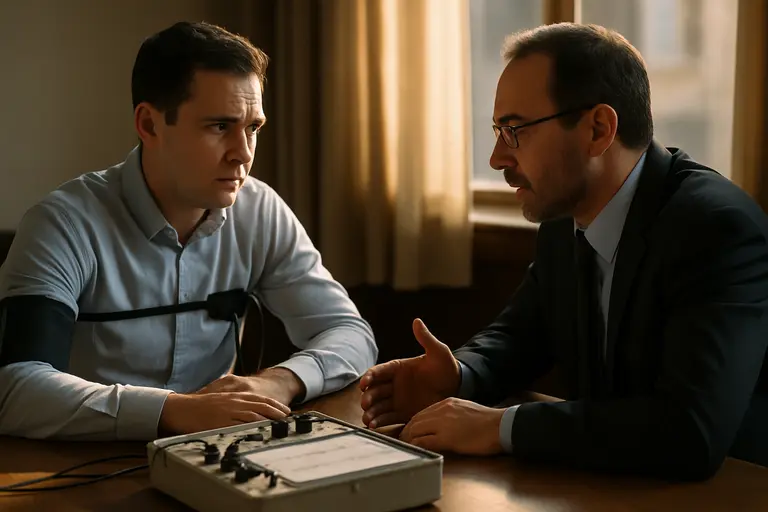
During chart collection, the examiner asks the questions that were reviewed earlier. The full set is commonly repeated more than once so the examiner can compare response patterns across charts rather than relying on a single moment. The examinee is usually expected to remain still, listen carefully, and answer as instructed, typically with short direct responses.
The atmosphere should be controlled and orderly. Movement, interruptions, and confusion can interfere with clean data collection. That does not mean the setting should be hostile. A professional examination room should support concentration, reduce unnecessary distraction, and keep the procedure consistent from the first chart to the last.
The Post-Test Discussion And Practical Limits
Scoring And Examiner Feedback
After chart collection, the examiner reviews the recorded physiological data and applies the relevant scoring approach used for that test format. The post-test discussion may include an explanation of the result and, depending on the situation, further conversation about responses that appeared significant. The examinee should expect the examiner to distinguish between the data recorded and any broader interpretation of the issue.
For organizations, this is where restraint is essential. A polygraph result may provide useful investigative information, but it should not be treated as a complete substitute for documents, interviews, access logs, inventory records, or other evidence. Sound workplace integrity work usually depends on several information sources pointing in the same direction.
Limits That Should Be Acknowledged
Because the polygraph records physical stress signals rather than truth itself, limits should be stated plainly. Stress can come from several sources, and a physiological response requires interpretation within the test structure. That is why a result should be handled as one piece of information, not as an automatic finding of misconduct or innocence.
This cautious approach protects both sides. Examinees are less likely to feel that the process is predetermined, and employers are less likely to overstate what the procedure can prove.
Preparing For A Transparent Workplace Process
For Examinees
Before scheduling a polygraph examination, an examinee should understand the purpose of the session, the general topic being examined, and the expected phases of the appointment. Preparation should focus on practical readiness: arrive on time, listen to the examiner’s instructions, ask for clarification when a question is unclear, and avoid guessing about what the instrument may show. The useful goal is not performance; it is understanding the process well enough to participate accurately.
An examinee should also expect the questions to be reviewed before testing. If a question is confusing, the pre-test phase is the appropriate time to say so. Clear communication does not weaken the examination. It supports a fairer and more interpretable session.
For Employers And Investigators
Employers should be careful not to present a polygraph as a guaranteed answer. A more defensible approach is to explain why testing is being considered, how the appointment is structured, who will conduct it, and how the result will be weighed with other information. The process should fit within existing workplace policies and should be checked against applicable employment rules before use.
- Define the issue before the appointment rather than expanding it during the session.
- Use clear, reviewable questions tied to the matter under investigation.
- Keep records of the reason for testing and the evidence considered alongside the result.
- Communicate limits so employees do not mistake the process for a guaranteed truth finding.
The Practical Value Of A Polygraph Walkthrough
Used well, the polygraph examination is a structured information-gathering procedure with defined stages: pre-test interview, chart collection, and post-test discussion. Its practical value comes from disciplined preparation, precise questions, controlled administration, and restrained interpretation. Its risk comes from overstatement, vague questioning, or treating physiological data as if it were a direct reading of intent or memory.
For workplace integrity decisions, the best use of the process is usually as part of a wider evidence plan. A clear walkthrough helps reduce fear, improves participation, and gives managers a more realistic understanding of what the session can provide. The stronger standard is not certainty. It is a transparent process that produces information worthy of careful, limited, and well-documented consideration.