

For over a century, the lie detector has been a hot topic in forensic science. It looks for tiny changes in the body to see if someone is telling the truth. Looking back at its history shows how far we’ve come in trying to figure out human honesty.
At first, inventors wanted a way to catch liars during police work. They thought heart rate and sweat could reveal secrets. Now, polygraph testing is key in government checks and court cases in the U.S.
Even after all these years, the machine is a topic of much debate. Some doubt its reliability, while others see it as essential for safety. As we dive into its story, we’ll see how this old tool is relevant today.
Early History of Polygraph Testing
The journey toward modern lie detection started with early experiments in human physiology. Researchers in the early 20th century tried to find hidden truths by watching involuntary body changes. William Moulton Marston was key in this time, focusing on systolic blood pressure as a sign of lying.
These early explorers thought certain physiological responses could reveal what’s in our minds. They tracked blood pressure and breathing changes to make a scientific way to check statements. This development of early tools set the stage for future forensic tools.
The legal world changed a lot after the 1923 case of Frye v United States. This court decision made it hard for early lie detection methods to be used in courts for years.
Despite these legal challenges, the technology kept getting better. The Keeler polygraph was a big step forward. It had multiple sensors to record physiological responses at the same time.
The Keeler polygraph became the go-to for law enforcement and government. Its development let examiners see a fuller picture of a person’s stress during questioning. These early steps are the base for today’s complex systems.
Modern Adaptations and Technological Advances
The world of forensic science changed a lot with digital technology. Development of digital polygraphs replaced old mechanical pens. Now, we have cleaner data and easier storage of important info.
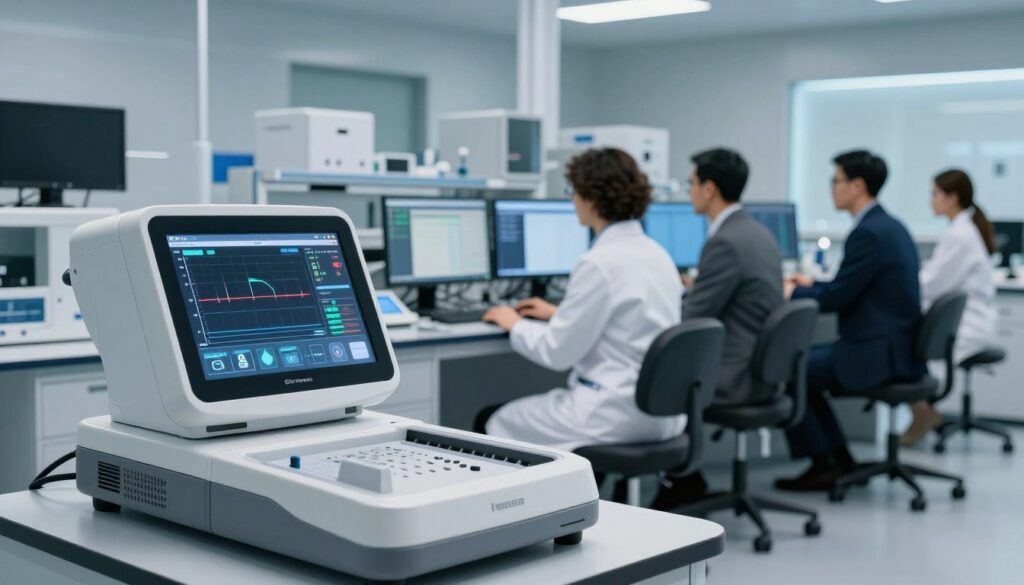
Today, advanced computer algorithms analyze physiological responses more accurately. These tools cut down on human bias. They focus on objective data, reducing errors.
New sensors are key in today’s tests. They catch tiny body changes that were hard to spot before. The main upgrades are:
- Improved sensors for skin conductance and sweat gland activity.
- High-resolution heart rate monitors for small pulse changes.
- Real-time data processing for quick feedback during tests.
The field keeps working on making these tests more accurate. They aim for standard protocols to get consistent results everywhere. This effort makes modern testing a trusted part of the legal system.
Notable Historical Cases and Impact
The journey of truth verification has been complex, from William Moulton Marston to modern technology. Many historical cases have shaped how we see the accuracy of these tests. These moments show the struggle between new science and the strict rules of courts.
The Keeler polygraph was a big change in criminal investigations. Leonarde Keeler created it, and it became key for police to find suspects. It built trust in these tests, but experts argued about its accuracy in secret.

Technology moved to digital polygraphs to get better data. But, the big challenge is figuring out what the body’s responses mean. To learn more, check out the polygraph process explained and see how it works.
The case of United States v. Scheffer was a big test for these tests in court. The Supreme Court said military courts could ignore polygraph evidence. They worried about its reliability and how it might take away from the jury’s job. This decision made it clear that these tests have a small role in federal cases.
Today, these legal rules affect how the American justice system looks at truth verification. Even with new tech, the debate over its use in court is ongoing. Historical scrutiny makes sure only the most trustworthy methods are used in important legal decisions.
Challenges and Controversies Through Time
Polygraph testing is a hot topic in law and science. Critics say the lack of standard methods is a big problem. This makes it hard to accept polygraph results in courts.
The Scheffer case changed the legal view on polygraphs. It showed judges can decide if polygraph evidence is allowed. This shows the ongoing fight to mix technology with rights.
The Employee Polygraph Protection Act also made a big impact. It stopped most private companies from using lie detectors. Yet, the government keeps using them for security checks.
Experts in forensic science are unsure about polygraph accuracy. They say body reactions don’t always mean someone is lying. This debate shows the difference between technology and human feelings.
Think about how these tests affect our world today. Do you think they have a place in work or should they be forgotten? Your thoughts help keep the discussion about truth and technology going.