
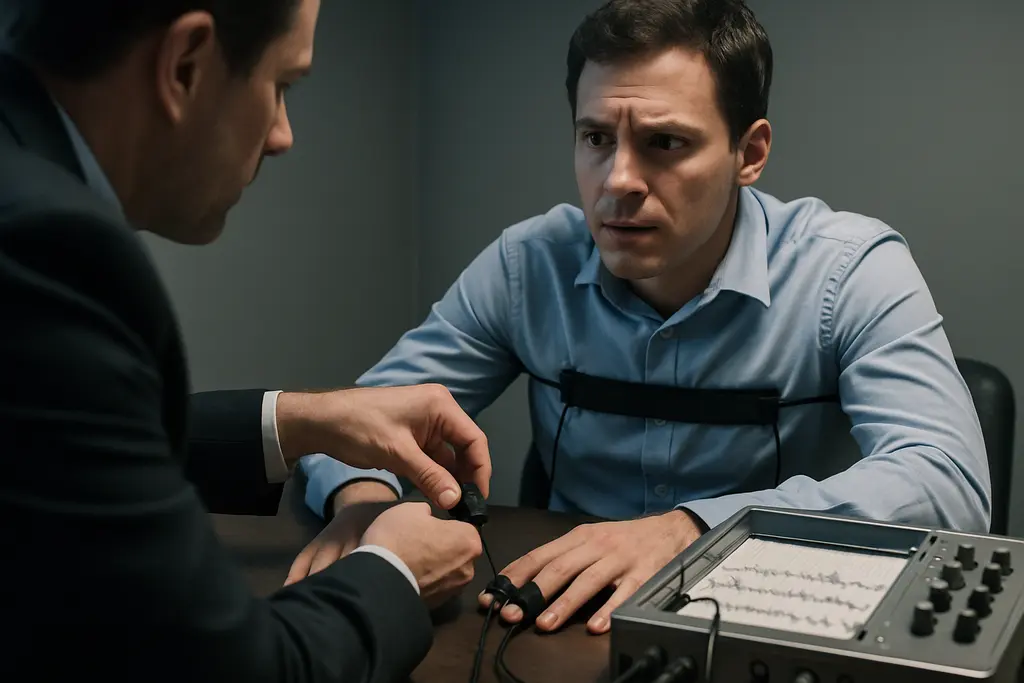
Polygraph Limitations matter most when an employer is tempted to treat one test result as a decision. Recent research has not made workplace polygraph testing useless, but it has made careless use harder to defend. The practical question for employers, investigators, and compliance teams is no longer whether a polygraph can produce useful information in some settings. The better question is whether the test is lawful, focused, documented, and weighed alongside stronger forms of workplace evidence.
A study published on June 3, 2026 compared a deployed polygraph approach with an eye-tracking method in a concealed-information test. The reported accuracy was 94.9% for eye tracking and 88.2% for the polygraph under identical conditions, according to the PubMed abstract for the June 2026 study. Those figures are useful, but they do not justify broad workplace screening. The study setting, the type of test, and the decision context all affect what an employer can reasonably infer.
Polygraph Limitations and Recent Workplace Research
Evidence From June 2026 Testing
The June 2026 comparison is significant because it places polygraph results beside another physiological method rather than treating the polygraph as the only available reference point. The result favored eye tracking in that study, but the difference should be read with caution. Experimental conditions can be more controlled than workplace disputes, where stress, fear of discipline, unclear memories, and interpersonal conflict may all affect behavior and physiology.
This is where Polygraph Limitations become operational rather than theoretical. A workplace investigation is rarely a clean laboratory task. A missing asset, suspected data leak, cash discrepancy, or misconduct allegation may involve partial records, inconsistent witness accounts, and pressure from managers who want a quick answer. A polygraph examination may add information, but it should not replace document review, access-log analysis, interviews, policy records, or chain-of-custody checks.
Why Physiological Signals Require Caution
Recent research discussed in 2024 raised concerns about skin conductance response, a measure used in many polygraph settings. The concern is specificity: physiological arousal can be linked to emotion, cognitive effort, physical discomfort, fear, or stress, not only deception. That matters in employment settings because an innocent employee may be anxious for reasons unrelated to the incident under investigation.
For a practical explanation of how limits affect hiring and workplace decisions, a related discussion of ethical hiring safeguards is useful because it frames testing as one controlled input rather than a shortcut to certainty.
Legal Boundaries for Private Employers
EPPA Places Use Outside Routine Screening
In the United States, private employers face strict limits under the Employee Polygraph Protection Act. The U.S. Department of Labor states that the law generally prohibits most private employers from using lie detector tests for pre-employment screening or during employment, subject to limited exceptions and conditions under the Employee Polygraph Protection Act. That legal structure is central to workplace practice: polygraph testing is not a routine HR tool for most private-sector employers.
The practical effect is that compliance review should occur before any examination is scheduled. Employers should confirm whether the organization is covered, whether an exception may apply, whether notices are required, and whether the investigation record supports the proposed use. This is not a substitute for legal advice. It is a compliance checkpoint that helps prevent a test from being requested simply because suspicion exists.
Economic Loss Investigations Need Discipline
Research notes from 2026 described strict prerequisites for the economic-loss exception: a specific ongoing internal investigation, reasonable suspicion tied to the employee, and procedural safeguards. Vague concern, broad inventory shrinkage, or a general desire to test a group does not support sound practice. Even where an exception appears possible, the employer should document the incident, the evidence linking the person to the event, and the reason less intrusive methods are insufficient.
That discipline protects both sides. Employees should not be placed under unnecessary pressure, and employers should not create evidence that later looks coercive, unfocused, or disconnected from a defined loss. In workplace integrity work, process quality often determines whether the information gained from an examination has any practical value.
Practical Workplace Applications After Recent Findings
Appropriate Use Is Narrow and Documented
Polygraph Limitations have the clearest workplace impact in the difference between specific-incident testing and broad screening. Recent reviews described polygraphs as more defensible in focused incident contexts than in wide screening programs. That distinction is consistent with practical experience: a precise question about a defined event is easier to evaluate than a generalized inquiry into trustworthiness, loyalty, or future risk.
A focused workplace use may involve a known incident, a defined date range, identified evidence, and a clear reason the examination is being considered. A weak use may involve testing a department after unexplained losses, asking broad character questions, or using the examination to compensate for poor documentation. The first approach still carries risk; the second magnifies it.
Recruitment and Integrity Workflows
For hiring teams, the recent research points toward restraint. Recruitment decisions should rest primarily on job-related criteria, verified credentials, lawful background processes, structured interviews, and consistent reference practices. Organizations that work with external hiring partners, including networks such as Alliance Recruitment, should ensure screening steps remain transparent and in compliance with employment laws and standards.
A polygraph should not be used to fill gaps created by unclear job requirements or inconsistent vetting. If an employer has a legitimate integrity concern, the better first step is usually to strengthen ordinary controls: access permissions, segregation of duties, written policies, audit trails, complaint channels, and incident response procedures. Testing may then be considered only within the boundaries of law, policy, and evidence.
Risks That Need Controls

False Positives, False Negatives, and Examiner Feedback
No recent finding supports treating a polygraph result as infallible. False positives and false negatives remain possible. The workplace risk is not only an incorrect chart interpretation; it is the way people respond to the result. A manager who hears “deception indicated” may stop looking for alternate explanations. An employee who hears that a test went badly may feel intense pressure, even if the evidence is uncertain.
That is why examiner feedback, report wording, and management response need controls. Reports should distinguish between the test result and the underlying facts. Investigators should avoid presenting the result as proof of misconduct. Decision-makers should ask whether independent evidence supports the same conclusion, whether contrary evidence exists, and whether the result changes the probability of involvement enough to justify further action.
Newer Methods Do Not Remove Governance Concerns
The June 2026 eye-tracking research also raised issues that are highly relevant to workplaces: involuntary responses, opaque scoring, and possible bias. A method with a higher reported accuracy in one study may still create problems if employees cannot understand the process, if scoring is not explainable, or if the method performs differently across groups.
Those concerns should shape procurement and policy decisions. Before adopting any newer deception-detection method, an employer should ask what validation exists, what population was studied, how errors are handled, who can review results, and how the organization will protect employee privacy. Polygraph Limitations should not be used as a reason to accept another technology without scrutiny.
- Use testing only after confirming legal authority and a defined investigative purpose.
- Document the incident, the evidence, the reason for testing, and the safeguards used.
- Treat results as one information source, not as a standalone finding of misconduct.
- Separate examiner conclusions from employment decisions made by management.
- Review whether less intrusive evidence can answer the same question.
Workplace Policy After Polygraph Limitations Research
Recent research should push employers toward narrower, better-documented, and more transparent use of polygraph services. The responsible application is not to abandon all testing or to promote it as certainty. It is to define where the method may add value, where it should be avoided, and who is accountable for compliance.
A sound policy should identify permitted use cases, approval steps, employee notices, record controls, examiner qualifications, report handling, and the standard for follow-up action. It should also state that Polygraph Limitations require corroboration before adverse decisions are made. That single sentence can prevent a common failure: allowing a physiological test result to outrank stronger workplace evidence.
The recent evidence points to a restrained model. Polygraph testing may still have a place in carefully controlled, specific-incident investigations, but broad screening and vague integrity testing carry greater legal, scientific, and trust risks. Employers that acknowledge those limits are better positioned to protect employees, preserve workplace confidence, and make decisions that can withstand later review.