
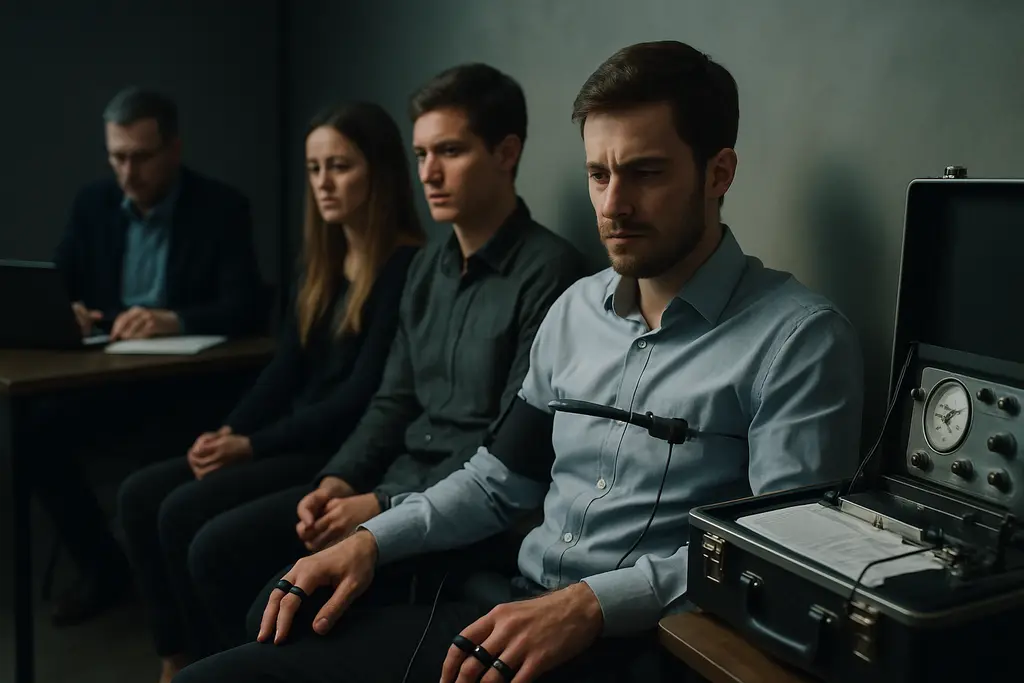
Mass Polygraphs moved from a specialized security practice into a wider public debate after a series of U.S. national security leak investigations in 2025 and 2026. The record described in recent reporting does not support easy conclusions. Polygraph testing can help investigators structure questioning and assess risk signals, but it can also strain employee trust when used broadly, under pressure, or without clear limits.
The recent intelligence and defense cases mattered because they involved senior personnel, sensitive clearance environments, and questions about disclosures to the press. The reported facts also showed how quickly a tool associated with counterintelligence and personnel security can become controversial when deployed as a deterrent or as part of a large leak inquiry.
What Mass Polygraphs Changed in Leak Probes
The Shift from Targeted Testing to Broad Screening
Traditional counterintelligence polygraph use is usually framed around defined security risks, access to sensitive information, or clearance-related review. The recent leak inquiries described in the research record went further by applying polygraph testing across groups of personnel connected to sensitive reporting about weapons stockpiles, classified information, and press disclosures.
In April 2025, the FBI under Director Kash Patel began using polygraph tests in leak investigations involving national security agencies, and current and former officials described the effort as creating a climate of fear, according to The Washington Post. That episode is significant because it showed the investigative value of polygraph testing being weighed against workplace effects such as anxiety, perceived coercion, and reduced internal confidence.
The August 2026 Joint Staff testing, as described in the research materials, involved roughly 50 military and civilian personnel and was tied to reporting on diminished U.S. munitions stocks related to the war with Iran. Officials described the round as unusual in scale and seniority. The reported questions focused on whether personnel had disclosed classified information to the press, particularly information about munitions shortages.
Why Mass Polygraphs Raise Trust Questions
Mass Polygraphs can support a leak inquiry by creating a consistent questioning process across people with access to the same sensitive information. Yet consistency is not the same as fairness. In a workplace setting, the test process must be understood by employees, bounded by policy, and separated from assumptions of guilt.
The concern is not only accuracy. It is also governance. A broad testing campaign can signal that leaders are taking leaks seriously, but it can also suggest that ordinary access to sensitive information has become enough to place employees under suspicion. That risk grows when refusal is perceived as career-threatening or when employees do not understand how results will be used.
For organizations outside government, the lesson is practical: a polygraph service should never be treated as a stand-alone substitute for document review, access logs, interviews, device records, and clear internal policies. A related discussion of employee trust in Pentagon polygraph testing makes the same point in a defense context: process design affects whether testing is viewed as legitimate.
Reported DHS Testing and Employee Pressure
Duration, Instrumentation, and Perceived Coercion
Within the Department of Homeland Security, multiple current and former employees reported polygraph examinations in mid-2026 that they viewed not as routine clearance refreshers but as leak investigation tools or coercive measures. Some exams reportedly lasted up to six hours, and the testing involved instrumentation such as pulse monitors, breathing sensors, and seat or floor sensors, according to The Guardian.
Those details matter because employee experience can shape the credibility of the entire inquiry. A lengthy examination may be defensible in some security settings, but it becomes harder to justify if workers believe the true purpose is intimidation rather than fact-finding. The research record also notes that some employees said refusal could affect a security clearance or job. That kind of perceived pressure can weaken the reliability of workplace cooperation even when the agency’s stated aim is protecting classified information.
There is a practical distinction between asking difficult questions and creating an atmosphere in which employees fear that the process has already judged them. Polygraph services used in sensitive environments should be paired with written scope, defined question areas, examiner qualifications, record-handling rules, and a clear explanation of how results fit with other evidence.
How Documentation Affects Integrity Reviews
Good documentation does not make a polygraph result conclusive, but it does make the process easier to audit. The organization should be able to show who authorized testing, why the selected group was included, what questions were approved, what rights or policies applied, and how decision-makers separated test results from independent evidence.
Documentation also protects the organization from overclaiming. If a person does not show a significant reaction to a set of questions, that does not prove no leak occurred. If a reaction is recorded, that does not prove the person disclosed information. The most defensible use is as one structured input within a wider investigation. The importance of documented criteria in evaluations can be seen in resources such as writing service comparisons, which help readers assess claims based on clear evidence.
Legal and Policy Boundaries for Employers
Government Security Use Is Not a General Workplace Model
The research record states that polygraph examinations may be part of counterintelligence or personnel security measures in high-clearance civilian or military positions, subject to procedural safeguards and legal restrictions. That point should be read carefully. Practices used in intelligence or defense contexts should not be copied into ordinary workplaces without independent legal and policy review.
Private-sector employers face different rules, different employee expectations, and different risks. A company considering polygraph services for theft, fraud, data leakage, or misconduct concerns should define the business need first, then assess whether testing is lawful, proportionate, and likely to improve the evidence record. This is not legal advice; it is a risk-control principle. The more intrusive the tool, the clearer the justification should be.
A cautious policy should address several practical questions before any exam is scheduled:
- What specific incident or risk justified the test?
- Who approved the testing scope and question areas?
- What notice, consent, or policy disclosures were provided?
- How will results be weighed against independent evidence?
- Who can access reports, recordings, or examiner notes?
- What review process exists if an employee disputes the process?
These questions help keep polygraph services aligned with workplace integrity rather than workplace fear. They also reduce the risk that a test result becomes a shortcut for decisions that should require corroboration.
Practical Lessons for Polygraph Services

Use Scope Before Scale
One lesson from the recent leak investigations is that scale changes perception. Testing one person based on a defined evidentiary trail is different from testing dozens of people because they had possible access to sensitive information. The larger the group, the more important it becomes to explain selection criteria and avoid the appearance of collective suspicion.
Polygraph providers can help by insisting on clear referral questions and by declining vague assignments. A useful exam is built around specific issues, not general curiosity about an employee’s loyalty. For leak investigations, the strongest referral questions usually connect to defined access, a known disclosure window, and a specific category of protected information.
Mass Polygraphs are most defensible when they are narrowly scoped, consistently administered, and reviewed alongside records that can be independently checked. They are least defensible when used to project toughness, deter future speech, or pressure employees without a clear evidentiary foundation.
Success Means Better Decisions, Not Guaranteed Answers
A responsible success story in polygraph services is not a promise that the test found the truth with certainty. A better measure is whether the process helped decision-makers ask sharper questions, eliminate weak assumptions, identify areas needing corroboration, and document the basis for further inquiry.
The research record noted that, in the Joint Staff round, none of those tested reportedly failed the leak-related polygraph questions. That fact should be handled with care. It may have helped officials assess one line of inquiry, but it did not, by itself, establish the full source of the reported information or resolve broader questions about access controls and internal communications.
For corporate and legal clients, the same standard applies. Polygraph testing can support an integrity program when the organization treats it as an investigative aid rather than a verdict. That means no exaggerated claims, no pressure tactics, and no disciplinary decision based only on a chart interpretation.
Mass Polygraphs in Intelligence Leak Reviews
The practical lesson from Mass Polygraphs in recent intelligence leak reviews is that the tool’s value depends heavily on restraint. Polygraph testing may help investigators organize questioning in sensitive matters, but broad use can damage trust if employees see the process as punitive, politically driven, or disconnected from evidence.
For agencies and private organizations alike, the safer standard is disciplined use: define the incident, narrow the tested population, document the basis for selection, explain the process, protect records, and compare results with independent evidence. That approach does not remove uncertainty. It makes uncertainty visible enough to manage.
Recent leak investigations showed that polygraph services sit at the intersection of security, workplace integrity, and employee confidence. Used carefully, they can contribute to a fact-based review. Used too broadly, they can become a symbol of distrust. The difference lies less in the instrument than in the governance around it.