
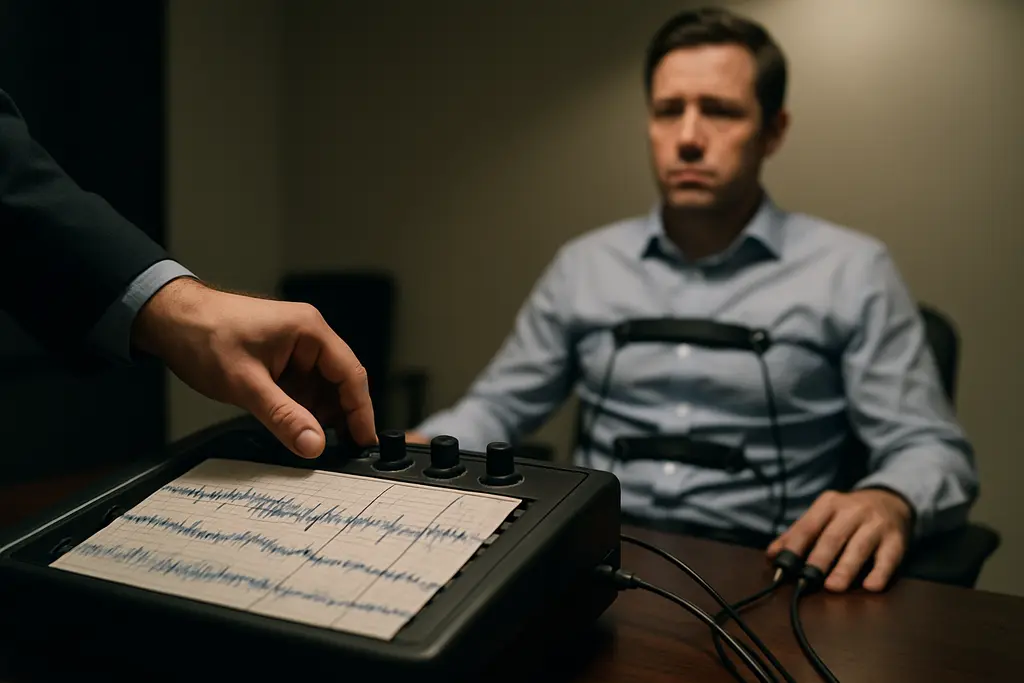
Polygraph Accuracy is often discussed as if it can give employers a clear answer about honesty. The newer comparison with eye-tracking technology deserves attention, but it does not remove the need for caution. For human resources teams, security departments, and workplace investigators, the central question is not which tool sounds more advanced. The better question is what level of confidence the available evidence can support, and what safeguards are needed before any result affects a person’s employment relationship.
A study published in Scientific Reports on June 3, 2026 compared an eye-tracking Concealed Information Test with a polygraph Concealed Information Test under identical conditions. The eye-tracking method reached 94.9% accuracy, while the polygraph reached 88.2%, with five polygraph tests excluded because of artefacts or countermeasure concerns, according to the study record at PubMed. That numerical difference is meaningful enough to study further, yet the research did not establish a settled rule that eye-tracking is superior for employer use.
Polygraph Accuracy Compared With Eye-Tracking
Polygraph Accuracy In The Test Setting
Polygraph Accuracy depends heavily on the type of test, the quality of the examination, the purpose of the questioning, and the standard used to classify a result. A polygraph does not measure truth directly. It records physiological responses that may be associated with stress, recognition, concern, fear, or other reactions. That is why responsible examiners and employers should treat a result as evidence to be evaluated, not as a substitute for an investigation.
The 2026 comparison is useful because it tested eye-tracking and polygraph methods under the same research conditions. In all 39 participants, the eye-tracking recordings were usable; by contrast, 34 of 39 polygraph recordings could be evaluated because some polygraph data could not be used. The full text reports that the eye-tracking model used measures such as fixation duration, number of glances, visits, and pupil diameter, with the top classifier using 19 eye-tracking features, seven of which were stable across cross-validation folds in the published analysis at PMC.
That finding matters to employers because unusable data can affect cost, scheduling, and confidence in a process. Still, laboratory usability is not the same thing as workplace readiness. A hiring or misconduct decision involves different pressures, incentives, and consequences than a controlled research task. Before an employer relies on any technology, the organization should ask whether the study conditions resemble the actual decision setting closely enough to be relevant.
Eye-Tracking Evidence From The 2026 Study
What The Higher Number Does And Does Not Mean
The eye-tracking result in the 2026 study was higher than the polygraph result, but the difference was not reported as statistically significant given the sample size and design limits described in the research notes. That distinction should shape employer expectations. A higher percentage in one study can justify further validation, but it does not justify treating the newer tool as a proven replacement for established methods.
For employers, Polygraph Accuracy should be compared with eye-tracking performance in context. Eye-tracking may reduce some concerns associated with physical artefacts because many eye responses are difficult to consciously control. At the same time, the research notes describe possible vulnerabilities involving visual strategies, environmental conditions, and opaque classifier decisions. Those issues become more serious in employment because an employee or applicant may not understand how a machine-learning model reached a classification.
That opacity affects trust. Employees are more likely to view integrity programs as legitimate when rules are explained before testing, the scope is narrow, the evidence is documented, and people have a fair chance to respond. A process that produces a score without explanation may feel efficient to management, but it can weaken confidence if the workforce sees it as surveillance rather than a fact-finding tool.
Employer Use Requires More Than A Score
Legal And Ethical Boundaries
U.S. employers face a separate threshold question before any comparison of testing methods becomes practical: whether the test may be used at all. The research notes identify the Employee Polygraph Protection Act, signed on June 27, 1988, as a major limit on private-sector polygraph use. They also state that most private employers cannot require or use polygraph tests for pre-employment screening or during employment, subject to limited exemptions, and that results cannot be the sole basis for an employment decision. Employers should treat that as a reason to obtain qualified legal review before creating or revising any testing policy.
Eye-tracking technology creates a different problem. The research notes state that, as of September 24, 2026, there was no federal law specifically mandating or restricting employer use of eye-tracking for deception or truth verification in employment contexts. That absence should not be read as permission to use the technology broadly. Broader privacy, labor, discrimination, biometric, and workplace surveillance rules may still matter, depending on the jurisdiction and use case.
Employers also need to consider fairness. A test that misclassifies a truthful person can damage reputation, morale, and employment prospects. A test that misses deception can leave workplace risk unresolved. Both errors matter. This is why polygraph testing limits should be part of any HR discussion about investigative tools, whether the organization is considering established polygraph services or newer eye-tracking systems.
Practical Safeguards For Workplace Integrity

Questions Employers Should Ask Before Adoption
A cautious employer should not begin with the question, “Which technology has the highest accuracy number?” The better starting point is whether the workplace problem justifies any form of physiological or behavioral testing. Many integrity concerns can be handled through access controls, inventory review, audit trails, witness interviews, conflict-of-interest disclosures, and ordinary performance management. Testing should not become a shortcut around evidence collection.
If an organization is legally eligible to consider testing, practical safeguards should be written before any individual is examined:
- Define the specific workplace issue and avoid broad fishing expeditions.
- Use trained professionals and documented procedures.
- Tell the person what the process is intended to assess and what it cannot prove.
- Keep results separate from rumor, retaliation, or unrelated performance concerns.
- Require independent evidence before any employment action is considered.
- Review privacy, data retention, and access rules before collecting sensitive information.
These safeguards protect both sides of the employment relationship. They help employers avoid over-reliance on an uncertain signal, and they help employees see that the process is not being used as a predetermined accusation. Trust is not built by avoiding difficult questions. It is built by asking those questions through fair, transparent, and proportionate methods.
For readers comparing workplace integrity topics across related publications, Old Norse News offers additional content in the same network, providing a broader perspective on these issues. Cross-site reading can be useful, but employment decisions should still rest on current law, documented evidence, and qualified professional advice rather than general commentary.
Polygraph Accuracy In Employer Decisions
Polygraph Accuracy remains relevant because polygraph services are still used in certain permitted settings and in specific investigations. Eye-tracking research is relevant because it may point toward future tools that are easier to administer or less affected by some data-quality problems. Neither method should be treated as a verdict. The 2026 study supports further research, not unrestricted workplace deployment.
The most responsible employer posture is evidence-based restraint. Use the research to ask sharper questions. Ask whether the test has been validated for the employment setting at issue, whether the result can be explained, whether the person tested has a fair response opportunity, and whether independent evidence supports any action. If those questions cannot be answered, the organization should pause rather than let a technology create false confidence.
Workplace integrity depends on more than detection. It depends on rules that people understand, processes that can be audited, and leaders who resist overstating what a test can prove. Eye-tracking may become more useful as validation grows. Polygraph services may remain appropriate in carefully limited settings. Employers should treat both as decision inputs, not decision makers.