
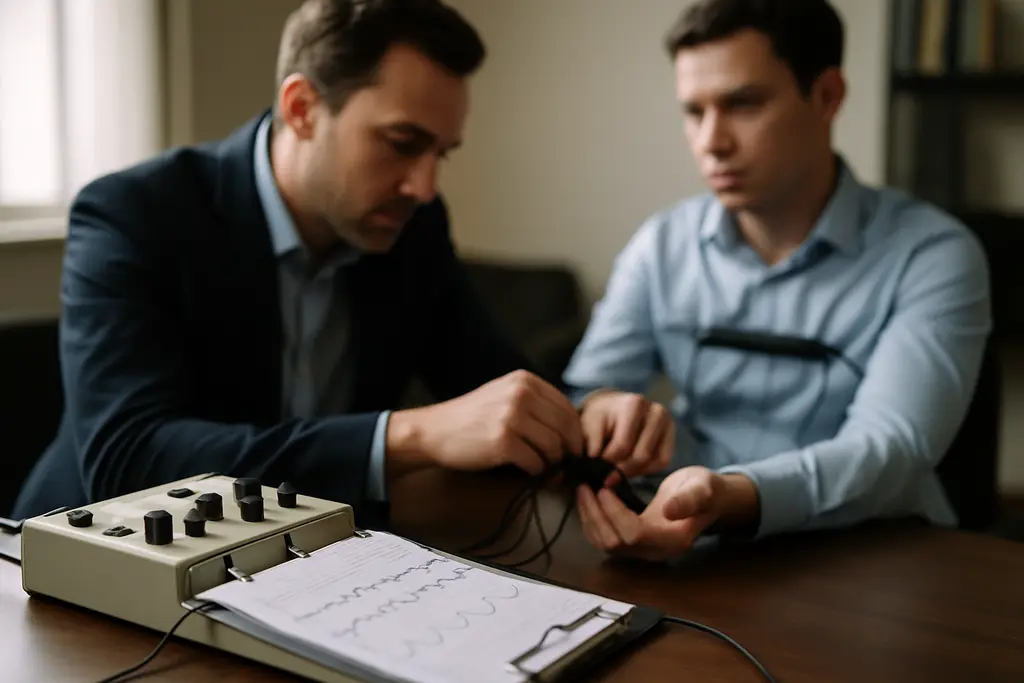
Polygraph evidence remains difficult to use in U.S. courts because judges are asked to do more than decide whether a test seems useful in an investigation. They must decide whether the offered proof is reliable enough, fair enough, and controlled enough to be heard by a jury or factfinder. That distinction is central. A polygraph examination may help structure an interview, test a narrow account, or document a person’s response to specific questions. Courtroom admissibility asks a stricter question: should the result be treated as evidence in a legal dispute where liberty, liability, or credibility may be at stake?
Why Polygraph Evidence Faces Judicial Doubt
Polygraph Evidence And The Reliability Gap
The leading federal reference point remains United States v. Scheffer, decided on March 31, 1998. In that case, the U.S. Supreme Court upheld Military Rule of Evidence 707, which categorically excluded polygraph results in court-martial proceedings. The Court stated that there was “simply no consensus that polygraph evidence is reliable,” a phrase that continues to explain much of the judicial caution surrounding this subject. The decision is available through Cornell’s text of United States v. Scheffer.
The Court’s reasoning did not say that every polygraph examination is useless. It addressed a different question: whether a legal system may exclude a class of evidence that remains scientifically disputed. The Court held that the military rule did not violate the defendant’s Sixth Amendment right to present a defense because evidentiary systems may bar proof that is considered unreliable or likely to mislead. That is a narrow but powerful point. A defendant’s interest in presenting favorable material does not automatically overcome a court’s duty to screen scientific or technical claims.
For judges, reliability is not judged by confidence alone. They look at whether a method can be tested, how it has been reviewed, whether known error rates are acceptable, and whether the relevant professional community generally accepts the technique for the purpose offered. The research record described in the legal materials is mixed: some event-specific testing has reported accuracy above chance, while other settings raise concern about false positives, inconclusive results, and the risk that a juror may give the test more weight than it deserves.
How Court Rules Shape Admissibility
Stipulation, Exclusion, And The New Mexico Exception
Rules vary by jurisdiction, which is why broad statements about admissibility can mislead. In many courts, results are excluded unless the parties agreed in advance that the test could be used. That prior agreement, often called stipulation, matters because it reduces surprise and confirms that both sides understood the evidentiary risk before the examination occurred. Without that safeguard, courts often view the test as too contested, too prejudicial, or too likely to distract from other proof.
New Mexico stands apart in the research provided. It is identified as the only U.S. state where results are presumptively admissible without prior stipulation by both parties. Even there, admissibility is not automatic in the casual sense. Under New Mexico Rule of Evidence 11-707, the proponent must establish matters including the examiner’s qualifications, the reliability of the technique, and the validity of the particular examination. Harvard’s legal materials on New Mexico evidence rules describe that distinctive approach.
This difference shows why admissibility is a legal control system rather than a simple scientific vote. A court may allow a result in one setting and reject a similar result in another because the legal purpose, procedure, examiner foundation, wording of the questions, disclosure history, or potential prejudice differs. That is also why professional polygraph work should be documented as an investigative service first, not as a guaranteed litigation exhibit.
Why Prejudice Matters To Judges
Courts also worry about the persuasive force of the instrument itself. A jury may treat a chart, an examiner’s opinion, or a reference to a person having “passed” or “failed” as more objective than the method can justify. Military Rule of Evidence 707 reflects that concern by excluding not only results, but also the examiner’s opinion and references to taking or not taking a polygraph in court-martial proceedings. That type of rule is designed to keep contested scientific material from replacing the factfinder’s independent assessment of testimony and corroborating evidence.
Procedural fairness is another recurring issue. The research notes identify State v. Lyons, an Indiana Court of Appeals decision from 2022, where polygraph results and post-test statements were suppressed after the prosecution failed to timely disclose that the test was non-stipulated until shortly before trial. The lesson is practical: even when the examination itself is not admitted, the surrounding interview process can create legal risk if disclosure, consent, or procedural rules are mishandled.
Practical Lessons For Workplace Integrity
Separate Investigation Value From Courtroom Use
Workplace leaders sometimes confuse investigative usefulness with legal admissibility. That mistake can distort internal decisions. A polygraph may assist a workplace inquiry by helping frame a focused interview, clarify a timeline, or identify inconsistencies that need independent checking. It should not be treated as a standalone basis for discipline, termination, referral, or public accusation. The legal skepticism discussed above is a reminder that test results need corroboration and careful handling.
For private employers, the legal issues can extend beyond evidence rules. Polygraph use in employment settings may be controlled by employment-specific statutes, notice requirements, exemptions, and consent procedures. This article does not provide legal advice, but it does reflect a compliance principle that applies across sensitive workplace processes: a test should fit a legitimate purpose, be administered by a qualified examiner, and be interpreted within a documented investigation. For related workplace policy concerns, our discussion of polygraph ethics at work addresses consent safeguards and practical limits.
Trust also depends on how organizations communicate. Employees and applicants should not be told that a polygraph can determine truth with certainty. They should be told what the process does, what it does not do, how results will be reviewed, who will see them, and what other evidence will be considered. For those interested in connecting with other similar organizations, readers may also visit a related site in the same network, but legal decisions should always rest on qualified advice and primary authority rather than network affiliation.
Using Polygraph Results Without Overstating Them
A Cautious Weighting Framework
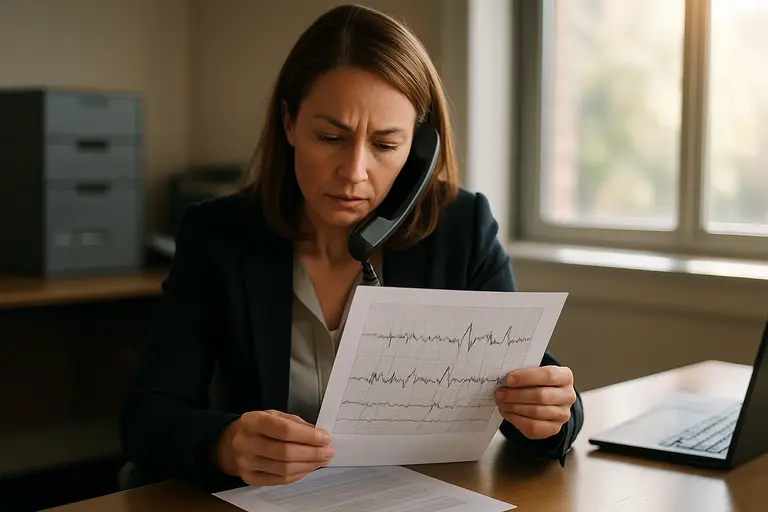
A sound internal process treats a result as one data point. That means the result should be evaluated beside records, access logs, witness accounts, financial documents, physical evidence, communications, and the subject’s own explanations. The more serious the consequence, the less defensible it is to rely on a single source of contested information. That approach is consistent with the way courts screen disputed proof: they ask whether the evidence is reliable enough for the specific use being proposed.
- Define the issue before testing. Questions should address a specific event or conduct, not broad character judgments.
- Document consent and scope. The subject should understand the purpose, limits, and handling of the examination.
- Preserve independent evidence. Records and witnesses should not be ignored because a test result feels persuasive.
- Review examiner qualifications. Training, method, question formulation, and reporting format all affect weight.
- Avoid certainty language. Reports and decisions should not suggest that the instrument directly reads truth or intent.
That framework does not weaken polygraph services. It makes them more defensible. In workplace integrity matters, the most useful process is usually the one that resists shortcuts. A well-run examination can contribute information, but the decision-maker still has to assess the full record and consider alternative explanations. Courts remain skeptical partly because they see how easily a technical-sounding result can overshadow weaker facts.
Legal Perspectives On Polygraph Evidence
The legal pattern is clear enough for practical planning: courts do not treat polygraph results as ordinary proof. Scheffer confirms that a categorical exclusion can be constitutionally permissible in the military context. New Mexico shows that a more permissive state rule can exist while still requiring a foundation for examiner qualifications, technique reliability, and test validity. Other jurisdictions often depend on stipulation, case law, and trial-court screening.
For lawyers, investigators, employers, and compliance teams, the safer view is that polygraph work should be designed for ethical fact development, not promised courtroom impact. If a matter may later become litigation, counsel should be consulted before any examination is scheduled. If the matter stays internal, decision-makers should still apply the discipline courts demand: define the purpose, check the method, document the process, test the result against independent facts, and avoid overstating what the examination can prove.
Judicial skepticism is not hostility to investigation. It is a demand for restraint where credibility, science, and legal consequence meet. That restraint is also good compliance practice.