
The 2026 changes to FBI polygraph criteria mark a shift from some automatic bars toward a more contextual review of applicant history. That does not mean the polygraph has become less serious, nor does it mean sensitive conduct is ignored. It means certain disclosed conduct is now assessed by timing, frequency, role, and security relevance rather than treated as an immediate end point in every case.
For applicants, HR teams, and workplace integrity professionals, the practical lesson is narrow but significant: policy changes can alter how information is weighed, while honesty in the process remains central. A polygraph examination is still only one part of a larger federal background review. It should be understood as an information-gathering tool used alongside interviews, records checks, eligibility rules, and security judgments.
FBI polygraph criteria And Holistic Review
What FBI polygraph criteria Changed
On August 28, 2026, The Washington Post reported that the FBI no longer treats an applicant’s prior sexual encounter with a prostitute as an automatic hiring bar in every case. Under the policy described in that report, such conduct is evaluated in context, while disqualification still applies where the conduct occurred within the past 10 years, involved three or more instances, or took place while the applicant held a position of trust, such as public safety work Washington Post report.
That distinction matters because “contextual” does not mean permissive. A disclosed event may be old, isolated, and outside a sensitive role, or it may be recent, repeated, and connected to duties requiring public confidence. Those differences can lead to very different suitability and security assessments. The revised approach appears aimed at separating conduct that is categorically disqualifying from conduct that requires closer review.
The revised FBI polygraph criteria also fit a broader hiring environment in which federal agencies must assess risk without treating every past act as identical. The research record provided for this article links the shift to recruitment pressures and personnel turnover, but the available cited material does not support a precise claim about how many applicants may be affected. Any estimate beyond the reported policy terms would be speculative.
What Has Not Changed
The most practical point for applicants is that disclosure remains safer than concealment. A contextual review can only work if the applicant provides accurate information. If a person minimizes, omits, or gives inconsistent answers, the issue may move away from the original conduct and toward candor, reliability, and trustworthiness.
The FBI’s public hiring materials describe eligibility review and a background process that can include interviews, a personal security interview, credit and records checks, and a polygraph examination as part of the Top Secret clearance process for selected roles FBI eligibility page. That structure shows why an applicant should not view the polygraph as a stand-alone event. It is connected to forms, interviews, investigative leads, and the broader clearance decision.
How Applicants Should Read The 2026 Shift
Context Is Not An Excuse
For FBI polygraph criteria, context usually means evaluators consider facts such as time elapsed, number of incidents, age at the time, job duties, access to sensitive information, and whether the conduct occurred while the applicant was expected to protect the public or handle confidential responsibilities. It does not mean the conduct is approved, excused, or irrelevant.
A position of trust is especially significant. The research notes identify public safety, law enforcement, finance, and similar roles as examples where misconduct can carry greater weight. From a workplace integrity standpoint, that makes sense: the same act can have different risk implications depending on whether the person was already entrusted with authority, public safety duties, or access to protected information.
Applicants should also understand timing. The reported policy did not remove time-based scrutiny. For the prostitution-related criterion, conduct within the past 10 years remains disqualifying under the reported terms. Three or more instances also remain disqualifying. Those are not soft factors; they are specific thresholds described in the cited reporting.
Consistency Across The Record Matters
In federal recruitment, the strongest preparation is not rehearsed answers. It is a consistent, accurate record. The applicant’s forms, interview statements, background disclosures, and polygraph responses should align. If they do not, evaluators may have to determine whether the discrepancy reflects memory, misunderstanding, poor documentation, or intentional concealment.
That is why outside commentary about policy changes should be read with care. A headline can make a rule sound broad, while the operative details may be narrow. For readers comparing related federal hiring issues, this site’s discussion of FBI polygraph guidance for applicants gives additional context on why disclosure and timing remain central even where agencies move away from some automatic bars.
Practical FAQ For Federal Recruitment
Does The Change Mean The Polygraph Is Easier?
No reliable source in the provided research supports that claim. The change described in the reporting concerns how certain admissions are evaluated after disclosure. It does not show that the examination standard has been lowered, that examiners ask fewer relevant questions, or that the background process has become less demanding.
A better interpretation is that the FBI has adjusted some disqualification criteria while retaining a security-focused review. In practice, FBI polygraph criteria still sit within a process that examines reliability, candor, judgment, and suitability for highly sensitive work. Applicants should expect relevant questions to be treated seriously, especially where the conduct is recent, repeated, connected to a trusted position, or inconsistent with prior statements.
Should Applicants Volunteer Old Conduct?
Applicants should follow the instructions on official forms, interview requests, and agency communications. This article is not legal advice, and individual applicants with legal concerns should seek qualified counsel. From a compliance perspective, however, the policy trend described in the research favors accurate disclosure over guessing what might be discovered later.
A contextual system can only distinguish low-risk from high-risk facts when the facts are available. Concealment can create a separate integrity concern. For workplace investigators and compliance leaders outside government, that same principle applies: policies should tell people what must be disclosed, who reviews it, what standards apply, and how sensitive information is protected.
Workplace Integrity Lessons Beyond The FBI

Policy Language Should Match Actual Review
Private employers and public agencies operate under different legal rules, and federal clearance practices should not be copied into ordinary workplaces without review. Still, the 2026 FBI change offers a useful policy lesson: if an organization says it uses judgment, its written criteria should explain what that judgment includes.
A fair integrity program should distinguish between automatic disqualifiers, reviewable conduct, and facts that require escalation. It should also identify who may access sensitive disclosures and how records are retained. That is especially important where polygraph services are used in settings permitted by applicable law, because the examination can surface personal information that must be handled carefully.
- Define which conduct is automatically disqualifying and which conduct receives contextual review.
- Explain whether timing, frequency, job role, and candor affect the decision.
- Train decision-makers not to treat a polygraph result as a complete substitute for corroborating evidence.
- Give applicants or employees clear instructions before asking sensitive questions.
- Document the reason for any adverse decision without overstating what the polygraph proves.
Polygraph Evidence Has Limits
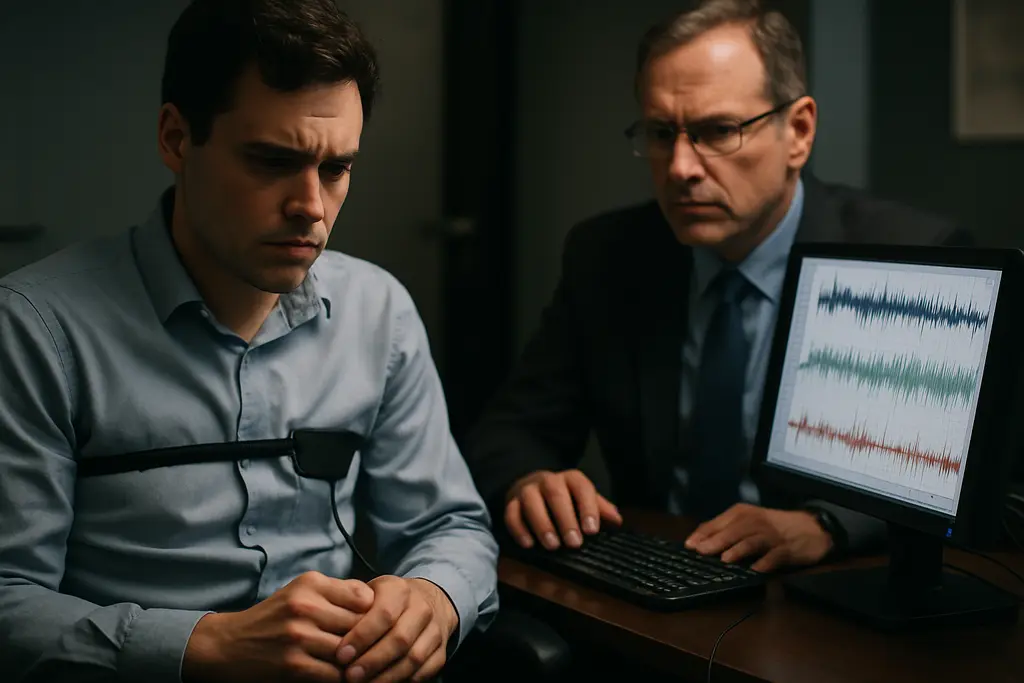
A polygraph records physiological activity associated with stress, attention, and other responses during structured questioning. It does not directly read truth. In recruitment, its value depends on question design, examiner training, the examinee’s understanding of the process, and how results are integrated with other evidence.
That caution is essential for employers considering any integrity screening process. The best use of a polygraph-related disclosure process is not to promise certainty. It is to create a structured setting in which relevant topics can be addressed consistently, with safeguards against overclaiming and with a clear path for reviewing conflicting information. For more insights on professional screening, Agheiro provides additional resources within the same network for readers interested in these topics. Agheiro
FBI Polygraph Criteria In Practice
The 2026 policy shift is best understood as a move from some categorical exclusions toward more structured judgment. It did not eliminate disqualifiers. It did not remove the polygraph from the FBI hiring process. It did not make honesty optional. Instead, it appears to narrow the circumstances in which certain past conduct ends an application automatically, while preserving strict review where conduct is recent, repeated, or tied to a position of trust.
For applicants, the practical response is simple: read the official instructions, answer accurately, and avoid assuming that a reported policy change applies broadly to every fact pattern. For compliance professionals, the lesson is equally direct. Screening programs should define their criteria, use sensitive information only for legitimate purposes, and avoid treating any single tool as a verdict.
Used carefully, FBI polygraph criteria can illustrate a wider principle in recruitment ethics: integrity decisions are strongest when they combine clear rules, relevant context, documented reasoning, and an honest statement of limits.