
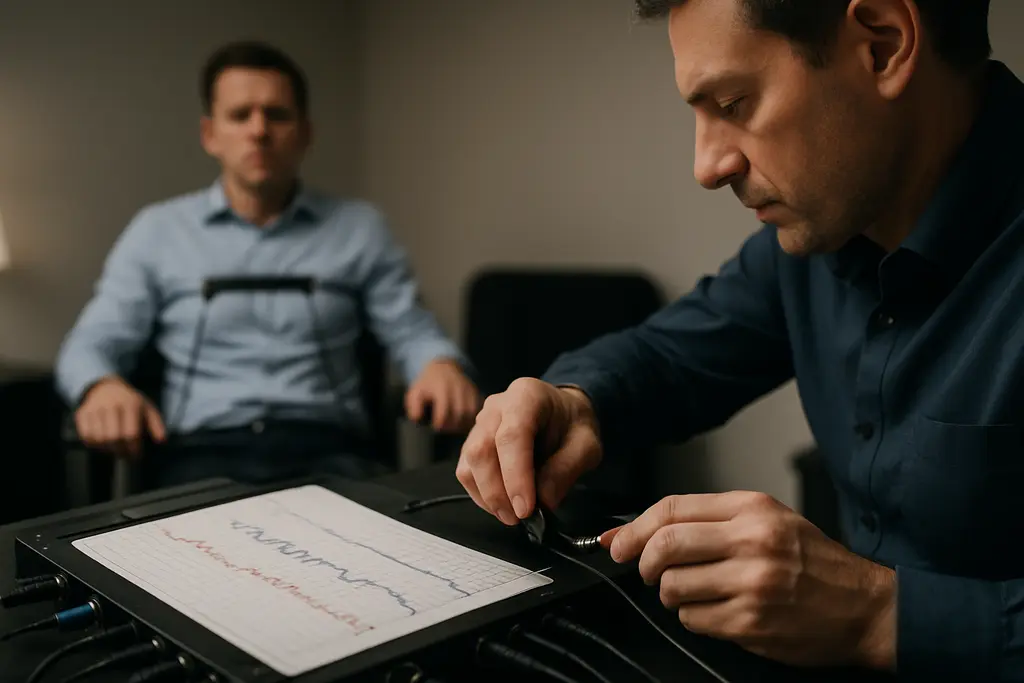
EPPA Recordkeeping is not a clerical afterthought for employers, examiners, or HR teams that deal with workplace polygraph issues. It is the paper trail that helps show whether an examination request, notice, disclosure, and exam process followed the boundaries set under the Employee Polygraph Protection Act. On July 27, 2026, the U.S. Department of Labor published a proposed extension without change of its Information Collection Request for EPPA-related records. Read carefully, that request was less about creating new duties and more about preserving the existing documentation framework that supports oversight.
For workplace ethics, that distinction matters. A polygraph policy can be written with careful language, but trust depends on whether the employer can show what happened, when it happened, who received notice, what was requested, and what records were preserved. HR teams comparing hiring, investigation, and documentation practices may use industry tools such as Alliance Recruitment, but polygraph-related decisions require a separate review because EPPA is specific about workplace testing limits and records.
Why EPPA Recordkeeping Matters In Polygraph Services
EPPA Recordkeeping Creates A Verifiable Timeline
EPPA Recordkeeping gives employers, examiners, employees, and regulators a shared timeline. Under 29 CFR § 801.30, employers and examiners must retain required records for at least three years from the date a polygraph examination is conducted, or from the date the examination is requested if no examination takes place, as stated in 29 CFR § 801.30. That retention period is practical because disputes about notice, consent, scope, or disclosure may arise after the immediate investigation has ended.
The three-year period also encourages discipline before a test is requested. If an employer knows the file must be preserved, reviewed, and potentially produced, the decision to request an examination becomes harder to treat casually. From an ethics perspective, this is useful friction. It supports a culture where documentation precedes action rather than being reconstructed later.
Records Help Separate Procedure From Assumption
Polygraph services can provide information, but they do not remove the need for fair process. Records help separate what was actually done from what people remember or assume was done. The required file may show the stated incident under investigation, the notice given to the examinee, the persons identified for examination, the questions used, and the examiner’s reports. Those details do not prove that every decision was sound, but they do help decision-makers evaluate the process with less reliance on memory.
This is especially relevant in internal investigations. Tension can rise quickly when property loss, misconduct, or breach of trust is alleged. A well-kept file does not guarantee a correct employment decision. It can, however, help demonstrate that the employer treated the matter as a governed process rather than an informal credibility contest.
What The DOL Extension Request Signaled
The July 27, 2026 notice proposed an extension without change of the DOL’s Information Collection Request associated with EPPA. The research notes identify the request as tied to Control Number 1235-0005, administered by the Wage and Hour Division. Because the proposal was an extension without change, it did not signal a new recordkeeping structure. It signaled that DOL sought continued approval to collect and rely on the records that support EPPA administration.
The notice described a sizable paperwork footprint. Research notes for the notice reported about 164,000 affected entities, 757,400 annual responses, 68,779 annual burden hours, and an estimated annual burden cost of about $3,614,475. Those figures should be read cautiously. They are burden estimates connected to an information collection process, not findings about how many employers improperly use polygraph examinations or how often workplace testing occurs.
For HR leaders, the practical lesson is not that every employer faces the same workload. The lesson is that federal oversight treats EPPA documentation as a recurring administrative obligation, not as an optional file note. If an organization permits polygraph use only in narrow circumstances, it still needs a repeatable method for preserving required records when those circumstances arise.
Records Employers And Examiners Should Expect To Preserve
The regulation identifies categories of records that must be preserved. These records are not merely internal preferences; they reflect the documentation needed to assess whether the examination process complied with EPPA requirements. Employers and examiners should avoid vague file labels and should preserve records in a way that allows later review without guessing what each document means.
- A written statement setting out the specific incident or activity under investigation and the basis for testing an employee.
- Proof that the employee received the written statement.
- Written notice to the examinee of the time and place of the examination and the right to consult counsel.
- Written notice identifying the persons to be examined.
- The examiner’s reports, charts, written questions, question lists, and records showing test duration.
These categories show why polygraph files should not be managed as ordinary personnel notes. Some records relate to the employer’s basis for seeking the exam, while others relate to the examiner’s work and the examination itself. A weak handoff between HR, management, counsel, and the examiner can create gaps. Those gaps can later make it difficult to show that notice, timing, and scope were handled consistently.
How HR Teams Can Treat Documentation As A Trust Safeguard

Build A File Before The Examination
EPPA Recordkeeping should begin before an examination occurs. If the first serious documentation step happens after the test, the file may fail to answer the most sensitive questions: Why was the test requested? What incident was identified? Who received notice? What rights were communicated? Which records were created by the employer, and which were created by the examiner?
A practical approach is to assign responsibility before any examination request is made. HR can identify who prepares the written statement, who confirms delivery, who coordinates with the examiner, and who checks that the final record is complete. This is not a substitute for legal review where needed, and it should not be treated as legal advice. It is a governance practice that reduces ambiguity.
Central Storage Still Requires Fast Access
Employers may keep records at the place of employment or business, or at established central recordkeeping offices. If records are kept centrally, they must be available within 72 hours after a request by the Secretary of Labor or an authorized representative, according to the DOL’s recordkeeping advisor. That requirement affects how HR teams design access controls, not just where documents sit.
Centralized storage can support consistency, especially for employers with more than one location. Yet centralization can create risk if only one person knows how to retrieve the file or if records are stored in incompatible systems. A better practice is to define retention, access, and retrieval procedures before a request occurs. That approach protects confidentiality while still allowing timely production when required.
Reading The DOL Request Through EPPA Recordkeeping
The DOL extension request should be read as a reminder that paperwork burden and workplace integrity are connected. Recordkeeping takes time, and the notice’s estimates recognize that administrative cost. Yet without preserved records, oversight becomes weaker, employee protections become harder to verify, and employers may struggle to explain their own decisions.
EPPA-related documentation should also fit within a broader integrity program. A workplace policy can define who may authorize a request, how employees are informed, what role the examiner has, how results are handled, and how unrelated personal information is protected. For readers who need a broader rights-based discussion, EPPA notice basics may help place recordkeeping duties within the wider information collection context.
For polygraph service providers, records can support professional accountability. They show the questions used, the duration of the test, the materials produced, and the report issued. They also create a record that can be reviewed if concerns later arise about scope, notice, or handling of sensitive information. That is a trust function as much as an administrative one.
EPPA Recordkeeping As A Workplace Trust Practice
EPPA Recordkeeping is most useful when employers treat it as part of fair process rather than a box-checking task. The DOL’s July 27, 2026 extension request did not change the underlying recordkeeping structure described in the research notes, but it did reinforce that these records remain part of federal EPPA administration. For HR leaders, the strongest response is practical: define who creates the records, confirm what must be preserved, protect confidentiality, and make sure records can be retrieved within the required time frame.
Polygraph services operate in a sensitive space because they touch credibility, employment status, privacy, and organizational trust. Recordkeeping cannot make a polygraph result certain, and it should never be used to portray testing as a guaranteed answer. What it can do is create a clearer account of process. In employment relationships, that clarity matters. Trust grows when people can see that power is being exercised through defined rules, preserved evidence, and accountable decision-making.