

Polygraph Effectiveness cannot be evaluated from physiology alone. A polygraph records changes associated with respiration, sweat, and cardiovascular activity, but those signals do not identify deception by themselves. The professional judgment comes from how the examiner compares response patterns to relevant and comparison questions, while also considering psychological factors such as anxiety, fear, stress, comprehension, and the setting in which the examination occurs.
That distinction matters in workplace integrity programs. A polygraph result may contribute information during a specific investigation, yet it should not be treated as a stand-alone substitute for records, interviews, access logs, policy review, or other evidence. Psychological perspective keeps the discussion practical: what does the test add, where is it vulnerable, and how should decision-makers limit overconfidence?
How Psychology Shapes Polygraph Effectiveness
Why The Test Is Not A Direct Lie Detector
The common label “lie detector” is imprecise. The instrument detects physiological change, not deception as a physical substance. Deception may be associated with measurable arousal in some test formats, but arousal can also arise from fear of not being believed, concern about job loss, shame, misunderstanding, fatigue, or the social pressure of being examined. That is why examiner training, question wording, pre-test discussion, and test structure matter so much.
The point is not to inflate Polygraph Effectiveness beyond the evidence. It is to recognize that a properly structured examination is a psychological assessment supported by physiological data. The examiner must reduce ambiguity before the sensors are attached: define the issue, confirm the examinee understands each question, identify medical or emotional concerns that may affect participation, and avoid wording that is vague or compound. For a closer look at that risk, see this discussion of polygraph question wording.
What A Psychological Lens Adds
A psychological lens helps separate two questions that are often blurred. First, did the person show a meaningful response pattern during the test? Second, what is the most reasonable interpretation of that pattern in the full context? The first question is technical. The second requires judgment and caution.
In a workplace setting, that caution protects both the organization and the employee. If an employer asks about a missing asset, an unauthorized disclosure, or a policy breach, the examinee may feel threatened even when truthful. A sound process should anticipate that reaction rather than dismiss it. The examiner’s pre-test interview, the clarity of the issue, and the use of established techniques help reduce psychological noise, but they cannot remove it entirely.
What The Accuracy Data Can And Cannot Tell Us
Single-Issue And Multiple-Issue Results
The American Polygraph Association’s 2011 meta-analysis reported that event-specific, single-issue examinations had an average accuracy of 89%, with a confidence interval of 83% to 95%. The same review reported 85% average accuracy for multiple-issue screening examinations, with a confidence interval of 77% to 93%, and an aggregated decision accuracy of about 87% across validated techniques, with a confidence interval of 80% to 94% APA validity review.
Those figures are useful, but they should be read carefully. A single-issue examination asks about a defined event, which generally gives the examiner and examinee a clearer target. Multiple-issue screening asks broader questions and can be harder to interpret because the psychological meaning of a response may be less specific. In practice, that means a workplace program should distinguish between an investigation into a known incident and a broader screening process. Treating both as equal uses of the same tool can create avoidable risk.
Sensitivity, Specificity, And Decision Risk
Another way to examine the evidence is to separate sensitivity and specificity. In field diagnostic assessments, polygraph testing showed sensitivity of 92% and specificity of 83%, meaning the reported true-positive rate was higher than the reported true-negative rate in that assessment OJP comparative analysis.
For managers and compliance teams, those terms are not just statistical details. Sensitivity concerns how often the process identifies deception when deception is present. Specificity concerns how often it identifies truthfulness when the person is truthful. A workplace decision based on a false positive can damage trust, morale, and fairness. A false negative can leave an integrity problem unresolved. Both errors matter, and neither can be eliminated by confidence in the instrument alone.
Why Psychological Context Changes Interpretation
Polygraph Effectiveness In Screening Settings
Screening deserves special caution because the question is often broader than a single event. The more general the issue, the more room there may be for anxiety, uncertainty, memory differences, and personal interpretation. If the behavior being assessed is rare, even a test with meaningful accuracy can still create difficult decision problems because the number of truthful people may be much larger than the number of deceptive people.
For that reason, Polygraph Effectiveness in screening should be discussed in terms of risk management, not certainty. A screening result may justify follow-up questions or a review of other records, but it should not automatically become a final employment judgment. Organizations that use polygraph services should document the purpose of the examination, the limits of the method, and the evidence that will be considered alongside the result.
Anxiety, Fear, And Stress As Alternative Explanations
Psychological state matters because physiological arousal has more than one possible cause. An examinee who fears being wrongly accused may show stronger responses than expected. A person who misunderstands a relevant question may react to the perceived accusation rather than the actual issue. A person under workplace stress may bring that stress into the room. These possibilities do not make the data useless, but they make interpretation conditional.
This is why pre-test discussion is not a formality. It is where the examiner checks comprehension, clarifies definitions, and determines whether the person is suitable to proceed. It is also where ethical practice begins. Consent, confidentiality boundaries, competence, and fair reporting should be addressed before the test begins. For related workplace considerations, this article on polygraph ethics explains why procedure and fairness matter as much as the chart data.
Workplace Integrity Uses And Cautions
Using Results As One Evidence Stream
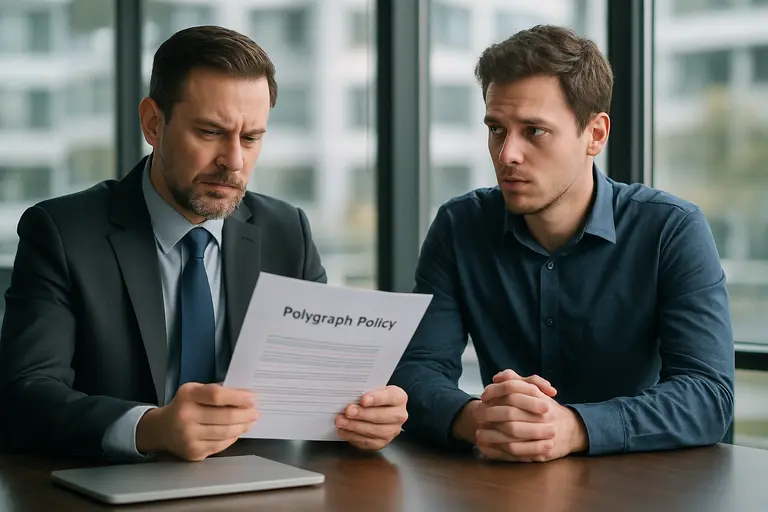
In workplace integrity matters, polygraph services are most defensible when they complement other evidence. Examples may include inventory records, access-control data, written statements, policy acknowledgments, financial records, or interviews. The practical question is whether the polygraph result fits with independently available information or raises a specific issue that warrants further review.
Employers should avoid presenting the test as a guaranteed truth-finding device. That framing can pressure employees, distort expectations, and weaken trust in the process. A more defensible approach is to explain what the examination can assess, what it cannot prove, who will receive the report, and how the result will be weighed. This is a compliance communication issue as much as an investigative one.
Communication, Documentation, And Fair Process
Clear communication reduces unnecessary fear. Employees should understand the reason for the request, the voluntary or required nature of participation under applicable policy, the subject matter of the questions, and the limits of confidentiality. This article is not legal advice, and employment rules vary by jurisdiction, so organizations should involve qualified counsel where workplace testing may affect rights, discipline, or employment status.
Documentation should also be readable and consistent. Teams reviewing policy language sometimes consult related editorial resources such as writing-service comparisons, which can help in ensuring clarity, but the evidentiary opinion in a polygraph matter should remain separate from marketing language, employee relations messaging, or general communications support. The examination record should state the issue tested, the method used, the outcome reported, and any qualifications needed to interpret that outcome fairly.
- Use a defined issue whenever possible, rather than broad or vague accusations.
- Confirm that each question is understood before chart collection begins.
- Compare the result with records, interviews, and other available evidence.
- Avoid treating any result as absolute proof of truth or deception.
- Explain confidentiality, reporting limits, and next steps before testing.
Psychological Perspective On Polygraph Effectiveness
A defensible view of Polygraph Effectiveness starts with a balanced premise: validated polygraph techniques can provide useful information, especially in defined, event-specific matters, but psychological factors remain central to interpretation. The instrument records physiological activity; the examiner, using an established method, evaluates what that activity may mean in response to carefully structured questions.
For workplaces, the best use is cautious and evidence-based. A polygraph examination should support a broader integrity process, not replace it. Decision-makers should ask whether the tested issue was clear, whether the examinee understood the questions, whether the method was appropriate for the purpose, and whether independent evidence supports or conflicts with the result. That approach respects the data without pretending that physiology alone can settle every question of truthfulness.