

Imagine a workplace dispute so intense, the air seems to vibrate with anger. The desire for a truth-telling device is almost overwhelming.
But can you show those squiggly lines from a polygraph in court? The answer is usually “no” in courtrooms. It’s like trying to use a whoopee cushion in the Supreme Court—it’s more funny than serious.
Here’s the catch. While polygraph test results are not usually allowed in Canadian courts, they hold power elsewhere. In secret talks and private arbitration, that chart can be a strong negotiating tool.
In modern workplaces, disputes aren’t just about testimony — they often involve digital records, internal emails, and secured communications. Protecting that information through reliable antivirus software for email systems is part of maintaining integrity long before a conflict escalates to polygraphs or arbitration.
This tool, seen as too shaky for court, can spark a settlement outside of it. It shows how what seems real can be more important than what’s actually allowed in court.
The big question is: how accurate are these tests? Experts argue over the 80-90% figure. What does it mean for the “he said, she said” battles in meetings? As seen in when disputes need outside validation, the question of trust is key. Let’s look at how a machine’s findings compare to human opinions.
Policies for Dispute Resolution
Imagine your HR handbook getting a new chapter on conflict resolution. It’s not about using truth serums. Instead, it’s about creating a clear, fair way to solve problems. This approach helps avoid making things worse.
The goal is to move from suspicion to clear rules. A good policy turns a possible witch hunt into a fact-checking process. It’s about good oversight, not Big Brother.
First, voluntariness is key. Everyone must agree to take the test without being forced. A test done under duress is not valid. This rule is your first defense.
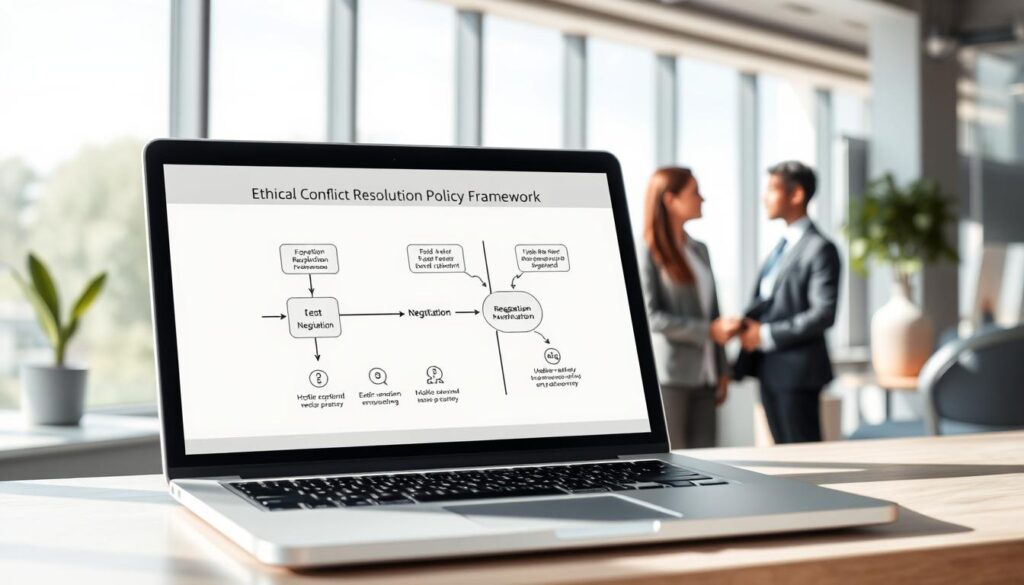
Next, we look at who does the testing. You can’t just use anyone. Accuracy and Professionalism are essential. Your policy should require a certified, experienced examiner. Look for proper credentials and a good track record.
Why is this important? A skilled examiner knows how to handle stress and questioning. They make sure the test is useful, not misleading.
Privacy and confidentiality are also critical. The person being tested must be treated with respect. The policy should say who sees the results and how they are kept safe. This is not for gossip.
A policy must fit into your company’s HR system. It’s like adding a polygraph module to your ethics framework. Resources like HR Insider can help make sure your policy works with labor laws and other rules.
Your conflict resolution policy should work with other rules. It should not conflict with them. This makes sure everything is in line and compliant.
So, what does this framework look like in practice? Let’s break it down into actionable pillars.
| Policy Pillar | Core Principle | Implementation Checklist | HR/Legal Alignment |
|---|---|---|---|
| Voluntariness & Consent | Zero coercion; informed, written consent is mandatory. | Clear consent form; right to counsel; no retaliation for refusal. | Aligns with labor law on voluntary participation and anti-retaliation statutes. |
| Examiner Credentials | Only certified, experienced professionals may conduct tests. | Verify state licensure; check professional affiliations; review examiner’s history. | Mitigates liability; ensures due diligence and admissible results. |
| Privacy & Data Handling | Strict confidentiality governs all phases of the process. | Secure storage protocols; limited access list; defined retention period. | Complies with data privacy laws (e.g., state-specific regulations). |
| Process Integration | The polygraph is one tool within a broader dispute resolution system. | Define triggering circumstances; link to existing investigative procedures; establish review boards. | Embeds within overall corporate governance and ethical frameworks. |
Notice how each pillar connects to a larger system. This isn’t about creating a standalone interrogation protocol. It’s about weaving a thread of forensic accountability into your existing tapestry of corporate governance.
When would such a policy even be invoked? Ideally, only for specific, high-stakes internal disputes where factual claims are diametrically opposed and evidence is scarce. It’s a tool of last resort, not first inquiry. The same careful principles apply whether you’re navigating a corporate theft allegation or, as seen in personal legal battles, a polygraph test in a divorce dispute.
Ultimately, a smart policy for using polygraphs in conflict resolution achieves a delicate balance. It grants the organization a mechanism to seek clarity in murky situations while fiercely protecting individual rights. It replaces paranoia with procedure. And in doing so, it doesn’t just resolve the dispute at hand—it preserves the integrity of the workplace itself.
Precedent Cases
If you think polygraph drama only happens on crime shows, let me introduce you to real-world courtroom sagas. These cases shape today’s workplace disputes. Legal history teaches us what not to do, with two classic blunders standing out. These aren’t dry legal doctrines. They’re stories of good intentions colliding with bad science and worse judgment.
First, let’s look at The Criminal Investigation Transplant. Imagine a company facing theft. Panic sets in. Someone decides to play detective, using police tactics.
Employees are rounded up, questioned under pressure, and asked to take a polygraph. The atmosphere shifts from office to interrogation room.
This is where the trouble begins. Treating staff like criminal suspects creates a legally toxic environment. The results are often inadmissible in court, but the damage to morale and trust is permanent. It transforms an internal issue into a hostile, defensive battleground. The real conflict isn’t solved; it’s just weaponized.

The second cautionary tale is The High-Stakes Hiring Snafu. Here, the polygraph isn’t used reactively, but proactively as a gatekeeper. Think high-security roles, government contractors, or positions of extreme trust. The logic seems simple: use the machine to filter out dishonesty. But this reduces a complex human being to a single, squiggly line on a chart.
Ethical concerns explode when the test becomes the sole deciding factor. What about experience? References? Actual skills? Relying on a polygraph alone is a profound cognitive error. It mistakes a dubious data point for the whole truth. This practice, as noted in employment screening studies, often overlooks other relevant factors and can lead to discrimination claims.
So, how do these two scenarios stack up? The table below breaks down the anatomy of these all-too-common failures.
| Aspect | The Criminal Investigation Transplant | The High-Stakes Hiring Snafu |
|---|---|---|
| Typical Context | Reacting to internal theft or policy violation | Screening candidates for sensitive positions |
| Core Flaw | Applying law-enforcement pressure in a corporate setting | Using one unreliable metric as a primary filter |
| Primary Legal Risk | Creating a hostile work environment; defamation | Discrimination; violating fair hiring practices |
| Common Outcome | Eroded trust, low morale, and wrongful termination suits | Missing out on qualified talent; costly litigation |
| Key Takeaway | An investigation is not an interrogation. Keep it professional. | Due diligence is a multi-tool, not a single button. |
The throughline in these precedent cases is clear: over-reliance on the polygraph machine overshadows human judgment. It turns a delicate personnel matter into a lawsuit magnet. Courts have consistently scrutinized such practices, as seen in landmark Supreme Court decisions that shape admissibility standards.
In the end, these stories aren’t just about a machine. They’re about a mindset. Using a polygraph as a shortcut for complex human decisions is a recipe for conflict. The precedent is set. The warning is written. Will we read it?
Alternatives and Supplementary Methods
The polygraph is exciting on TV, but real-life conflict solving is different. It’s like using a chainsaw for delicate tasks—it’s not the right tool. A better approach is to see it as part of a larger strategy.
Structured mediation is key. A skilled mediator helps find common ground, something machines can’t do. They use physiological stress tests, but evidence from investigations is more solid.
Preventing disputes is the best strategy. Good HR training and clear communication are like a shield. They follow the rule that a polygraph should be used alongside other tools, not instead of them. This way, problems are solved early, not later.
Imagine a team of strategies working together. The polygraph is like a loud trumpet. Mediation is the gentle strings. Investigations are the beat. And good policies are the conductor. True success comes from using all these tools, not just one.